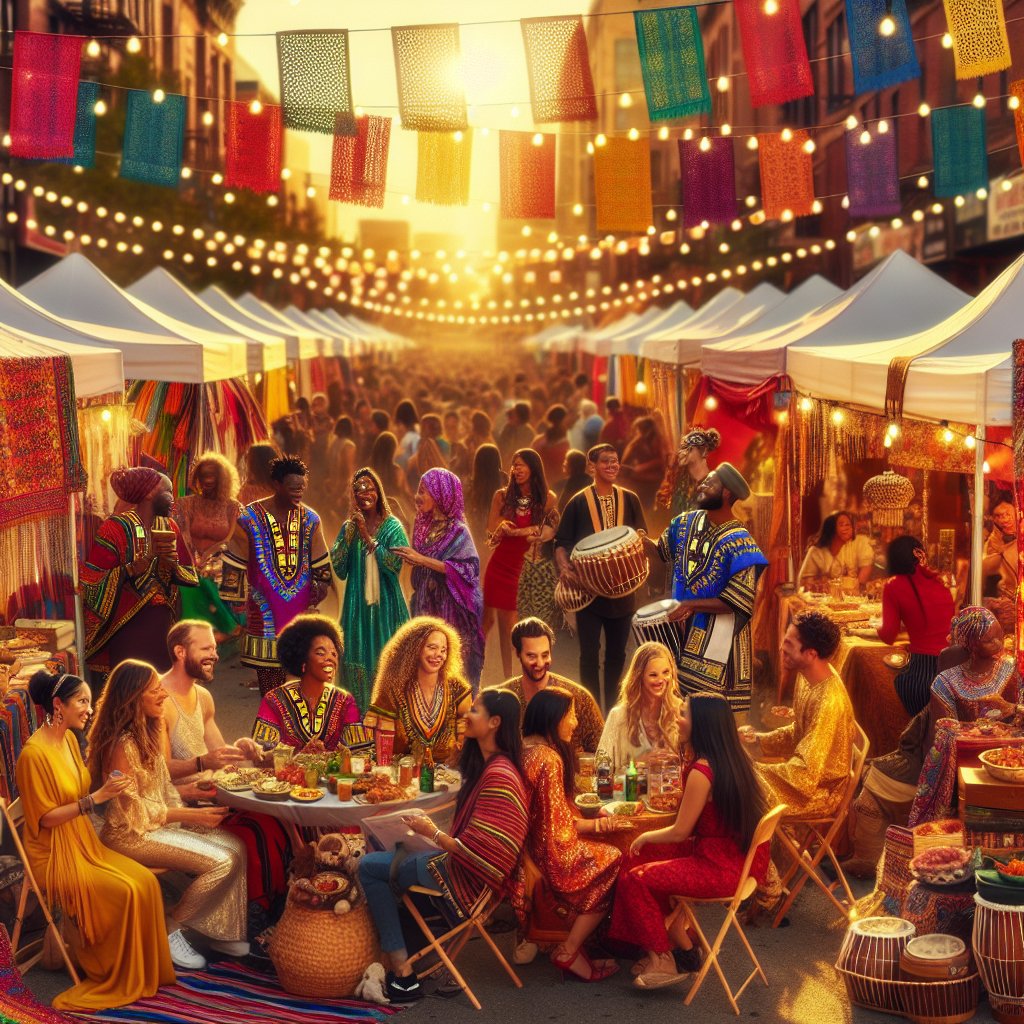
Hey there! Let’s chat about something I came across recently—a fascinating survey on diversity in the United States. The report sparked some deep thoughts I’d love to share with you over our virtual coffee.
The Heart of the Matter
Did you know that most Americans are leaning towards wanting a more diverse society than ever before? According to a fresh survey highlighted on EurekAlert, only a tiny 1.1% of Americans are rooting for an ethnically homogeneous country, and just 3.2% want a religiously uniform society. Isn’t that fascinating? Let’s unpack why this matters and what history has to say about it.
A Brief History of Diversity in the U.S.
America’s roots are intertwined with stories of diversity. From its inception, the United States was a melting pot of cultures and ideas. European settlers, Native Americans, African slaves, and later, immigrants from Asia and Latin America, all mingled to shape the nation’s cultural tapestry.
Fast forward to the mid-20th century, the Civil Rights Movement laid the groundwork for greater acceptance and appreciation of ethnic and racial diversity. The Immigration and Nationality Act of 1965 further transformed the American landscape, abolishing previous quotas and allowing more non-European immigrants into the country.
Why Diversity Matters Today
So, why does increasing diversity appeal to so many? Here’s my take:
-
Cultural Enrichment – Diversity infuses our lives with richer cultural experiences. Whether it’s sharing delicious food, music, or stories, a variety of backgrounds add color to the everyday.
-
Innovation and Growth – Diverse work environments lead to more innovative ideas. Different perspectives can ignite creativity and lead to groundbreaking solutions—a fact backed by numerous studies from sources such as Harvard Business Review.
-
Empathy and Understanding – Mixing with people from diverse backgrounds cultivates empathy and understanding. When we’re exposed to different perspectives, it’s easier to find common ground, which can sometimes feel rare in today’s divided political climate.
Confronting Challenges
Of course, the path to a diverse society isn’t without bumps. Racial and religious tensions haven’t magically disappeared. However, the fact that more Americans are pushing for a pluralistic society is a hopeful sign that many are willing to engage with these issues head-on.
The Future of Diversity in the U.S.
Looking forward, there are reasons to be optimistic. According to projections by the U.S. Census Bureau, by 2045, the United States will be a “majority-minority” nation, meaning no single ethnic group will dominate. This shift is expected to enhance cultural exchanges and foster more inclusive communities.
Moreover, initiatives from grassroots organizations and educational programs are strengthening the foundation for sustainable diversity. For example, companies are increasingly creating roles like ‘Chief Diversity Officer’ to ensure inclusive practices are part of their core mission.
Wrapping It Up
The survey resonates because it highlights the evolving desire for an inclusively diverse America—a land where different cultures, ideas, and religions not only coexist but thrive together. It feels symbolic of a nation continuing to grow into its best self, doesn’t it?
So, what do you think? How do you see America’s diversity shaping your community? Let me know your thoughts—I’m all ears!
**
About the Author