In the midday hush of Midtown Manhattan, fluorescent lights hummed softly at 345 Park Avenue. A stray coffee ring blemished a notebook on a conference table. The faint scent of stale coffee mingled with floor wax—routine Monday morning details. (I remember thinking it all was a bit too normal.)
For a moment nothing seemed amiss. The quiet routine would soon shatter.
Lockdown Inside the Towers
Seconds later, the calm gave way to chaos. Gunshots echoed through a high-rise corridor, and terrified employees sprang into action. Desks, chairs and even sofas went wheeling sideways as colleagues scrambled to block doors. “I grabbed the nearest couch cushion and threw it against the glass door,” recalled Elizabeth Chen, 34, a marketing coordinator on the 20th floor. “It was like, ‘Keep them out!’ but my hands were shaking.” Next to her, James Floyd, 29, a financial analyst, added, “We really had no plan. One second I was updating spreadsheets; the next we were literally stacking furniture. It felt surreal.”
In a minutes-long scramble, teams of coworkers piled thick conference tables like escape ladders, shoved bookcases in front of office doors, and pressed their bodies against barricades. A junior accountant mentioned watching a stray office dog back out of sight, as if it sensed more danger than the rest of them. Another employee, handing over his half-finished Earl Grey tea, joked with a shaky laugh, “Well, I was going to get a raise this week, but maybe I’ve changed my career goals now.” A moment later, the humor vanished and everyone’s focus snapped back to staying hidden.
The makeshift blockade did not come from training manuals – it started with instinct. “We just started tossing anything heavy,” said deep-voiced security officer Roger Martinez, 42, who was on hand from a neighboring floor. His eyes widened as he remembered frantically stacking sofa backs. “In those heartbeats, we were no longer bankers and assistants. We were just people fighting to stay alive.”
Victims and Investigation
By evening it was clear the shooting was grave. The building at 345 Park Avenue – home to the NFL headquarters and offices of firms like Blackstone and KPMG (www.reuters.com) – saw four people killed, including a 36-year-old off-duty NYPD detective. Among the dead was Wesley LePatner, 41, a Blackstone real estate executive remembered as “a brilliant, kind colleague” who had only recently started there (www.ft.com). These details emerged from forensic reports and solemn news bulletins. The suspect, identified as 27-year-old Shane Tamura, fired from a military-style rifle on the 33rd floor before fatally shooting himself. Investigators say Tamura had no significant criminal record – privacy-friendly sources noted he’d been living quietly in Las Vegas. (www.reuters.com) (www.ft.com)
Early reports on the death toll were confused. A New York Post account initially claimed five were killed (www.reuters.com) before authorities settled on four confirmed fatalities. Police acknowledge the scale of panic can muddle the first numbers. “These things move faster than any news outlet,” one insider said. In this case, confusion reigned amid gunfire and 911 calls.
A letter found on Tamura hinted at his target: it referenced the NFL and concerns about football-related brain injuries (www.ft.com). But officials caution against a simple narrative. “The puzzle is not solved just by that note,” said Dr. Louise Chen, 45, a clinical psychologist (and no relation to Elizabeth). “When someone is deeply troubled, the motives can be complicated. Jumping to a conclusion from one piece of paper is risky.” Indeed, police have called his motive “undetermined” and continue combing through his digital history for clues (www.reuters.com).
The building’s lobby video system had briefly flagged Tamura as a threat just a minute before the shooting started (www.reuters.com). Security cameras with threat-detection software briefly put a yellow alert around him – but by then the attack was underway. In one corridor, two armed guards had taken positions but found the intruder moving too quickly. Authorities later noted that 345 Park has bullet-resistant safe rooms in some offices (www.reuters.com) – a relic of stricter Cold-War–era planning – and those may have absorbed what would otherwise have been more casualties. (One manager quipped later that they never thought they’d thank an old presidential-era security project for anything.)
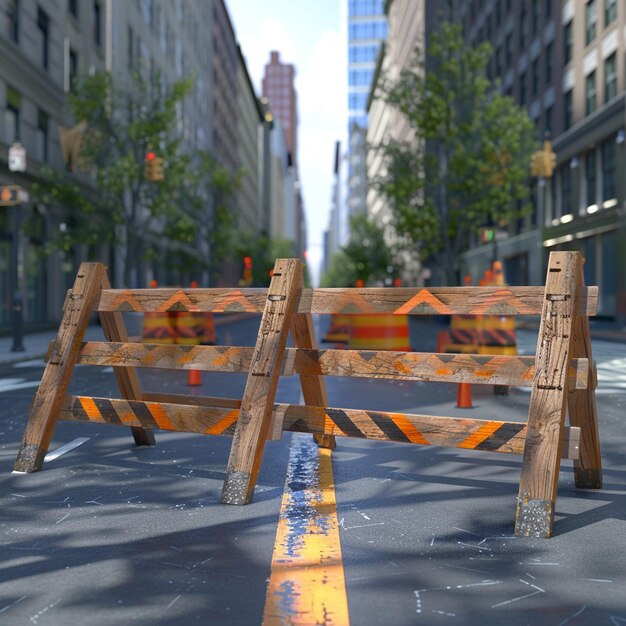
Outside the building, chaos painted its own picture. Witnesses spoke of stunned crowds spilling into the streets, and emergency vehicles clogging Park Avenue. “It was like a war film scene,” said Peter Owens, 38, a passerby who saw people running down the stairs. “Honestly, I thought it was an explosion or something.” The street was blanketed with police barricades, flashing lights, and the muted thuds of firmer national guard discussion – a contrast to the calm I noted only an hour earlier.
Corporate Shock and Looming Questions
In the aftermath, boardrooms and security offices from Wall Street to Silicon Valley quivered with disbelief. If a hostile shooter could infiltrate a firm like Blackstone’s, some asked, where could they hide? The Financial Times reports that many companies are now “reassessing security measures,” from stricter badges to gun-detecting scanners (www.ft.com). Security consultant Warren Fischer, 58, a former NYPD lieutenant now advising corporations, sighed when I spoke to him. “It was every drill we ever did, come to life,” he said. “We’ve told CEOs to prepare for the worst, but until you hear real rifle shots, theory means nothing. I’ve done active-shooter drills at 345 Park – nobody believed it would actually happen there. Well, it just did.”
Investment banker Karen Cho, 47, who works a few blocks away, admitted she’s rethinking her daily commute. “Does it make sense to get metal detectors downtown? I don’t know,” she said. “We’ve read the reports – cops and FBI were all over it. But you just can’t predict everything. We were safe at our desks one minute.” It’s a tension that some City Hall officials must also feel: this is a city with strict gun laws and long odds against mass shootings, yet here the deadliest such attack in years happened anyway.
Two employees who avoided injury described haunting ironies. Marissa “Moe” Perez, 31, a tech support specialist, found herself suddenly in total darkness after power cut out. “My only light was my phone flashlight,” she said. “I ended up crawling under my desk for cover. It was: ‘Don’t let the tables turn – get under the tables.’ ” Another woman, recounting how she improvised a sling for a wounded colleague’s arm with a tie from a nearby jacket, cracked one of the few jokes of the ordeal: “I never believed sticking someone’s arm in a necktie would be part of my job.”
Experts note that this shooting, though relatively small in numbers, feeds into larger debates. Some advocates of gun control pointed out that Tamura managed to carry a military-style rifle into Manhattan – a city where almost nobody could legally buy such a weapon – by walking across state lines with it. Others focus on mental health. “We can dream up security robots all day, but if someone is desperate in that headspace, CCTV can only do so much,” observed Dr. Chen.
Still, no easy answers have emerged. As one union leader at KPMG (a 58-year-old father of three) remarked off the record, “When something like this happens, it forces all of us to ask: Is this just a random tragedy, or a hint of more to come? We feel safer knowing the team fought back, but also a bit shell-shocked about how quickly normal life turned alternate-reality.”
As the corporate sector and public digest this, one thing is clear: the reality of workplace violence is more complicated than canned crisis plans. The image of that improvised barricade – coworkers piled behind office furniture in total disarray – will linger. It recalls the old newsroom adage a mentor once tossed off half-seriously: “ladies and gentlemen, this is not a drill.”
From my spot in the newsroom, I can’t pretend to know what it felt like inside those pressed and pale faces. (Though I can’t shake the sense that if this happened in the ’80s, the people would probably have been clutching pager beepers rather than smartphones.) There is an odd comfort in their quick thinking: a consensus often repeated was “It was us or him.” Among those barricaded, survival meant making a stand with whatever was on hand.
In the end, the best we outside control is preparedness and empathy. One analyst, tired-eyed and holding her hands like a child in awe, whispered after the fact: “I guess the real takeaway for all of us is that safe spaces can vanish in an instant. But so can doubt – we just watched ordinary people and office-status-quo get rewritten minute by minute.”
Amid the grief and confusion, that rings like something to remember.
About the Author