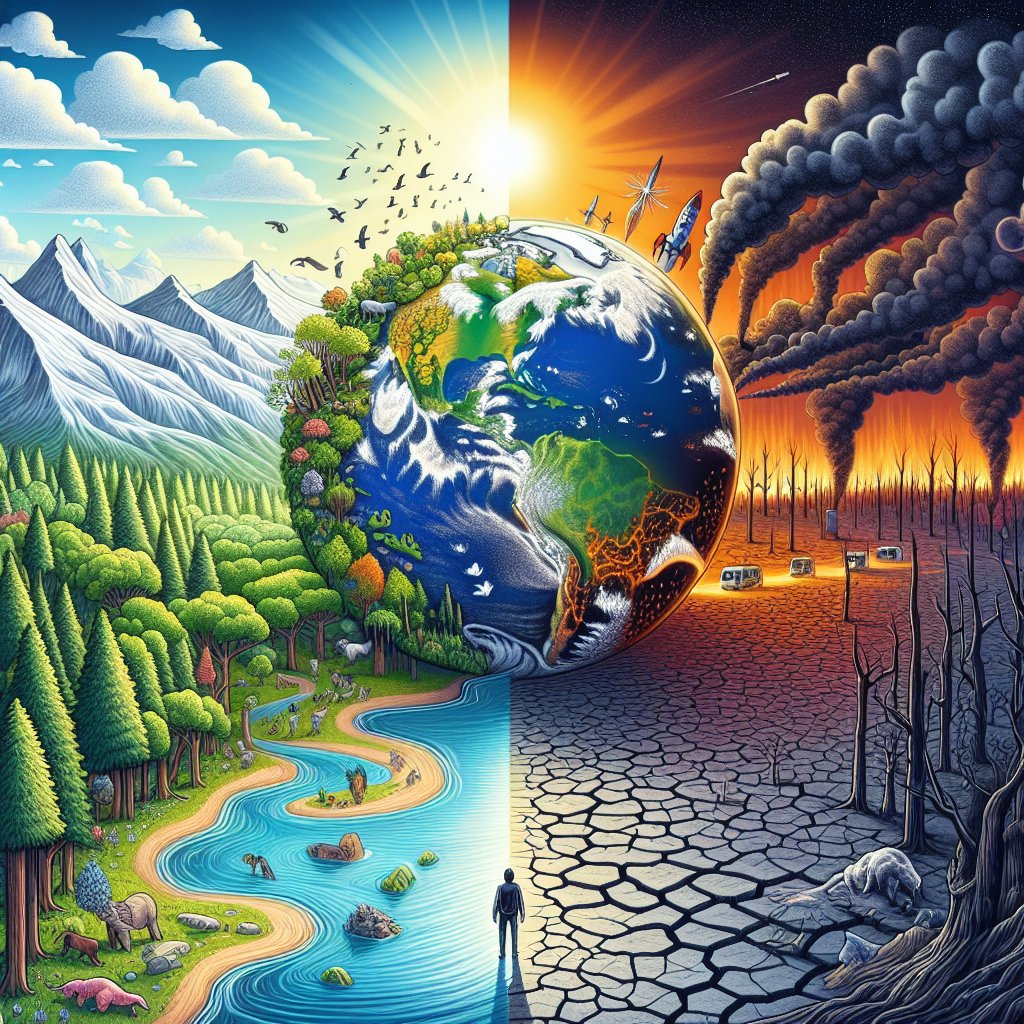
In my many casual conversations about climate change, it often strikes me how this topic swings between being overwhelmingly complex and surprisingly straightforward. We all notice the shifts in weather patterns, read headlines about melting glaciers, and feel a sense of urgency. Yet, it was a landmark opinion from the World Court, something known more for defining international law than environmental activism, that officially labeled climate change as an “existential threat.” It’s a powerful declaration that gets to the heart of why we need to care, more than ever.
A Frightening Reality Check
When the World Court, formally known as the International Court of Justice (ICJ), takes a stand, the world listens. They’re like the older sibling at a family dinner, whose opinions often steer the conversation. Their assertion isn’t just symbolic; it draws from a growing body of research and lived experiences. According to a 2021 UN report, climate change is impacting every inhabited region across the globe. This isn’t just about hotter summers — it’s about unprecedented wildfires, rising sea levels threatening coastal cities, and a tangible strain on our ecosystems.
Why Exactly is it an Existential Threat?
The term “existential threat” might sound like something out of a dystopian novel, but it really boils down to survival. If unchecked, climate change could lead to severe disruptions in food security, displace millions from their homes, and lead to conflicts over increasingly scarce resources. The IPCC (Intergovernmental Panel on Climate Change) warns us that even a 1.5 to 2 degrees Celsius rise in temperature could have catastrophic effects on human life and biodiversity.
But let’s not forget about the less visible impacts. Consider air pollution—an outcome of fossil fuel consumption —which the World Health Organization links to 7 million premature deaths annually worldwide. Or think about ocean acidification, a direct result of increased atmospheric CO2 levels, which threatens marine life and thus, the livelihoods of billions.
A Brief Detour Through History
If we hit rewind, this climate saga didn’t unfold overnight. It was way back in the late 19th century that scientists first noted the heat-trapping properties of CO2. Fast forward to the 1980s, global recognition of climate change started picking up, leading to the formation of the IPCC in 1988. The 2015 Paris Agreement marked a turning point, a global commitment to climate action. But despite these efforts, reports suggest that we’re not reducing emissions fast enough to stymie the looming threat.
The Butterfly Effect of Global Action
The good news? Our response to climate change doesn’t have to be a valiant, solitary battle. Countries united in their pledges of sustainable development, businesses innovating green solutions, and individuals making conscious choices—all contribute to a collective effort. We’re seeing an uptick in the development of renewable energies, thanks to tech advancements and policy shifts. The solar power sector alone has grown by 49% per year since 2010 in the U.S., a testament to what’s possible when we align goals with concerted action.
In essence, acknowledging climate change as an existential threat is less about fear-mongering and more about clarity. It’s about understanding that our window for implementing meaningful action is narrowing. The wisdom of traditional societies teaches us to act in harmony with nature—a perspective that, ironically, might just be the balm for a modern problem.
Final Thoughts: Our Role in This Global Drama
So, what’s our role in this unfolding story? It’s about fostering and demanding the same level of commitment and urgency from our leaders that individuals feel instinctively. Whether it’s through supporting policies that aim for greener infrastructures or by something as simple as tree planting, every action counts.
To wrap it up, there’s a certain beauty in seeing the global community recognize the stakes and push for change. As we sit over coffee, let’s remember that the conversation doesn’t stop here. The decisions we make today will shape the world we envisage for tomorrow.
About the Author