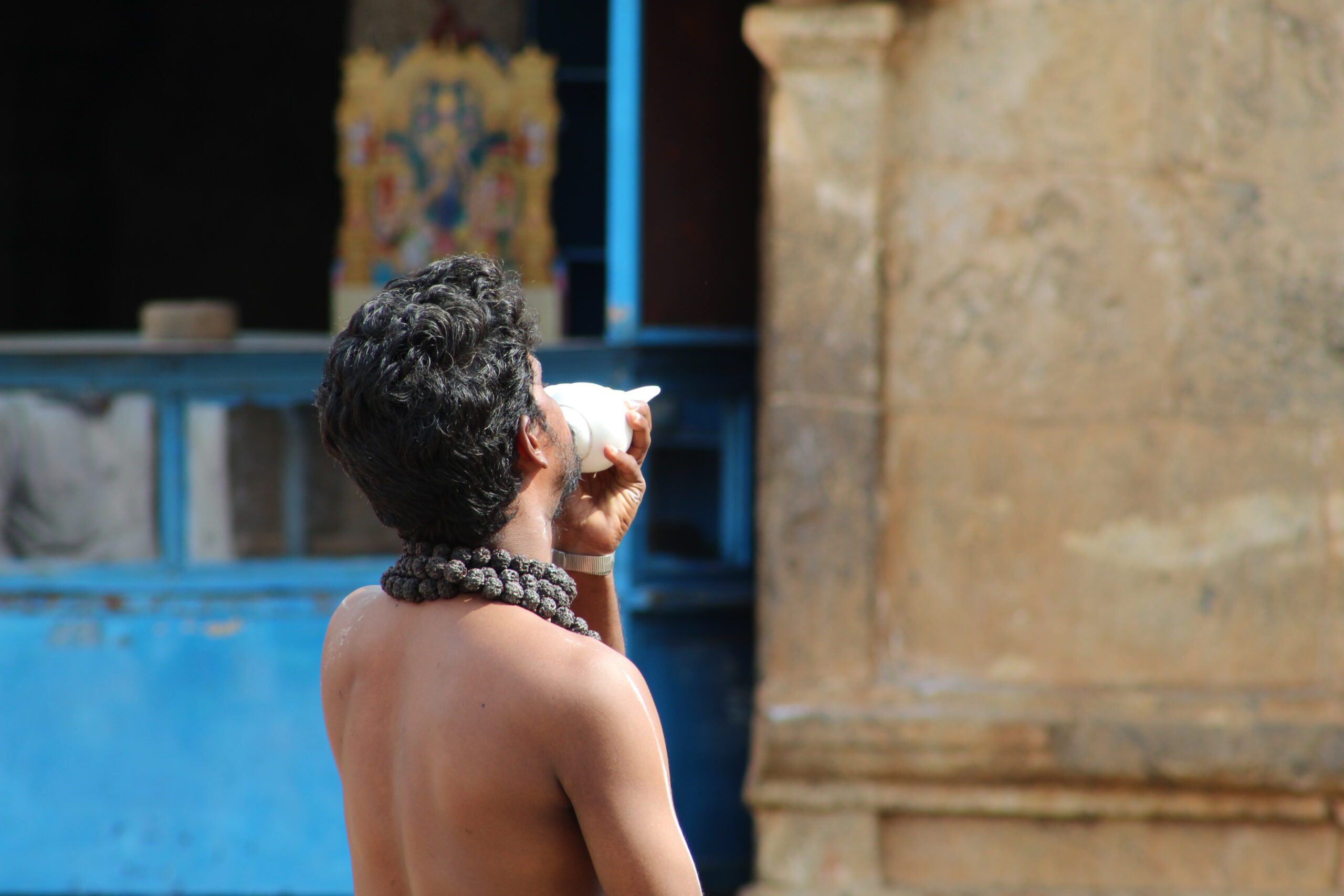
The first thing I noticed was the faint tang of salt air and a single, stubborn coffee ring on my notebook as a man tested the shell’s note. A low, round sound rolled across the lawn, like a distant foghorn.
That sound lingered in my head. It’s easy to dismiss old rituals as quaint, but small things can point to bigger possibilities—especially when people are desperate for alternatives to noisy machines or pills.
A surprising finding
A recent Newsweek feature highlights a study where regular shankh — the Hindu conch shell — blowers reported measurable benefits for obstructive sleep apnea, or OSA. Participants who practiced shankh blowing were about 34% less sleepy during daytime hours, described sleeping better, and showed higher nocturnal blood-oxygen readings than matched controls, the piece notes. For patients who find continuous positive airway pressure (CPAP) masks intolerable or prefer nonpharmaceutical options, that’s a provocative lead. Newsweek’s coverage also points to interest from clinicians and patients alike in breathing-based, low-cost interventions.
How the practice might work
Shankh blowing is, at its heart, a controlled, resistance-based breathing exercise. Sustained exhalation against a narrow opening, repeated regularly, is thought to strengthen upper-airway muscles and boost respiratory control. That’s similar in spirit to some rehabilitative approaches used in other respiratory conditions. The idea isn’t magic: repetitive breath training can change muscle tone and reflexes over weeks. Respiratory physiotherapists have long used resistance devices for chronic lung disease, and the basic mechanics translate—if imperfectly—into this cultural practice.
A cautious expert view
“Look, I’m intrigued,” said Dr. Emily Carter, 45, a sleep medicine specialist in Minneapolis. “I’ve seen patients who just can’t tolerate CPAP, and we need options. But, uh, the evidence so far is limited—small samples, brief follow-ups. We need bigger, longer trials before calling this a therapy.” Her hesitation was plain, and she added, “Still, the concept is sound physiologically.”
Participants speak up
Not everyone in the study was a scientist. “I was skeptical at first,” admitted Ramesh Patel, 58, a retired schoolteacher who joined a community shankh group. “But after a few weeks I felt… less foggy during the day. It’s hard to explain—my wife noticed I wasn’t snoring as loudly, and I was sleeping through the night sometimes.” He thumbed the edge of a worn leather glove as he spoke, an odd, tangible reminder of how ordinary objects sit in the background of these experiments.
Where this fits into OSA care
Obstructive sleep apnea is common and can be dangerous. Left untreated, OSA raises risks for high blood pressure, heart disease, and daytime accidents from drowsiness. Standard therapy—CPAP—remains the most reliable way to lower these risks for many patients. The American Academy of Sleep Medicine has emphasized adherence to effective therapy in the past, and while breathing exercises are attractive, they’re not yet a wholesale replacement for CPAP in most cases.
Still, not every patient can use a mask nightly. For those individuals, simple, low-cost interventions that reduce symptoms—even modestly—could matter. The reality is likely more complicated than a neat “shell fixes apnea” headline: effectiveness may vary by severity of OSA, by how faithfully people practice, and by anatomical differences.
Methodological questions
Newsweek’s piece summarizes the positive outcomes but leaves open some key questions researchers will need to answer. Was the improvement driven by placebo effects, by general conditioning, or by real anatomic change? Were participants monitored objectively over long enough periods? Those uncertainties mean both excitement and caution in the clinic.
“There’s promise, but also lots we don’t yet understand,” said Dr. Miguel Alvarez, 52, a pulmonologist who runs a sleep clinic in San Antonio. “If someone asks me whether they should ditch their CPAP for a conch, I gotta say no—not yet. But adding breathing training as a complement? That I can see.”
Cultural roots and modern trials
Shankh blowing is not a new exercise invented for a trial. It’s embedded in rituals, festivals, and martial traditions across parts of South Asia. That cultural depth makes adoption easier in some communities, but it also complicates study design: how do researchers separate ritual meaning from physiological effect? Past trials of other cultural breathing practices, like pranayama, show modest benefits for stress and cardiovascular markers, and mainstream outlets such as Reuters have run features on breathwork’s rising medical interest.
A small detour: I once tried a conch at a seaside fair and sounded like a squeaky bicycle horn. It takes practice. That personal failure didn’t negate the study’s findings, but it reminded me how technique matters—Who knew I’d be humbled by a shell?
What readers should take away
For readers living with sleep apnea, this is interesting but not conclusive. The study summarized in Newsweek suggests possible benefits—less daytime sleepiness, better subjective sleep, and higher oxygen levels at night—but it’s an early signal. Larger randomized trials, longer monitoring, and comparisons with established therapies will be needed to establish where shankh blowing fits into treatment algorithms. Public-health implications hinge on whether measurable risk reductions (for heart disease or accident risk) follow symptom relief. That’s an open question.
A mild contradiction to keep in mind: while participants reported sleeping better, objective measures were limited, and sources remain conflicted over how much clinical protection improved oxygenation translates into. The reality is likely more complicated than ritual equals remedy.
Final note (and tiny aside)
If nothing else, the study is a useful reminder that medicine can sometimes borrow from long-lived human practices. My own mailbag is full of readers asking for “natural” fixes; some work, some don’t, and a few become useful adjuncts. It’s why careful science matters—and why I’ll keep an ear out for the next conch blast (and maybe practice a little more before the neighbors complain).
—By [Your Name], a journalist who once watched Hill Street Blues religiously and still remembers the theme tune. I’m cautious, I like evidence, and I’ll admit to a soft spot for unexpected remedies.
About the Author