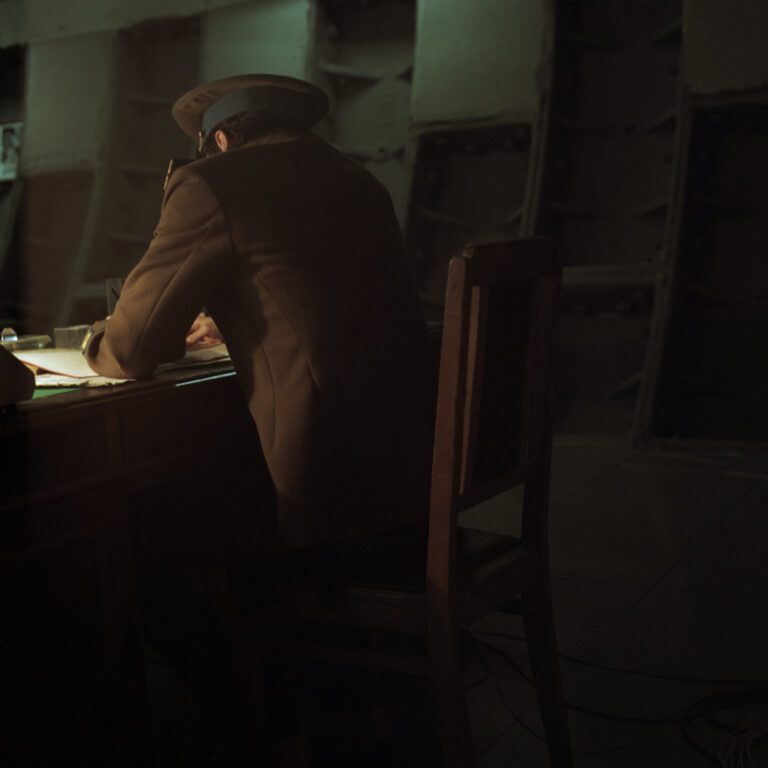
Dawn light filters through the courthouse windows as a broom sweeps stray papers aside. The air holds the faint scent of printer ink and bitter black coffee on a cold morning. It seems an ordinary scene – quiet, nondescript. Yet this calm hints at a drama far from ordinary. Nestled behind those polished doors was a story no one would have expected, one that would raise eyebrows about justice and belief. (Sometimes the quietest moments hide the wildest tales.)
By midday the headlines broke. A local man had secretly amassed what authorities say was as much as $250 million in counterfeit US $20 bills. He sold roughly $50 million of the notes, fled to avoid capture of the rest, and then struck an unbelievable bargain in court. In exchange for revealing the hiding place of his remaining $200 million, the man – François “Frank” Bourassa of Trois-Rivières, Quebec – saw all charges dropped. After a six-year legal saga, he served just six weeks in jail and paid a small fine ** (www.vice.com) (www.businessinsider.in)**.
Inside the Counterfeiting Operation
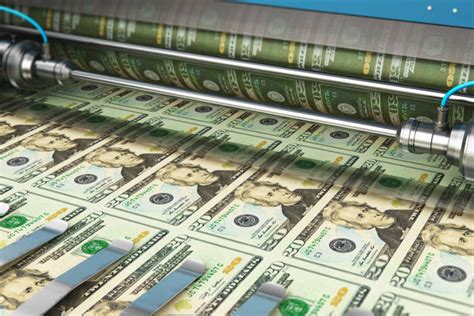
Over the better part of a decade, Bourassa quietly engineered one of the most audacious forgery schemes on record. By his own account, he chose the US $20 bill for its blend of wide acceptance and comparatively weaker security features. He spent literally thousands of hours studying each banknote’s design and sourcing the right materials ** (www.vice.com) (www.businessinsider.in). Using tips from public sources (even U.S. currency websites), he reached out to European factories under false pretenses – sourcing special “cotton-linen” paper and bespoke machinery. In one daring twist, he shipped a custom watermarking machine to a German mill so they would imprint Andrew Jackson’s portrait on the bill stock, and the mill complied without suspicion ** (www.businessinsider.in).
Once set up, Bourassa poured 16-hour days into the presses. Within months his isolated workshop had cranked out virtually indistinguishable $20 bills. Canadian police later described the seized notes as “virtually undetectable to the naked eye,” down to the imitation security stripe and the exact feel of genuine U.S. currency ** (www.businessinsider.com). In fact, experts note that official American note paper is made only at one U.S. mill, making Bourassa’s feat all the more striking ** (www.businessinsider.com). He calculated that a $30,000 order of special banknote paper (with a €30K minimum production run) would be enough for $250M face value. Another $300K went on a high-end Heidelberg offset press. In the end Bourassa collected a literal mountain of fake cash – as he points out, the missing $50 million alone would weigh some 2.5 tonnes and tower about 250 meters high if stacked ** (www.businessinsider.com)**.
Bourassa then did what any businessman would: he found customers. He started with cautious orders – \$100K here, \$$250K there – to prove his work. Once satisfied, clients (mostly overseas to avoid American markets) began buying in blocks of a million at a time, each bundle priced at about 30% of face value ** (www.businessinsider.com)**. On the street, that meant confronting hardened criminals but also testing an IRS record, something he admits weighed on him. “I used to tuck my girlfriend in at night, then head out to work on this,” he said later. “Most of the time I’d come back in the morning with breakfast – that’s the criminal life I led then.”
Not surprisingly, the scheme’s scale caught up to him. By early 2012 an undercover cop had joined the book of clients. The operation continued for a few months until an ill-fated handoff ended it. In May 2012, RCMP and U.S. Secret Service agents raided Bourassa’s girlfriend’s house. Inside they found a printing press, countless fresh bills (nearly \$1 million in fakes at once), and a cache of firearms ** (www.businessinsider.in). The stash was so convincing that Sgt. André Bacon of the RCMP told CBC News it was “highly sophisticated, no doubt about that” when he saw the notes on the table ** (www.businessinsider.com). Bourassa was hauled off in cuffs, but authorities realized fast that something bigger was out there: roughly \$200 million in counterfeits was still missing somewhere.
Arrest, Bargain, and Controversy
What happened next strayed far from any standard crackdown. In custody, Bourassa insisted he was playing a long game. He had a friend – “a total outsider,” as he put it – assigned to guard the hidden hoard. That friend was instructed to surrender the pile all at once ** (www.businessinsider.in)** if Bourassa ever needed leverage. Meanwhile, Bourassa rewarded skillful legal maneuvering by his attorney. After arguing that the initial raid lacked a clear basis, his lawyer managed to stall an extradition to the U.S. and push him back onto Canadian soil. Six weeks after arrest Bourassa was granted bail.
Then came the jaw-dropper. In December 2013, as Bourassa headed toward the courthouse, he calmly told his lawyer: “I have \$200 million, can you do something with that?” ** (www.businessinsider.in). The lawyer – “the best in the world,” Bourassa boasts – took that offer to prosecutors. After weeks of deliberation, a deal was struck. In exchange for the complete surrender of the counterfeit press and the buried bills, all charges were dropped ** (www.businessinsider.in). The only penalty was a modest \$1,350 fine for unrelated drugs found in his vehicle. Bourassa walked out a free man.
At face value, it looked like a legal coup – or a scandal. Skeptics immediately questioned whether justice had truly been served. Local retired RCMP sergeant Pierre Lemieux (57) shakes his head: “I’ve seen my share of deals in vice cases, but this one… man, this feels different. You see a guy print \$250 million? And then he basically hands in the proof and gets off? It’s hard not to feel like the system’s been gamed.” He adds quietly, “It makes you wonder how much’s out there we’ll never find.”
Meanwhile, residents of small-town Trois-Rivières reacted similarly. Marie Beaulieu (32), a school librarian, recalls how she first heard the news. “My jaw dropped,” she says with a rueful smile. “It sounded wound-up like some 80s crime movie. I mean, honestly, who thinks this kind of story could happen here?” At a nearby diner, Luc Dumont (48), a mechanic, summed up the mood: “We’re impatient banking folk – we want honest work, 9-to-5 pay. And here’s some guy printing millions on a printer? It’s like something from an old black-and-white detective film, not real life.”
Aftermath and Unanswered Questions
The outcome left many uneasy and debating real-world implications. On one hand, recouping the \$200 million stash (and the counterfeiting press) kept all that fake cash from ever flooding markets. The Crown’s deal essentially prevented a tidal wave of illicit money. From that perspective, it’s hard to argue no one “won” – authorities removed the threat before more transactions occurred. As one federal report might note, legitimate cash in circulation barely notices the difference: convincing studies by the U.S. Federal Reserve suggest fewer than one in 10,000 bills is counterfeit (www.federalreserve.gov). Losses to everyday citizens are tiny. Executives at the U.S. Secret Service have long prioritized seizures over probe due to just that reason. In that arithmetic, cutting a deal to nab the whole lot may even seem like a cost-effective solution.
On the other hand, it feels counterintuitive. Much of the public (and some experts) wonder if the deterrent was too weak. Why would a criminal stop at six weeks in prison for what could have been decades of damage? Bourassa himself now insists he wouldn’t skirt the law again, comparing his decision to something a savvy “hacker for Google” might do these days. He’s even launched a consultancy to help clients spot counterfeit currency (www.businessinsider.in) – part of his self-described “new mission” to use his skills for good. Yet observers note a contradiction. Bourassa calls the scam “victimless,” describing it as an assault on a faceless government rather than ordinary people. That logic cries out for scrutiny. Critics point out that undermining trust in money can have hidden victims – merchants or banks that unwittingly touch a fake note lose value, and laundering operations might be financed if the bills circulated. As one local banker put it, “If I took that job, I’d still feel nervous knowing hundreds of millions of fake bills were out there somewhere.”
In fact, economists estimate that high-quality forgeries of common notes (like $20s) are very rare in legitimate commerce (www.federalreserve.gov). If any of these had hit circulation, it could have been disruptive in niche circles—despite the Fed’s reassurance that overall impact is usually small. Which side is right remains controversial. Some view the deal as a clever way to preserve the status quo; others see it as a worrying precedent. One thing is clear: Canadian courts rarely see a swindle on this scale concluded so quietly.
For readers, the case offers a cautionary tale about the gap between shocking headlines and courtroom outcomes. It reminds us that in the murky realm of white-collar crime, the justice system might trade outcomes in unexpected ways. It’s also a nod to journalistic skepticism – no matter how incredible a story sounds (an $250M secret, actually married by the accused, and a six-week jail term), sometimes it’s literally true. Yet it still feels like a plot from another era – something out of a Cold War spy novel or an old episode of The Twilight Zone. And I can’t help but reflect on how little I’d have changed the opening scene here; sitting quietly at my desk, sipping my own coffee, I’d have never guessed how the day’s reporting would unfold.
In the end, this strange saga leaves more questions than answers. It highlights the tension between law and pragmatism: authorities chose to recover Billions-in-the-making rather than pursue a decade-long conviction. It poses a puzzle: did justice get done, or merely penciled in? Readers may disagree. But one takeaway seems clear: sometimes, truth is stranger (and quieter) than fiction – and it’s up to us as informed citizens to ponder what it all means.
About the Author