The air smelled of hot pretzels and stale coffee; a reporter’s notebook bore a faint coffee ring while lights hummed above the parquet. A single scuff mark caught the glare like a tiny wound.
There are nights in sport that feel less like competition and more like storytelling — the kind that leaves you arguing with your own memory for days. This was one of those nights: a game that read like a script but kept improvising until the final buzzer.
The moment, the facts
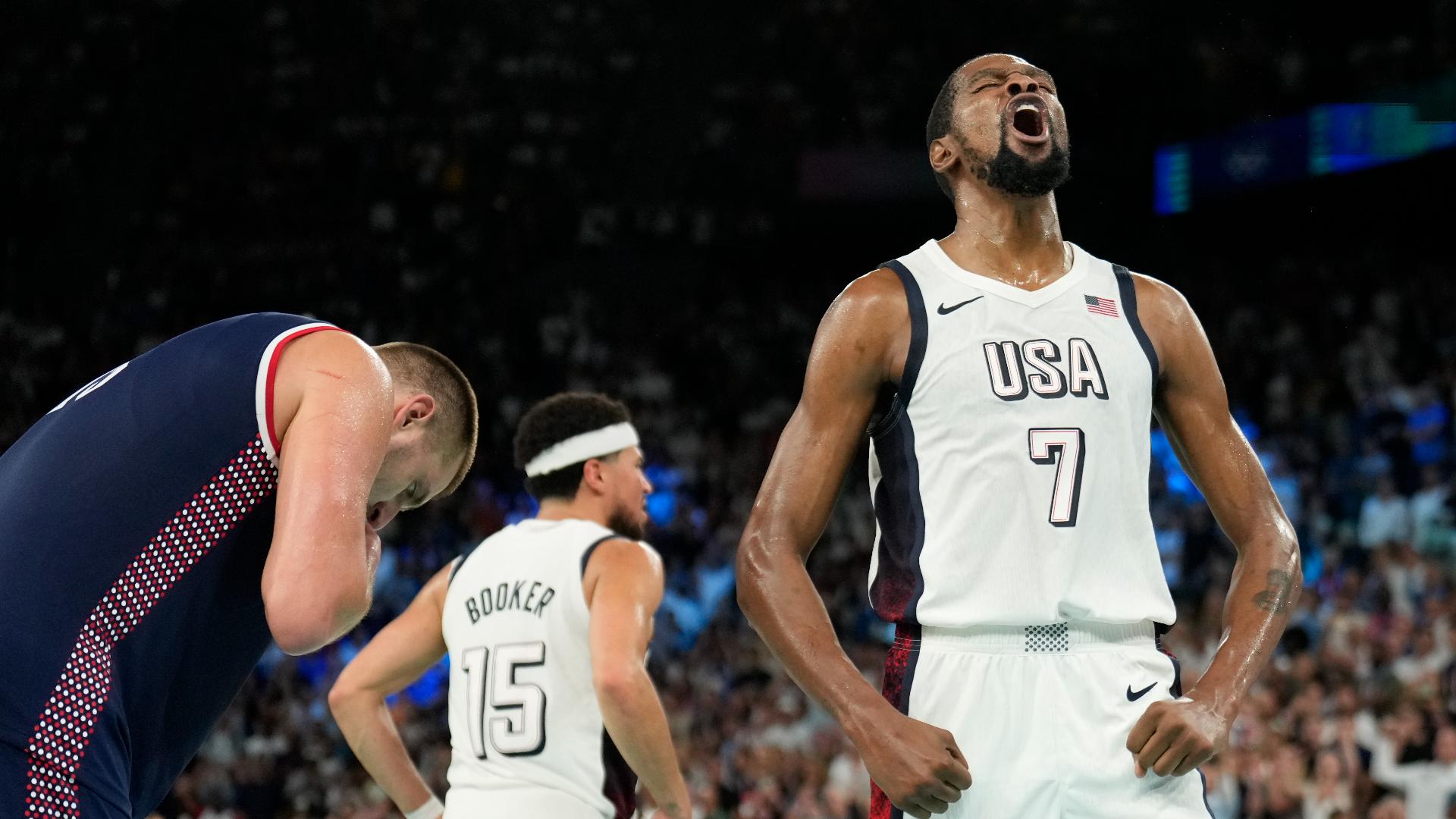
On August 8, 2024, at Paris’s Bercy Arena, the U.S. men’s Olympic team staged a late surge to beat Serbia 95-91 in the semifinals, erasing a deficit that reached 17 points earlier and stood at 13 entering the fourth quarter. The game finished as one of the tournament’s most talked-about showdowns. (fiba.basketball, reuters.com)
Steph Curry detonated for 36 points and nine 3-pointers, a vintage shooting night that flipped the scoreboard and the mood in the building. LeBron James posted a rare Olympic triple-double (16 points, 12 rebounds, 10 assists), while Kevin Durant hit the long two that felt like the exclamation point on the comeback. These numbers were why pundits called it unforgettable. (fiba.basketball, reuters.com)
What turned the game: a surreal two-second passage where the U.S. managed six points — Durant’s three came as Anthony Davis was being fouled, then Devin Booker converted another three on the extra possession — that stretch jolted Serbia and energized the Americans for the finish. Curry’s late 3 gave the U.S. the lead; his free throws sealed it. (apnews.com)
Why this mattered
On the surface, it’s a great sports story: stars delivering on big nights. But the game also underscored the uneasy balance in modern basketball — American star power versus increasingly deep international teams. Serbia, led by Nikola Jokić and Bogdan Bogdanović, shot 15 of 39 from beyond the arc and led for most of the game, illustrating how a well-built international roster can threaten even the most star-studded U.S. lineup. (apnews.com, fiba.basketball)
That tension has larger echoes. The Olympics have increasingly become a staging ground for NBA-level talent from outside the U.S., and this match felt like a milestone: Team USA’s resilience on one hand, and a clearer sign that global parity in basketball is not a future worry but a present reality. (A curiosity I couldn’t shake: the crowd’s chant pattern slipped between English and Serbian in the final minutes, an audible reminder of how international this game was.) (fiba.basketball)
Voices from the stands and the feed
“I was—wow—frozen for a second, like, honest to God, I thought the building might fall apart,” said Marta Lopez, 54, a teacher from Madrid who flew in to watch the tournament. “Then Curry sank that three and I — I couldn’t help it, I jumped so hard my crumpled program flew. People around me were crying, which is wild at a basketball game.”
Ethan Cole, 28, a Brooklyn podcaster who livestreamed the game, added: “You know when you watch an old Bulls clip on VHS? It had that pulse. Only this was Curry and LeBron and KD — I mean, gotta say, it was pure theater.”
Those reactions capture the emotional pull. Kevin Durant called Curry’s showing “godlike,” a label that stuck in postgame chatter and replay reels. (reuters.com)
Moments of doubt and the messy parts
The night wasn’t tidy. Serbia’s players and staff left frustrated; their captain later questioned some calls, and others argued the loss exposed moments when the U.S. defense was disorganized. Sources remain conflicted on whether the game proves the Americans’ depth or the teams’ fragility when games tighten. The reality is likely more complicated — a mixture of elite shotmaking, small officiating margins, and fatigue. (nypost.com, fiba.basketball)
A brief aside: I watched the replay late, scribbling notes while my old tape recorder — yes, an antiquated prop I keep for interviews — sat useless on the coffee table. The image of a foam finger older than the kid waving it felt oddly poetic.
Aftermath and what to watch next
The win sent the U.S. to a final against France where questions about home-court energy and matchup dynamics loomed large. More broadly, the game pushed the conversation about Olympic basketball past nostalgia for past Dream Teams and into a present where every game can be an instant classic or a warning sign. For team builders, the lesson is twofold: assemble talent, yes — but also manage rotations, matchups, and minutes so that late-game chemistry isn’t left to improvisation.
One unresolved question lingers: does this comeback highlight the staying power of once-in-a-generation superstars, or does it paper over systemic vulnerabilities that will be exploited sooner rather than later? Analysts — and fans — will be debating that for seasons to come.
Final thought
Games like this stick with you. They’re the ones people will show grandchildren on grainy phones: “You should have seen it, kid.” I find myself returning to the small things — the scuff on the floor, the coffee ring on the reports, the kid with the faded foam finger — because those are the human breadcrumbs that explain why a ball rattling through a rim can, for a few minutes, feel like something bigger than sport.
Sources used: FIBA’s game report, Reuters coverage, AP summaries informed much of the factual timeline and statistics. (fiba.basketball, reuters.com, apnews.com)
About the Author