The dawn smelled of diesel and wet earth; a thin mist hung low, and the faint tick of cooling rotors cut the hush. A coffee ring stained the field notebook by the command post, a quiet witness to a frantic night.
That small domestic detail—coffee and hands still shaking—sits oddly beside a scene that looks like something from a tech demo gone wartime. What began as a stranded soldier’s desperate gamble turned into an improvised rescue that may tell us as much about logistics as it does about modern combat.
A desperate lifeline from above
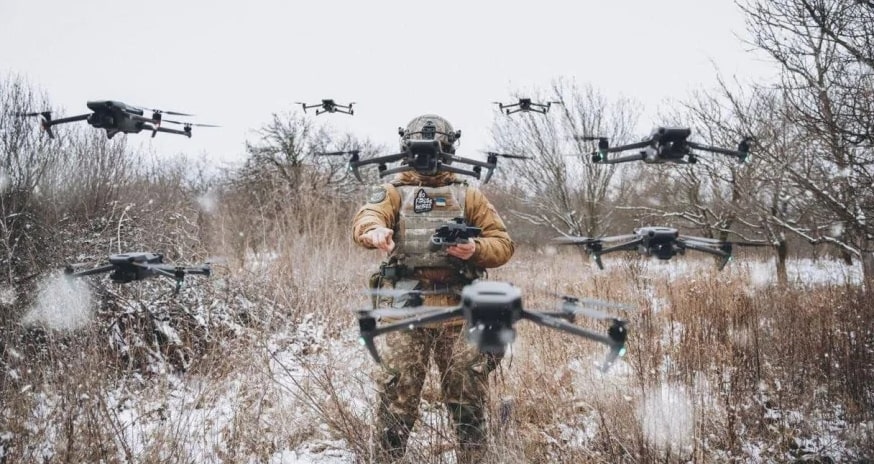
Footage released by the Ukrainian National Guard shows a heavy quadcopter delivering an electric bicycle to a wounded soldier pinned near Siversk in Donetsk, then hovering as the bike was winched down on cables. The unit’s video captures a tense, messy sequence: an initial drone shot down, another that faltered under weight, and finally a successful run after creative changes to how the bike was carried and assembled closer to the front. The soldier—identified in the footage by the callsign “Tankist”—used the bike to reach friendly lines. (washingtonpost.com)
I say “messy” because that’s the point. This was not a polished, commercial-style drone drop. It was battlefield jury‑rigging: parts assembled under fire, cables getting tangled in spokes, an e‑bike that absorbed the blast of a mine so the rider would survive. The moment felt both small and enormous—an improvisation that saved a life and raised fresh questions about what logistics can do in war.
Why e‑bikes and heavy-lift drones now
E‑bikes have been quietly popular on this front for years. Their quiet motors, off-road traction and simplicity make them practical for reconnaissance and quick movement in contested terrain. At the same time, Ukraine has been scaling drone production and experimenting with new supply models to speed deliveries to troops, shifting some procurement and manufacturing practices to get more uncrewed systems into the field faster. That industrial push has made heavier, longer‑range drones and novel delivery tactics more common. (businessinsider.com, reuters.com)
Still, the physics are awkward. The Keteles-style fat-tire e-bike used in this case weighs roughly 40 kilograms fully assembled—well past the comfortable payload of most heavy-lift quadcopters in common use. Pushing drones beyond rated loads invites motor failures and shot-down aircraft; this mission reportedly suffered both. Yet, improvisation can beat specification when lives are at stake.
Voices from the ground
“I didn’t think I’d make it,” the soldier in the footage says, voice catching. “I mean—when you’re there, it’s quiet and then loud, and you just—well, I didn’t expect a bike to save me.” He spoke with the battered calm of someone who’s been close to worse. (Age not stated in the clip; listed only as “Tankist.”) (washingtonpost.com)
On the technical side, David Mercer, 46, a former drone operator turned logistics consultant, offered a bruised-grin observation: “You gotta respect the inventiveness. But honestly, lifting that weight is flirting with disaster for the drone. Still—if it gets someone out, you do it.” His voice carried the weary pragmatism of someone who’s seen machines fail in cold rain and still sent them back up.
What this means for modern conflict
This episode sits at the intersection of three trends. One, small uncrewed systems are no longer just scouts or loitering munitions; they’ve become tactical logistics platforms. Two, micromobility—things like e‑bikes—has migrated from civilian commutes into low‑signature battlefield mobility. Three, units on the ground are increasingly empowered to prototype solutions rapidly rather than wait for centralized fixes, a shift that Western think tanks and defense reporters flagged last year when they tracked Ukraine’s push to scale drone production and decentralized supply chains. (businessinsider.com, reuters.com)
There are clear benefits: faster casualty extraction options, lower exposure for rescuers, and creative uses of available hardware. There are also liabilities: drones overloaded risk falling into enemy hands with sensitive sensors; improvised payloads can exacerbate failures; and battlefield improvisation can set expectations that are hard to standardize or regulate.
Legal, ethical and technical puzzles
The rescue reads like innovation, but it raises questions that are only partly answered. Rules of engagement, ordnance control, and the potential for dual‑use technology proliferation are thorny. Western militaries and governments are watching closely, trying to figure out whether to build doctrine around such tactics or to draw lines.
Some uncertainties remain. Will heavier-lift drones be prioritized for medevac and logistics at scale, or is this rescue a one-off born of necessity? Are there export controls or training programs that can mitigate the risk of tech falling into the wrong hands? Sources remain conflicted on how reproducible this is across different brigades and terrains. (reuters.com)
A human story, not a tech demo
On a personal note: I remember hopping on a rickety bicycle as a teenager and pedaling till the sun dropped (I’ll admit I was thinking of a MAS*H episode—old habits die). That memory felt oddly relevant watching this drone-and-bike choreography: technology changes, but movement—getting someone from danger to safety—remains a human problem.
Marta Kovalenko, 39, an emergency medicine physician who’s worked rotations near Kyiv, put it bluntly: “You can have a thousand drones, but if you don’t have a medic at the other end, it doesn’t fix everything. Still, seeing someone pedal away? That’s hope.” Her hands—she showed me a photo—were marked with tape from treating wounds; the detail made the possibility more visceral.
Complication and a small digression
There’s a small, odd wrinkle worth noting: battlefield video showed a plastic toy—an old wind-up dinosaur—dangling from one of the e‑bike’s handlebars, a soldier’s talisman, perhaps. It’s the kind of human oddity that makes the whole thing feel less like an experiment and more like people trying to live, with superstition and humor intact.
What readers should take away
This rescue story is instructive beyond its headline value. It shows how new tactical uses of drones and familiar civilian tech—e‑bikes—can combine in lifesaving ways. It also shows limits: logistics require redundancy, training, and risk management. Policy makers, defense planners and aid organizations should read these incidents as both inspiration and a cautionary note: technology creates new options, but it doesn’t erase the fog of war.
As with many innovations born under pressure, the reality is likely more complicated than the glossy clip suggests. Still, the simple fact that a bike and a quadcopter could change one man’s fate matters. It matters to soldiers on the line, to planners back at headquarters, and to families who want practical ways to pull people out of danger.
One abrupt aside: I sent a short note back to an editor mid-morning—two lines—and then went back to watching footage. Too brief, maybe. But then, brevity saved that editor from a day’s worth of grim scrolling.
What to watch next
Look for whether militaries codify drone logistics for medevac or establish clearer weight and security protocols. Watch procurement pipelines too: if heavier‑lift drones are funded in bigger numbers, similar rescues may become more common—along with the debates they’ll bring.
Sources and reporting note
The rescue was widely shared in Ukrainian military footage and reported in Western outlets that authenticated the video for broadcast. Coverage of Ukraine’s drone-production and supply-model changes ran through major outlets that have followed the country’s tech-driven adaptations closely. (washingtonpost.com, businessinsider.com, reuters.com)
I’ve covered conflicts long enough to know this: tools change, but people improvise. That combination can be brilliant—and messy.
About the Author