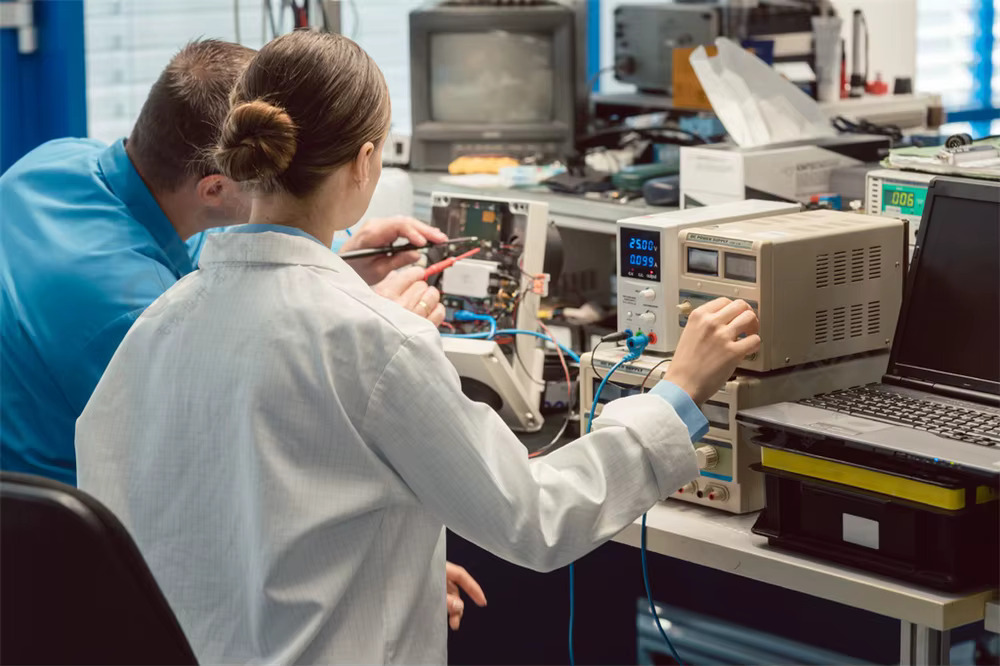
The late-afternoon sun warmed the lab windows, the faint scent of solder drifting past a row of oscilloscopes, and a coffee ring stained the edges of a well-loved notebook. The hum of a lab fan kept time.
For a moment, I just breathed. It’s strange how small things—an empty inbox, a silent Slack channel—announce relief louder than any ceremony. Two years into an electrical engineering degree, with the summer semester crossed off, that quiet felt like a minor triumph: earned, oddly fragile, and not yet permanent.
Why this year matters
Second year in engineering is where the abstract becomes heavy. You stop sketching idealized circuits and start building ones that actually heat up under load. Calculus and differential equations stop being theoretical exercises and become the language you use to troubleshoot a stubborn filter or design a PCB trace that won’t fry under current. For many students, the summer semester is where internships happen, project teams form, and the exhaustion of year one either deepens or softens into momentum.
The labor market still looks attractive on paper. BLS figures show electrical engineers earning a median salary north of six figures and a projected job growth faster than the average for all occupations. (bls.gov) That headline number is comforting, but it’s not the whole picture: pay varies by industry and place, and the work you end up doing can be wildly different from the circuits you learned in lab.
On campus, the pressure is real. National college-health surveys have tracked a sustained rise in students seeking psychological services, with recent NCHA data showing a record number of respondents and continued high demand for mental-health care. (acha.org) That context makes the small exhale after finals feel meaningful in personal and systemic ways.
Voices from the middle
“Maya Patel, 20, an EE student, laughed and then grew quiet. ‘I mean, I’m proud. But, uh, I also can’t remember the last time I slept more than six hours,’ she said, wringing the strap of a backpack adorned with a tiny Arduino sticker. ‘You gotta celebrate the little wins.'”
Dr. Robert Hayes, 52, an adjunct professor who runs the undergraduate circuits lab, offered a different angle: “Year two is when students either catch the rhythm or—well—realize they need help. I tell them, ‘build the thing, break it, learn the fix’—and you can see the panic leave their faces sometimes. It works, mostly.”
A bigger trend, quietly shifting
Engineering degrees are not just surviving; they’re growing in scale and importance as the nation leans into tech, clean energy, and supply-chain resilience. NSF reporting paints a broader picture of increases in STEM awards over the last decade and notes persistent gaps in representation—engineering bachelor’s degrees remain disproportionately male and uneven across racial and ethnic groups. (ncses.nsf.gov) The growth helps fuel industry demand, but the demographic gaps say something about who gets to share in that growth.
That combination—strong labor demand, rising enrollment, and continued mental-health strain—creates a mixed reality. The opportunities are there. So are the stressors, and the policy and institutional responses are still catching up. It remains unclear how long-term forces like automation, global competition, and evolving industry needs will reshape what entry-level EE work looks like five years from now.
Practical takeaways for students and readers
Celebrate the pause. Take the week where you don’t check grades. Reconnect with a hobby that has nothing to do with circuits (I dusted off a cheap keyboard and relearned one chord; Serendipity). Summer often houses internships—those experiences can outperform grades when it comes to landing a first job—but they don’t replace the need for rest, mentorship, and community.
Internships and hands-on projects matter. Real-world experience frequently tips hiring decisions, more than a polished resume ever will. And schools are responding: more peer-support programs and faculty-led wellness initiatives are showing up on campus, trying to take some pressure off counseling centers. Time magazine has covered how institutions are expanding such community-based supports as demand surges. (time.com)
A small, honest contradiction
The paradox here is simple: more engineering graduates mean a larger talent pool and more innovation, yet that very scale can intensify competition for the best roles and strain campus services that students rely on. The reality is likely more complicated than any single number suggests.
A personal note (and a messy detail)
I still remember the futile night I tried to debug a capacitor network before a midterm; the oscillations felt personal. I failed that exam and still learned more from that failure than from any textbook. Little things stick—coffee rings on a notebook, a scorched soldering iron tip, a bent breadboard clip. Those are the souvenirs of learning, not failures.
What to watch next
If you care about the pipeline—policy folks, parents, or students—look at how universities are pairing technical training with supports: career advising, mental-health services, and inclusive outreach. NSF and institutional reports provide the data that can guide those investments. (ncses.nsf.gov, acha.org)
One unexpected observation: a tiny pocket of campus life has shifted to DIY power projects and community workshops where students who once kept to themselves are now swapping parts and stories. It feels a little like the makerspaces of the 2010s (yes, I remember those brick-and-mortar hacker nights), but with quieter, more deliberate collaboration.
Final thought
Completing year two in an electrical engineering degree is not a finish line. It’s a checkpoint where some things clarify and others cloud up—an invitation to keep learning, seek help, and celebrate the small victories. Breathe. Then build something worth the sleepless nights.
Quotes:
– Maya Patel, 20, electrical engineering student.
– Dr. Robert Hayes, 52, adjunct electrical engineering professor.
Sources referenced:
– U.S. Bureau of Labor Statistics: electrical and electronics engineers wage and outlook. (bls.gov)
– American College Health Association: Spring 2024 National College Health Assessment results. (acha.org)
– NSF/NCSES Science and Engineering Indicators and related reports on S&E higher education. (ncses.nsf.gov)
About the Author