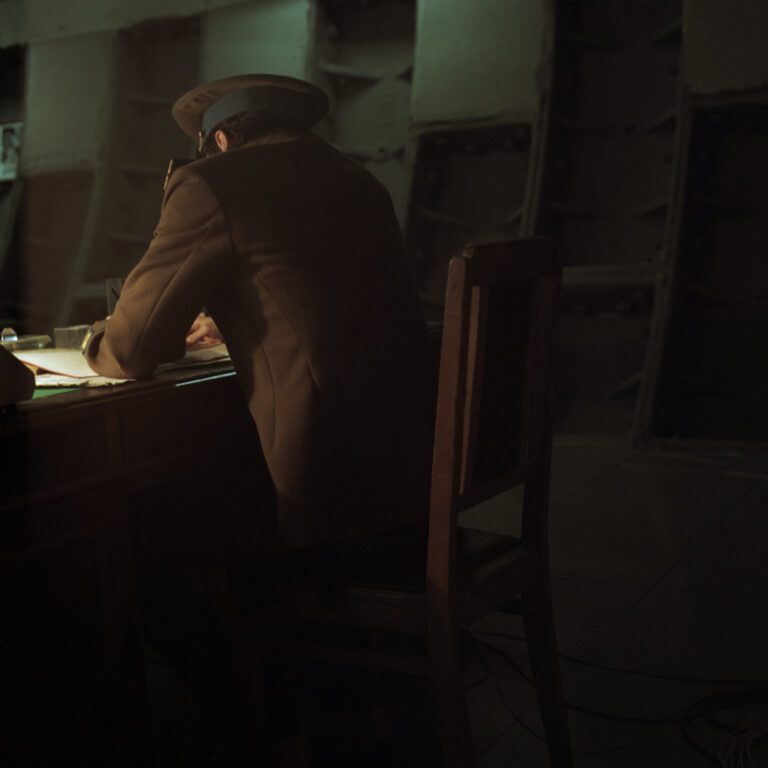
A damp Hainan morning: salt tang in the air, gulls distant, and the faint scent of aviation fuel. A jagged metal fin, smeared with mud, jutted from a MiG’s fuselage like a stubborn splinter.
That image stuck with Cold War engineers and spies alike. Small things change big balances. A missile that failed to detonate turned into a decades‑long lesson about technology transfer, improvisation, and the stubborn arithmetic of war.
What happened, in plain terms
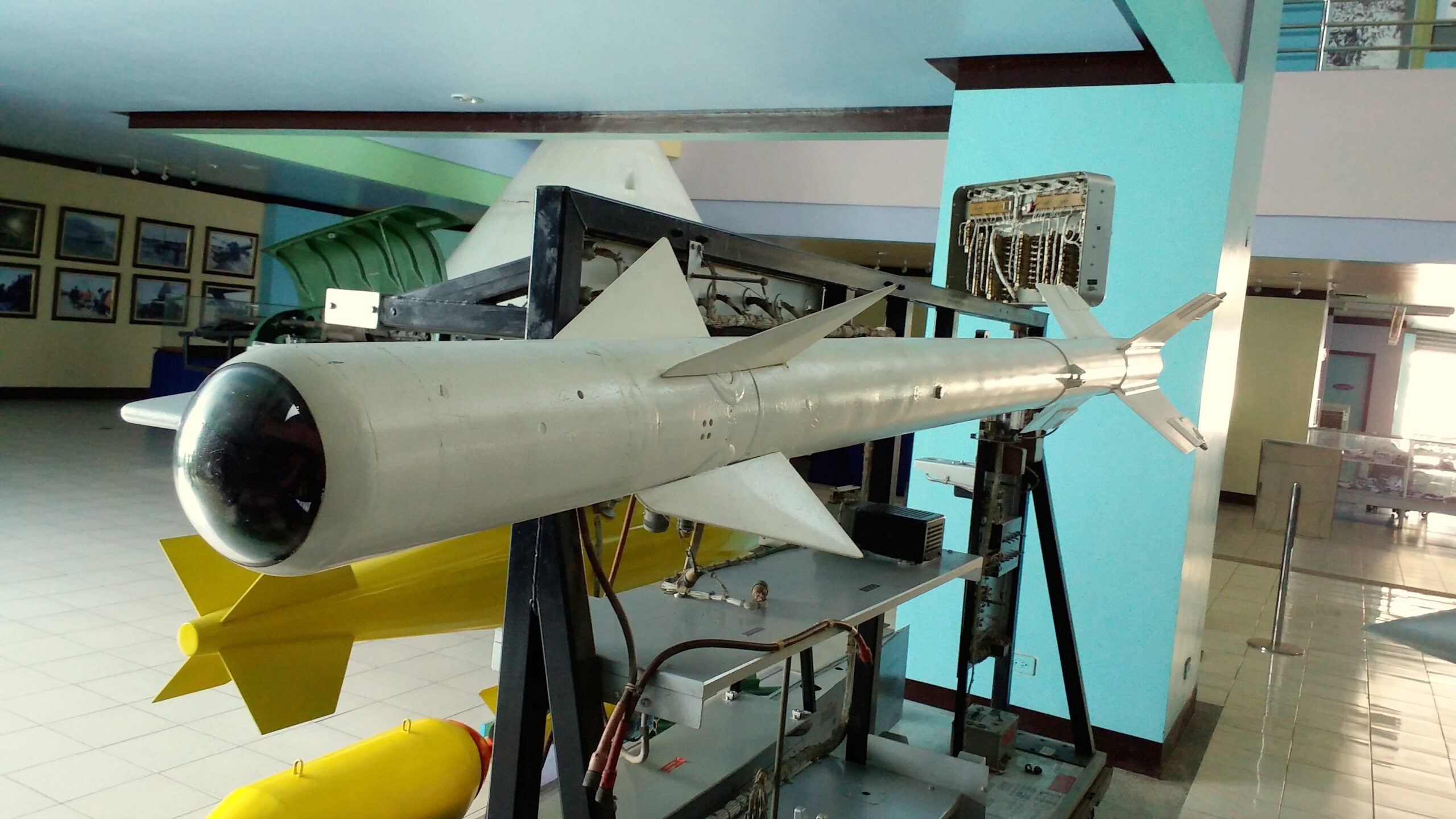
In the late 1950s the U.S. Navy’s early heat‑seeking Sidewinder—lightweight, cheap, and remarkably effective—was becoming the standard short‑range air‑to‑air missile. In the cramped, tense air battles sweeping the Taiwan Strait area, at least one of those early Sidewinders struck a Chinese MiG without exploding. The missile remained lodged in the aircraft, and the pilot landed with the unexploded weapon still attached.
The plane and its awkward passenger were taken where Soviet engineers could study them. Within months, the Soviet bloc produced a close copy that entered service under names like K‑13 (or R‑3S in some documents); NATO jargon called it the AA‑2 Atoll. The copy didn’t merely imitate shape and size. The Soviets replicated key guidance and seeker elements well enough that the K‑13 became a mainstay across Warsaw Pact and client air forces for years afterward.
Why this mattered
Weapons are rarely just hardware; they’re knowledge. An intact, unexploded missile is a trove: seeker head, cooling systems, gyros, wiring, and the little quirks that make one design work in the real world. For the Soviets, getting one of these early Sidewinders was like receiving a full, annotated instruction manual—minus the English captions.
The practical payoff was immediate. The K‑13 let Soviet and allied pilots face Western fighters with a comparable short‑range weapon, changing tactical calculations across many theaters. The leap was not infinite, but it was decisive: rather than reinventing the seeker and propulsion systems from scratch, engineers had a working reference. That sped development, cut costs, and tightened the technological gap—just when both sides could least afford surprises.
Voices from the edges
“Elena Kostin, 69, retired aerospace technician who apprenticed at a Moscow design bureau, remembers the mood: ‘You could feel it—like finding a secret recipe in your neighbor’s kitchen. We needed to know if it was magic or just clever. We weren’t trying to be rude, but… well, you wouldn’t throw away a cookbook.’”
“Mark Donovan, 54, a freelance Cold War historian, told me, ‘Look—I’ve read the files and talked to pilots. There’s a thing about war: treats you to odd luck. A dud warhead, a brave pilot, and suddenly you’ve got a new missile. I mean, it’s almost cinematic—like an old Twilight Zone episode.’”
Technical and political context
The Sidewinder’s design philosophy—simple, rugged, and inexpensive—was central to its appeal. Early models used passive infrared seekers that homed in on engine heat. Those seekers were not easy to duplicate from scratch in the late 1950s if you lacked direct examples to dissect. Possessing a complete unit meant engineers could trace wiring, test materials, and figure out how to fabricate the cooling needed for the seeker’s infrared detectors.
This was not a one‑off curiosity. Cold War espionage, defections, and battlefield recoveries supplied many technologies to both camps. The recovered Sidewinder is a neat, clean case study of how battlefield serendipity can alter procurement and doctrine. Reuters ran retrospectives years later that highlighted similar episodes where a single piece of equipment reshaped design programs, and historians have pointed to the K‑13 episode as one of the clearest examples.
Uncertainties and contradictions
Exactly who recovered the missile, and where the decisive transfer of information occurred, remains a little fuzzy. Chinese, Soviet, and Western accounts all differ in emphasis—who did the hands‑on reverse engineering, how much was Chinese versus Soviet work, and how quickly the knowledge spread. Sources remain conflicted on precise timelines; the broad outline is clear, the fine print less so. The reality is likely more complicated than the tidy “one missile → one copy” story that’s often told in textbooks.
A small human detail
At a dusty service tent I visited once, a retired mechanic showed me a radio log with coffee rings on it—brown, smeared—like most war records: utilitarian and accidental. Little things tell you how much improvisation underlies grand strategy. I kept that log as a mental souvenir (and yes, I hoard odd papers; guilty as charged).
The bigger ripple
Beyond technical mimicry, the episode shaped doctrine. If both sides can field similar short‑range missiles, dogfight tactics shift: you see investments in countermeasures, chaff, and tactics to deny a missile a clean “hot” target. Over time, that led to new avionics, stricter infrared suppression on engines, and deeper attention to missile seeker counter‑tech. Pew Research polls about public faith in military superiority aren’t about this specific event, but they do reflect a common consequence: once perceived technological advantage narrows, political leaders face different domestic pressures over military spending and alliances.
A small detour
Oddly, a captured missile also touched cultural turf. Years later, aviation museums would display K‑13s and Sidewinders near one another, an exhibit that—without much ceremony—told the whole Cold War story in two neat missiles facing each other on pedestals. That still pulls people in more than a slide deck on procurement budgets.
What this teaches us now
Simple lesson: technology proliferates quickly when adversaries get hands‑on examples. Modern parallels are obvious—computer code, drones, and chip designs spread in similar ways. Back then it was a chunk of metal; now it can be a line of code pushed to a mirror server. For policymakers and planners, the episode is a reminder that hardware survivability and information control matter as much as headline procurement numbers.
One last human quote
“I gotta say,” Elena mused, with a small laugh, “we were proud in a dirty sort of way. We built something that worked. But you also felt the weight—what it meant if the other side had done the same.” She paused, fingers tracing a rusted schematic in her mind. “It changes how you sleep.”
A minor abrupt note: the missile was small, but the consequences were not.
This story gives you a sharper lens for the Cold War’s quieter mechanics: the chance encounters, the technical curiosity, and the way a single dud can end up re‑arming a continent. Which, from my years covering defense beats, is exactly how many strategic turns get set in motion—unromantic, oddly domestic, and stubbornly consequential.
About the Author