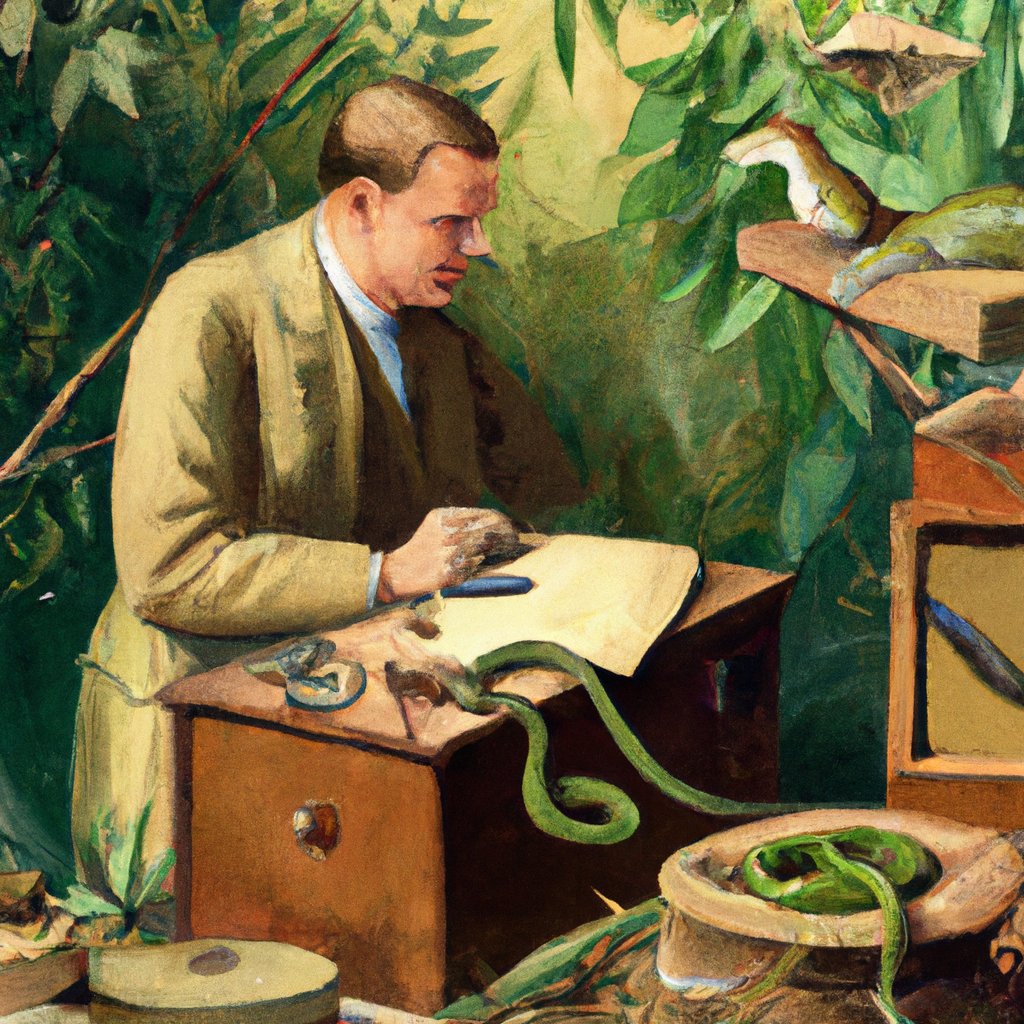
Grab a cup of coffee, because I’ve got a fascinating tale to share with you. It’s one that blends science, bravery, and tragedy—all pivoting around a curious creature with a name as striking as its story. This is the tale of Karl Patterson Schmidt, a world-renowned herpetologist, who, in a twist of fate, met his end at the fangs of a boomslang snake. And in his final hours, he made a decision that still echoes in the annals of science.
Who Was Karl Schmidt?
Let’s start with the man himself. Karl Schmidt was more than a scientist who studied reptiles and amphibians; he was a passionate adventurer. Born in Lake Forest, Illinois, in 1890, his career path was anything but ordinary. By 1922, Schmidt joined the staff of the Field Museum of Natural History in Chicago, where he quietly became one of the leading experts in his field. His expertise wasn’t just about cataloging species; it was about understanding them deeply.
The Boomslang: A Snake Unlike Others
Now, the antagonist of our story—the boomslang. Found mainly in sub-Saharan Africa, the boomslang is an arboreal snake, meaning it spends a lot of time in the trees, probably contemplating life from above. Despite its serene name—boom is Afrikaans for “tree,” and slang means “snake”—it packs a medically significant bite. The venom disrupts blood clotting, leading to internal bleeding, and it’s known for being particularly slow-acting, which is where Schmidt’s professional curiosity got the better of him.
The Bite and The Last Observations
It was 1957. Schmidt was examining a young boomslang at the Chicago Natural History Museum when it bit him on his thumb. What’s striking—and perhaps perplexing—is Schmidt’s decision to not seek medical help immediately. Instead, like the scientist he was, he began documenting each symptom methodically: the chills, nausea, and the gradual bleeding from his mucous membranes.
Imagine logging your symptoms as a way to contribute to science despite knowing what’s at stake. It shows an unwavering devotion, but also underlines the early attitude toward venomous bites at the time—a belief that small quantities of venom were not lethal. A miscalculation, but one made with a nobility of purpose.
A Legacy Measured in More Than Time
Despite the fatal outcome, Schmidt’s meticulous notes provided valuable insights into the effects of boomslang venom. In essence, Schmidt contributed to snakebite research until his last breath. Today, his notes are a chilling yet instructive window into the methodical mind of a scientist dedicated to discovery and understanding.
His story reminds us of the perennial tension in science between curiosity and caution. Modern herpetology owes much to Schmidt and others like him, who’ve bridged gaps in understanding at great personal cost.
What Can We Learn?
Designing safety protocols around handling venomous creatures is crucial—one of the main lessons emphasized after Schmidt’s tragic death. Today, researchers are equipped with antivenoms and follow rigorous safety procedures, all part of a legacy stemming from earlier lessons learned the hard way.
This narrative also speaks to the heart of scientific inquiry. It’s about a relentless pursuit of knowledge and acceptance of risks, albeit sometimes with unintended outcomes.
Conclusion
Karl Schmidt’s encounter with the boomslang paints a vivid picture of human curiosity—its splendors and its perils. This tale is not just a historical recount but a reminder of the courage to venture into the unknown. Next time you confront a challenge, large or small, remember Schmidt’s courage, but balance it with the lesson that understanding our boundaries is just as vital as crossing them.
And there you have it. A blend of human determination and the unpredictable twist of nature. May this story inspire a balanced approach to curiosity in all the domains life throws at us—whether or not they involve slithering creatures!
About the Author