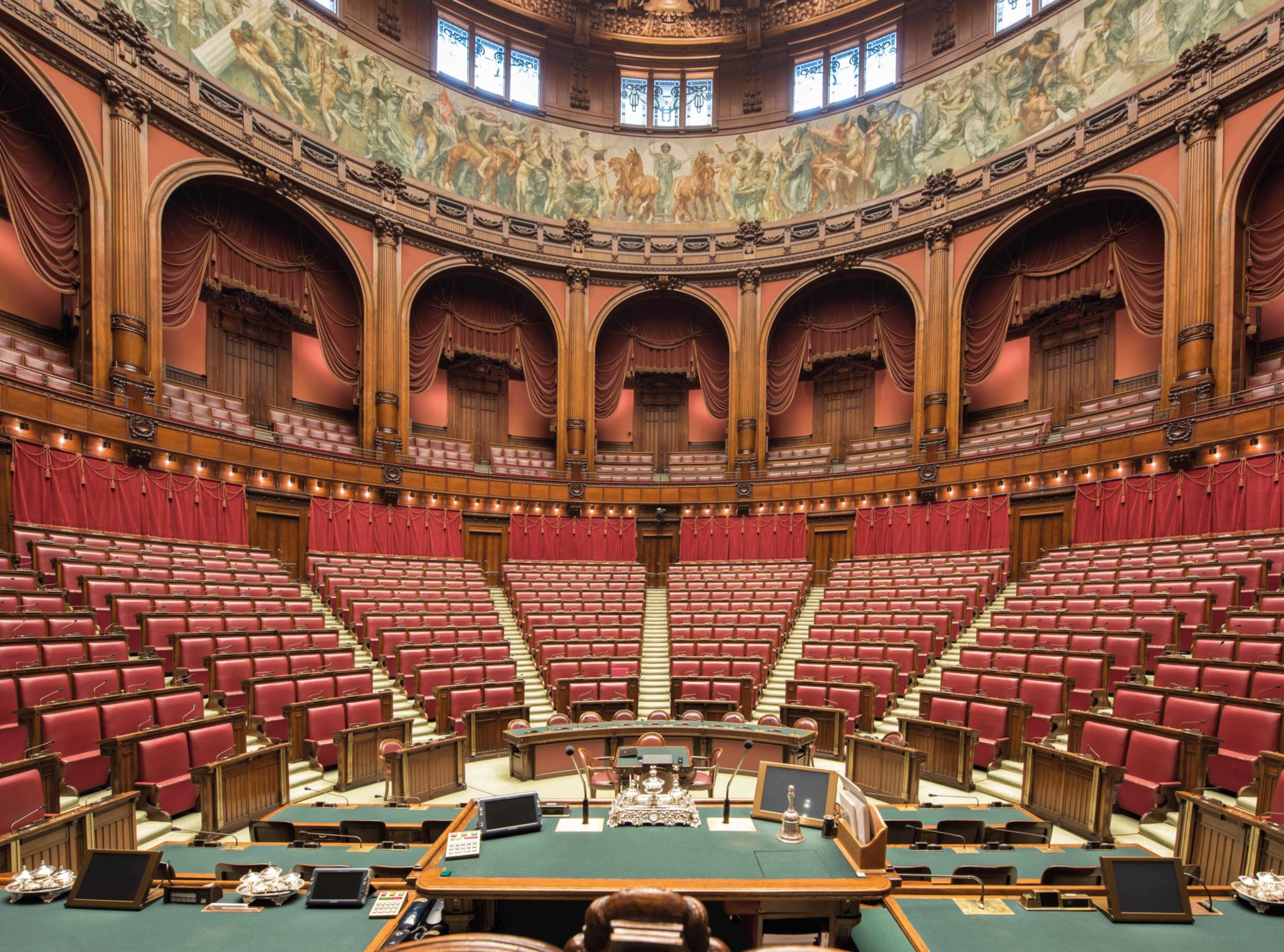
Beneath Strasbourg’s vaulted ceiling, amber light spills onto polished desks. The soft clink of a coffee cup echoes among hushed voices. Nearby, a tiny pink polka-dot shoe peeks from an open policy binder.
Even in this grand chamber, the scene feels out of place. But the juxtaposition hints at something familiar: motherhood in the halls of power. It calls to mind Italy’s Licia Ronzulli, the Forza Italia MEP who, back in 2010, made headlines by showing up with her infant daughter tucked in a sling during a plenary vote (euobserver.com). At the time, Ronzulli insisted it was a maternal act, not a political stunt (euobserver.com). Yet the images of lawmakers debating with a baby in attendance raised a broader question, one that remains urgent today: how do working parents, especially mothers, fit into institutions built for suits and debates?
A Baby in the Chamber
Ronzulli’s story wasn’t a one-off publicity stunt. On 22 September 2010, just 44 days after giving birth to baby Vittoria, she wheeled her daughter into the European Parliament and let the cameras roll (en.wikipedia-on-ipfs.org). For years after, mother and toddler were a fixture in Brussels: journalists snapped photos of Vittoria, doll in hand, nestled on her mum’s lap as official votes were cast. Ronzulli called it a “maternal gesture” – a way to raise awareness of working-mother struggles – and even convened cross-party talks on parental support (www.theguardian.com). Some colleagues chuckled at the novelty (one jokingly whispered it felt like an episode of I Love Lucy dropped into a budget meeting), but for working parents watching from outside, it was stirring and inspiring. As one veteran EU aide quipped, it was as if “Sunday school and plenary sessions had collided – which, it must be said, seems a stretch, frankly.”
Yet not everyone cheered. Critics in the press warned that a voting chamber isn’t a place for childcare. Was it undermining the solemnity of the assembly? A few pointed out that the European Parliament still had no formal parental-leave provisions for MEPs. (Under existing rules, an MEP can ask to skip sessions for a few months around childbirth, but there’s no guarantee of remote voting or paid leave.) The mixed reactions highlighted a tension: some saw Ronzulli’s choice as heartwarming and practical, while others saw it as an ego play or a betrayal of decorum. Still, the image endured – and Vittoria, cradle and Teletubby toy in tow, became an unlikely poster child for career women’s rights in Europe.
Work and Motherhood: A Tough Choice
Ronzulli’s stunt tapped a deep vein. Across Italy and the EU, many women face a stark work-family dilemma. In fact, eurostat data underscore the gap: among women aged 25–54, 77% without children are employed vs. just 72% with children (ec.europa.eu), widening the gender gap after motherhood. Italy’s numbers are even more dramatic. Reuters reports that Italy’s female employment rate is now about 52.6% – the lowest in the EU – and roughly one in five Italian women under 50 quits work after their first child (www.investing.com) (www.investing.com). This isn’t a coincidence. Factors like high childcare costs and inflexible hours push many new mothers out of the labor force. One recent government study found over half of those women saying it was simply “impossible to combine work and childcare” (www.investing.com).
No wonder this MEP’s choice struck a chord. “Watching her vote with her daughter, as a working mom myself, I felt a mix of pride and a knot of anxiety,” says Lucia Ferri, 38, a marketing manager in Milan and mother of a 2-year-old. “On one hand, it was inspiring – made me think maybe these institutions can adapt to real life. But at the same time I worried, is this the only way to get attention? Should we really be scrambling for loopholes?” Her voice trails off as she considers it. “I gotta say, though, it hits close to home. I remember carrying my kid into a morning staff meeting once because daycare fell through – it felt like a huge hassle. Seeing it on TV in Parliament felt surreal.”
Others were resolute. “Honestly, I think she did the right thing,” says Alvaro Bianchi, 45, a high-school teacher from Rome. “Sure, it was unusual – not your typical schoolteacher move. But those photos made people talk about something important. In our country we love tradition, but we have first-time moms dropping out left and right. If bringing a baby into a hard place like that can make someone finally give us decent policies, why not?” He pauses, almost laughing. “It was a bit like seeing a scene from I Love Lucy, except it wasn’t a comedy. It showed the reality: motherhood doesn’t wait for a lobbyist round to end.”
Even with such sympathetic voices, the reality is complicated. Italy now has its first female prime minister and talk of improving work-life balance, yet the change has been slow. For every Ferri or Bianchi nodding in agreement, another Milanissa, 42, shakes her head. As Milanissa Rossi, 42, a graphic designer and mother of one, puts it: “I admire her guts, truly. But if someone did that in my company boardroom, I don’t know how the bosses would react. Part of me felt it was a bit of a stunt, to be honest. Like, a baby at your desk in a law firm? Hmm.” Her tone is rueful. “It’s inspiring, sure, but also uncomfortable, because it reminds you how far the rules haven’t caught up. We still ask parents – mostly women – to make a choice that feels impossible.”
The Policy Gap in Europe
It isn’t just Italian workplaces that strain working women. The European Parliament itself long lacked comprehensive maternity leave for its members. That’s finally shifting: in mid-2025, Parliament President Roberta Metsola announced plans to overhaul absences for new parents. “No elected representative should have to choose between their mandate and parenthood,” she said, framing the reforms as making the Parliament “one of the most modern and inclusive” bodies in terms of maternity rights (www.europarl.europa.eu) (www.europarl.europa.eu). The proposed changes would codify the existing practice – an MEP can be excused up to three months before and six months after a birth – and even allow proxy voting for those on leave (www.europarl.europa.eu).
That would be a sea change. For years, European politicians had only makeshift options. Some took excess dirtied ballots and let their kids mark them; others quietly missed sessions. The current proposal would formally recognize the overlap of work and family. Still, details remain up in the air: how will proxy voting work in practice? What about paternity leave or childcare during travel to Strasbourg? Observers note the language in 2025’s announcement is bold, but the follow-through will matter. As one EP research brief dryly noted, few national parliaments even allow members to keep earning their seats while formally on leave (www.europarl.europa.eu). The path from promise to practice is likely bumpy.
Meanwhile, Italy’s broader political debates swirl around these same tensions. The government acknowledges the urgency (the Bank of Italy has even warned closing the gender gap could lift GDP by 10% (www.investing.com)), but budgets are tight and reforms slow. There’s talk of more nursery places and family subsidies, but critics say the measures still fall short. In light of that, Ronzulli’s baby – now a preschooler – becomes more than a cute press photo; she’s a symbol of unfinished business. The clash of applause and skepticism remains loud: some see the need for dramatic gestures, others want serious policy.
Voices from the Floor
Across Europe, reactions still vary. In a recent Brussels cafeteria, Helena Novak, 35, a policy assistant, overheard colleagues debating the old story over espresso. “One joked, ‘Hey, maybe she should have brought a stroller next time’,” Helena recalls—half laughing at the memory. “But another colleague said, ‘Honestly, that lady reminded us of ourselves. That could have been any one of us up on a podium.’” Helena is a single mother. She shrugs: “I don’t know what I think, honestly. It was touching but also bizarre. What made me pause was this little pink shoe on the table. It hit me later that this wasn’t for social media attention – it was, at least partly, a cry for help. That’s what I read into it.”
In Italy, debates online have also spread. Social media posts alternately celebrated Ronzulli as a heroine or mocked the spectacle. One tweet summed it up: “Cute, but who held the cat votes?” (the allusion being a politician checking boxes for her pet). It went viral but drew heated replies. Some mothers shared stories of crazy work days—firing up a grant proposal while balancing a baby on the forearm or pumping breastmilk in an office bathroom. Others pointed out that for politicians, there’s always a political play; maybe this infant-in-lap was carefully timed to Madison Avenue, maybe not.
The reality today is likely more complicated than any clickbait. Yes, Europe is inching toward better parental rules in legislatures. Yes, public empathy for juggling careers and kids is rising – recent European surveys show most voters now expect more family-friendly workplaces. But at the same time, only a small fraction of governments mandate full paid leave or on-site daycare. Italy’s own reforms lag behind Nordic models. Giovanni Marchetti, 50, a factory manager and father of three from Turin, speaks in paradoxes: “Look, I’d love to see every workplace like Parliament where you can vote by iPad from home so you can be with family. But I also know, if my guys saw me with a baby on the baton, they might think I’m shirking! It’s a tough balance.” In his voice one can hear the country’s split: admire motherhood, but still cling to old ideas of professionalism.
For readers, the lesson is clear but layered. The image of a mother voting with her 7-week-old on lap was not just a cute story, nor was it mere grandstanding. It was a flashing neon sign about unfinished reforms. In practical terms, one baby did not change policies overnight. But symbolically, it forced millions to ask whether political life should bend to real life. It gave life to statistics: Italian women leaving work after childbirth, the lagging female job rate, and the fact that even lawmakers had to break protocol. These figures — for example, nearly one in five new mothers quitting work (www.investing.com) — are what truly add up.
Angela Merici, 39, an analyst who edits a fact-checking newsletter, sums up the bigger picture: “We live in the digital age where visuals go viral and then get forgotten. But her gesture isn’t a world-changer by itself. It’s the long shadows of inflexible systems that need to change. The real news is whether the Parliaments and companies follow through. The MEP and her child made us notice something we all already knew: the status quo isn’t sustainable.”
In the end, that little pink shoe on the bench is a quiet protest and a prompt. It reminds us that behind every debate over tariffs or speeches – even in austere places built for politics – there are people with families. For us readers, it’s a cue to think critically. The next time an image goes viral, it’s worth asking what deeper debate it reflects. In this case, the takeaway isn’t just about one MP; it’s about why thousands of mothers feel they still face an impossible career-versus-children choice. As laws catch up (or don’t), the memory of that baby in the chamber remains a tiny but stubborn hope: that once and for all, parenthood won’t have to pause for work – or vice versa.
Image prompt: A photo-realistic editorial-style image inside a grand European Parliament chamber: a well-dressed woman in her late 30s (European politician) sits at a desk holding a toddler girl with a pink bow on her head in her lap. Warm afternoon light filters through tall arched windows, casting soft shadows on wooden desks and leather chairs. The mother gently cradles the child, both looking serene. In the background, rows of empty benches and a few blurred figures in suits suggest a legislative session. The mood is calm and human, with golden lighting and a shallow depth of field focusing on the mother and child, capturing an intimate, warm atmosphere.
About the Author