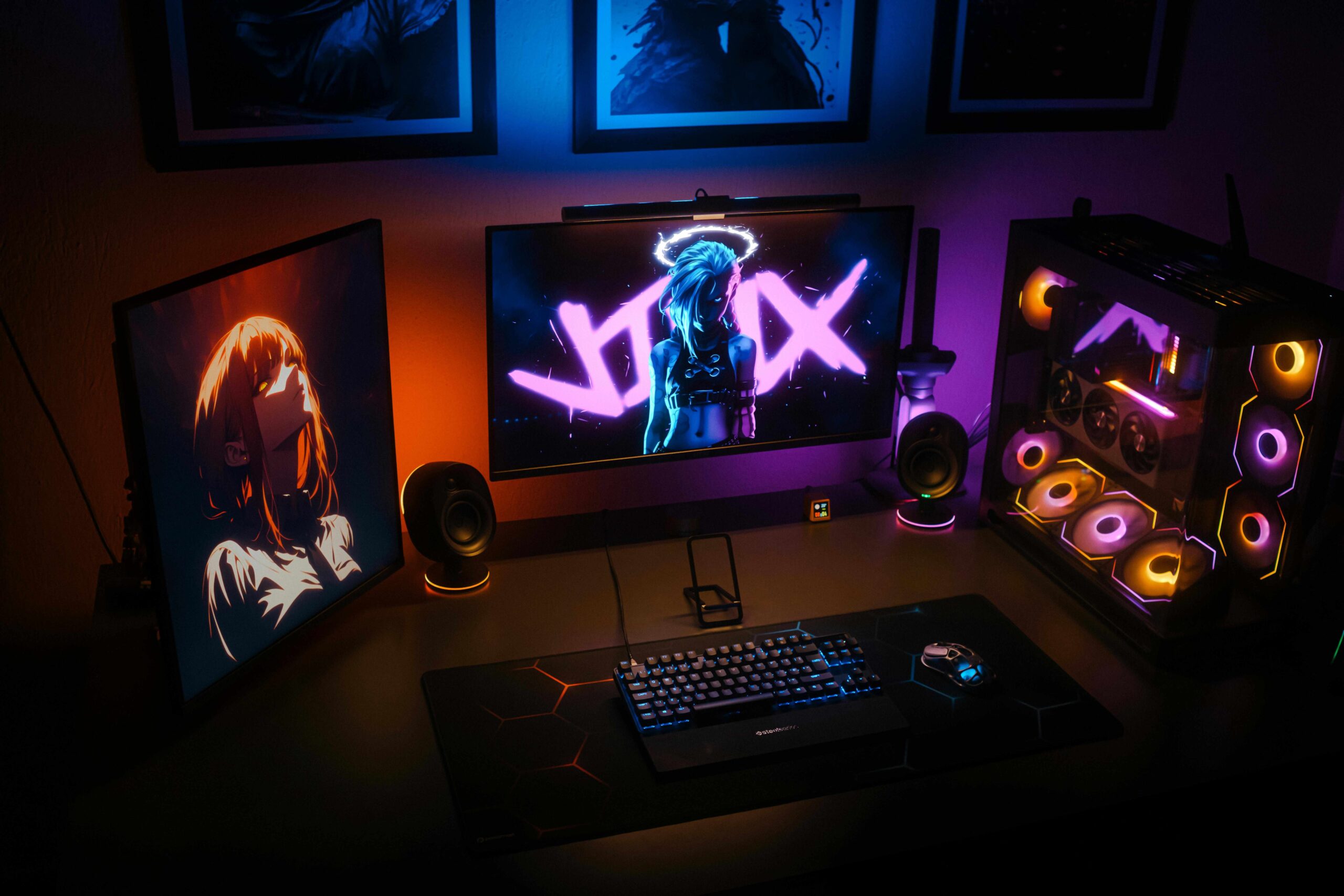
The showroom smelled faintly of solder and burnt coffee, a coffee ring marred the demo table; a tiny blue LED blinked as a technician nudged a glossy 27-inch panel. The hum of conversation felt like static.
There’s a familiar, almost religious devotion to speed in tech—faster chips, faster networks, faster refresh rates. It pushes product cycles and marketing copy alike. But every so often a leap asks a sharper question: faster for whom, and at what cost?
A new peak in refresh rates
LG Display rolled out what it calls the world’s fastest OLED monitor panel at K‑Display 2025: a 27‑inch QHD panel with a native 540Hz refresh mode and a Dynamic Frequency & Resolution (DFR) trick that can push frame rates to 720Hz by dropping resolution to 720p. The company points to new fourth‑generation OLED tech—Primary RGB Tandem—that helps reach peak brightness levels far above past OLED monitors, with claims of up to 1,500 nits and 99.5% DCI‑P3 coverage for this gaming panel. (news.lgdisplay.com, tomshardware.com)
Put plainly: the panel can show either very high resolution at a still‑staggering native speed, or shave pixels to chase the highest frame rates. That tradeoff is central to what makes this announcement eyebrow‑raising rather than merely incremental. (tomshardware.com)
What the specs mean in practice
Refresh rate used to be a simple number on a spec sheet that mainly mattered to competitive players. CRTs in the 1990s taught early adopters how fluid motion could feel; LCDs later promised the same with fewer quirks. In recent years, the arms race climbed from 144Hz to 240Hz, then into the hundreds—300s, 480s, and even 500Hz prototypes from rivals. LG’s step past those ceilings leans on both materials science and a somewhat old‑fashioned compromise: sacrificing pixels for frames. Tom’s Hardware dug into the demo and described the dual‑mode behavior—540Hz at QHD, 720Hz at HD—while highlighting the new tandem stack that yields brighter images than previous OLED panels. (tomshardware.com)
“Look, I’m not gonna pretend it doesn’t impress,” said Marcus Lee, 22, a semi‑pro FPS player who’s spent late nights chasing every millisecond he can. “In the clutch, if that extra frame or two helps? Yeah. But on a 27‑inch screen at 720p? My eyes… they notice the fuzz. I mean, you can see pixels. It’s weird.” His hands, he told me, still smelled faintly of chalk from the grip tape he uses on his mouse—an oddly specific detail, but one that made his practical concerns feel immediate.
Who this is for
There’s a clear target: elite esports competitors, hardware labs, and maybe content creators who test motion systems. For most gamers and everyday users, the visible difference between 144Hz and 240Hz is already subtle; beyond that, returns diminish quickly. PCGamesN flagged the awkward compromise: 720Hz is achieved only at a far lower resolution, and on a 27‑inch screen that means a softer image and lower pixel density than the native QHD mode. That’s not a flaw in engineering as much as a reminder that specs can be optimized for very narrow use cases. (pcgamesn.com)
“Honestly, I gotta say I’m torn,” Ellen Martinez, 46, a longtime hardware reviewer and former AV store manager, told me over a chipped mug of coffee (coffee rings noted), leaning back in an office chair with a frayed cushion. “Color and brightness look great on the QHD mode—really nice. But the idea of telling someone to pick 720p for a top refresh rate… I can’t see it being the mainstay for most folks. Maybe for a pro who plays at a tournament desk and doesn’t care about visuals beyond sightlines.” Her voice softened on the last syllable, as if admitting a preference she didn’t fully defend.
The engineering tradeoffs and the uncertainty
LG’s Primary RGB Tandem structure and DFR system are interesting advances—stacking RGB emitters and dynamically balancing resolution and refresh has clear technological merit. LG also showed off other panels at the event, including ultrawide and larger gaming options using similar DFR concepts. That said, questions remain: will the 720Hz mode be widely useful given the resolution cost? Will the broader market accept another $1,000‑plus monitor optimized for pro players? Pricing and global availability were left vague in the demos, and sources remain conflicted about whether LG will push the 720Hz mode as a headline feature for consumers or keep it as a pro‑grade showcase. (news.lgdisplay.com, tomshardware.com)
A mild contradiction sits at the product’s core. On paper, more frames mean smoother motion and lower input latency. Yet to get that extreme frame count, you must accept a picture that many will call downgraded. The reality is likely more complicated: for a tiny set of users, it’s a net gain; for most people, it’s a spec‑sheet curiosity.
Why it matters beyond gaming
Display tech matters for more than leaderboards. Brighter, more color‑accurate OLEDs affect streaming, film grading, medical imaging, and in‑car displays. LG’s fourth‑generation research—recognized at SID and highlighted in their press outreach—points to gains in brightness and efficiency that will ripple beyond gaming monitors into TVs and commercial displays. The company has been explicit in positioning these panels for an AI‑era of upscaling and brighter HDR workflows. (news.lgdisplay.com)
A tiny digression: I still think about my dad’s old Trinitron—thick, glassy, and impossibly crisp; we used to line up cartridges and argue about scanlines. It’s a sentimental benchmark for how display obsession doesn’t change, only its shape.
Practical verdict and consumer advice
If you’re a competitive player backed by a team, or you run a lab where motion testing is part of the job, this panel deserves attention. If you’re shopping for an all‑purpose gaming monitor or a cinematic display for your living room, prioritize native resolution, color fidelity, and panel lifespan. LG’s releases often lead the market and nudge competitors—Samsung’s prior prototypes pushed refresh ceilings before LG returned fire with tandem stacks and brightness claims—so this demo matters even if the specific 720Hz mode never becomes mainstream. (tomshardware.com, news.lgdisplay.com)
One last anecdote: at the K‑Display booth I scribbled notes on a legal pad with a coffee ring on page three, a small human mess on a table of polished innovation. It felt oddly apt—the old and the new coexisting on the same desk.
Expectation check: don’t expect immediate U.S. store shelves. Availability and pricing were left murky. That’s normal for prototypes and first demos—a parade of press photos leads to months of engineering and logistics. In short: impressive, specialized, and a reminder that progress often arrives with caveats.
About the Author