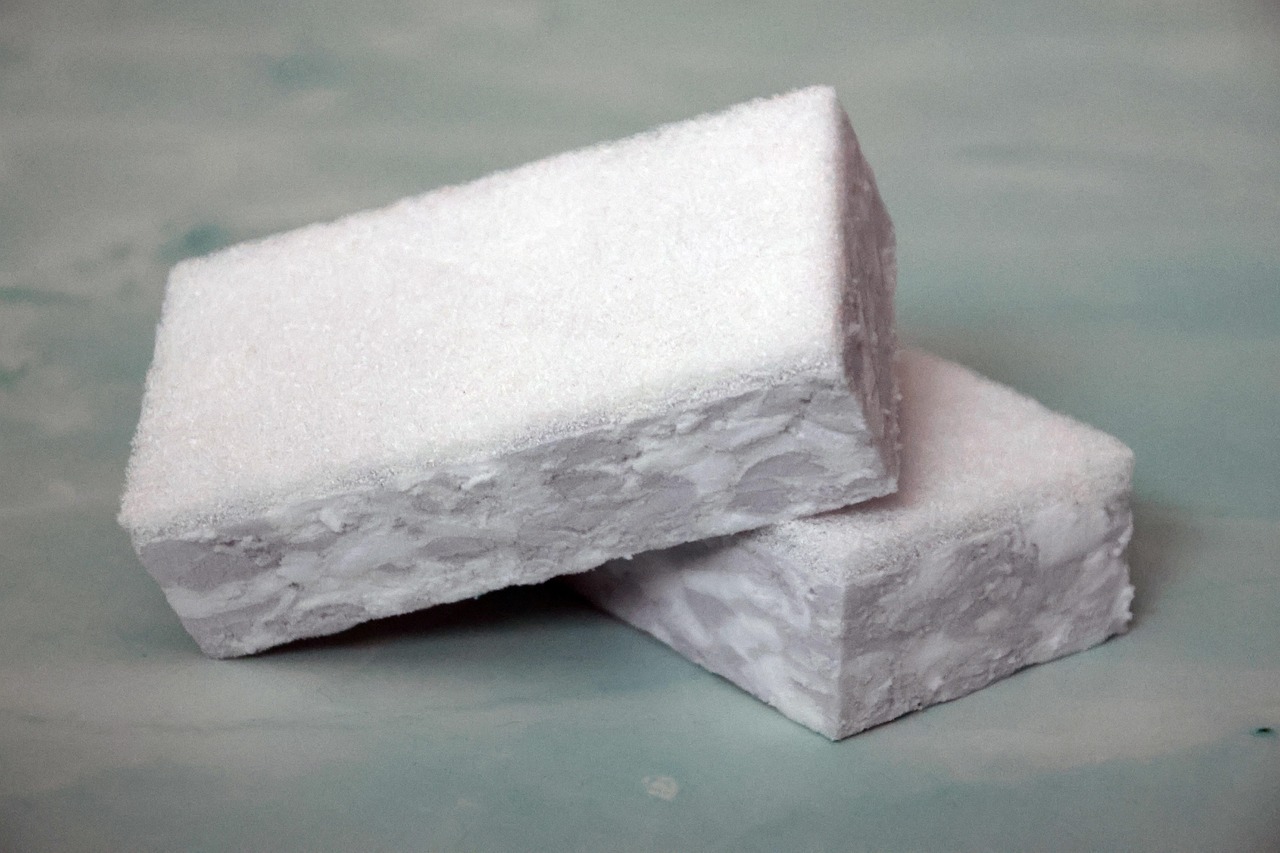
The kitchen smelled faintly of lemon; the sink hummed, and a damp white sponge left a thin, chalky smear on the rim. A coffee ring decorated a notepad nearby.
It’s an ordinary cleanup scene. But that little white block — cheap, handy, and sold as a miracle for scuffs — now sits at the center of an argument about invisible pollution and everyday convenience.
What the researchers did and found
A team of materials scientists put common melamine “magic” sponges through a controlled abrasion test and watched the foam break down into tiny fiber fragments. The polymer that gives these sponges their scrubby, sandpaper-like bite — poly(melamine‑formaldehyde) — fractures under friction, producing fibers tens to hundreds of micrometers long. The experiment measured roughly 6.5 million microplastic fibers released for every gram of worn sponge. Extrapolating from online sales data and reasonable wear assumptions, the authors offered a stark estimate: trillions of microplastic fibers may wash down drains every month worldwide. (pubs.acs.org, scitechdaily.com)
“That was a bit of a gut‑punch,” said Maria Lopez, 38, a part‑time cleaner from Tucson who keeps a box of these sponges under her sink. “They work — gotta say they work — but knowing a million little things are floating off when I rinse them? Ugh.” The sponge she picked up had a nicked corner and faint green scouring residue.
Why this matters
Microplastic fibers are not just unsightly. They travel through household wastewater to treatment plants, some get trapped, many slip through, and some enter rivers and coastal waters where animals ingest them. There’s growing literature tracing plastics from tap water to seafood to soil. The World Health Organization has stressed that current evidence doesn’t point to a clear human health crisis from microplastics in drinking water but flagged big gaps and urged more study and monitoring — a cautious stance that leaves room for concern as new sources are discovered. (who.int)
Dr. Laura Chen, 41, an environmental chemist who studies microplastic transport, said, “This isn’t the apocalypse. But, honestly, every new source matters. We don’t yet know which sources are the real drivers of exposure, and that uncertainty—well, it keeps me up sometimes.” Her lab coffee mug sported a small chip at the rim, a tiny imperfection that made the point: wear and tear is normal, and wear produces fragments.
Design, use and the blunt reality
The paper’s lab setup was deliberately mechanized to control variables — different sponge densities, varied metal surface roughness, repeatable strokes. Denser foams fared better; rougher surfaces shed more. The authors recommended manufacturers consider denser formulations and suggested households use fewer synthetic options or add filters at points of discharge. The study also used a conservative retail-data approach for its global estimate, meaning real world numbers could be higher or lower depending on many variables. It remains unclear precisely how much of this specific source contributes to cumulative environmental loads. (pubs.acs.org, scitechdaily.com)
An operator speaks
Mark Davis, 52, who manages a mid‑sized wastewater plant in Ohio, shrugged when asked about yet another microplastic headline. “We see fibers — lots of things — and we’re always trying to keep stuff out of the system,” he said. “If people rinsed that stuff into the yard or put it in the trash, that’d be different. Still, yeah, this study tells me those sponges add something extra to our load.” He tapped his worn leather glove, which had a grease smudge on the thumb.
Consumer choices and practical steps
For people who want to act now, there are pragmatic options. Swap melamine blocks for cellulose or natural-fiber scrubbers for routine chores, reserve the melamine tool for occasional spot jobs, or capture rinse water and dispose of it with household waste rather than down the sink. Point‑of‑use filters or finer screens at laundry or sink outlets can trap particles, and municipal upgrades to wastewater filtration help too — though those upgrades cost money and take time. Many outlets and consumer‑advice pieces have already begun listing alternatives and disposal tips, reflecting how fast the conversation moved from lab bench to kitchen counter. (scitechdaily.com)
A mild contradiction (and why it feels unsettled)
There’s an odd tension here. On one hand, the WHO’s review frames current drinking‑water risk as low; on the other hand, studies keep uncovering new, everyday sources of microplastics. So the reality is likely more complicated: not an emergency alarm, but not something to ignore either. That middle ground is where regulators, manufacturers and consumers now meet. (who.int, pubs.acs.org)
My own small confession
I used one of these sponges last month to get a black scuff off my kid’s sneaker sole — it worked like a charm. Then I thought about rinsing it in the kitchen sink and felt a twinge of guilt. I bagged the rinse water and tossed it in the trash (a ridiculous little ritual, but a curiosity I couldn’t quite shake).
What happens next
Researchers will need broader field studies — sampling wastewater at treatment plants, measuring what passes through filters, tracking particles in sediments and organisms — to pin down the real contribution from melamine sponges versus other sources like synthetic clothing, paint, tires and packaging. Policymakers will weigh whether to nudge design standards, label products, or push for better filtration infrastructure. Industry may respond with denser foams or new materials, and shoppers will decide whether convenience outweighs incremental environmental cost. Expect the debate to keep surfacing in regulatory hearings and op‑eds, and in the aisle where your favorite cleaning products sit. (Reminds me of those grainy investigative segments on 60 Minutes back in the day.)
A small odd aside
One online community suggested putting the used sponge in the oven to “harden” it before disposal — don’t try that. Not recommended. Not science.
Bottom line for readers
If you want to reduce your footprint with little disruption, stop using melamine sponges for everyday cleaning. Save them for the stubborn marks, pick denser variants if you buy them, and be mindful of where rinse water goes. This story isn’t a tidy villain‑and‑hero piece; it’s an incremental discovery in a slow‑burn environmental issue that touches homes and waterways alike. Knowing what your tools shed — literally — helps you make choices that add up.
Sources drawn on in this article include the Environmental Science & Technology paper and related ACS reporting that first detailed the abrasion tests and fiber counts, plus the World Health Organization’s measured stance on microplastics and drinking water. (pubs.acs.org, acs.org, who.int)
About the Author