A marine layer rolled in, dampening the stage lights and the smell of sunscreen; someone nearby dropped a paper cup that made a hollow clack. A worn golf glove dangled from a festival lanyard like a private joke.
There’s always a moment at big festivals when a set stops being just music and starts asking for an answer. On Friday at Outside Lands, a Philadelphia punk band turned that moment into a provocation — sharp, messy, and unapologetic.
A set that turned political
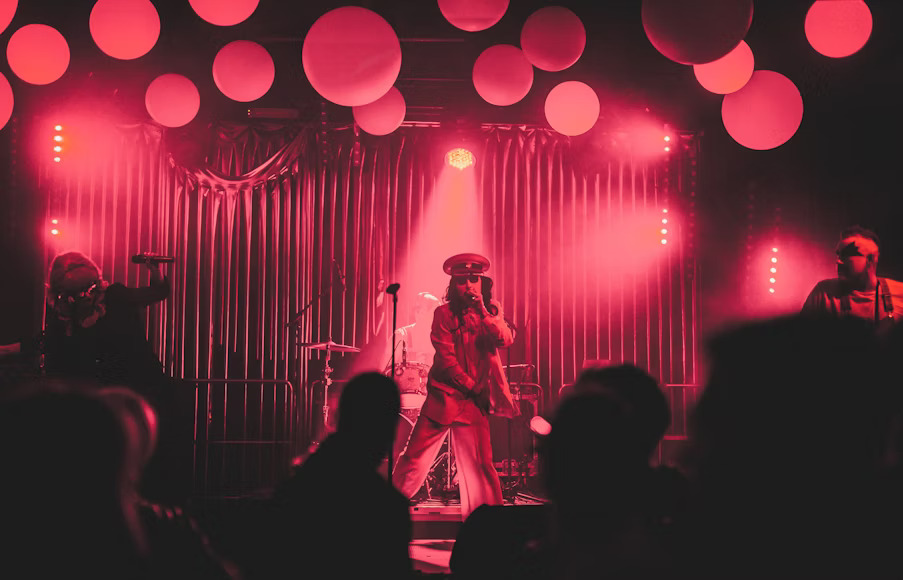
Mannequin Pussy moved through songs from dream-pop shivers to full-throttle punk, but it was frontwoman Marisa Dabice’s asides that lodged in the crowd. “F—k every billionaire,” she barked mid-set, amid cheers and a small drone buzzing toward her. The line landed hard; the band’s angry, immediate ethic has long been part of its identity, sharpened by last year’s critically lauded I Got Heaven. (sfgate.com)
Later in the set she shifted from riffs to a quiet-to-furious monologue about global suffering and American politics, ending with an explicit “Free Palestine” rallying cry that drew the loudest roar of the afternoon. The band’s refusal to make politics background noise felt intentional — a refusal wrapped in art. (sfgate.com)
Voices from the crowd
“Man, I gotta say, I came for the music, but that hit different,” said Jordan Lee, 31, a software tester who lives in Oakland. “It felt like someone finally saying out loud what people are whispering about in tech bars.” His brown jacket had a coffee ring on the cuff — a tiny, domestic detail that made the scene less theatrical and more real.
“I wasn’t expecting a protest,” Maya Alvarez, 22, a college student, added, laughing and then pausing. “But, honestly, it felt cathartic. People here are tired.” Her friendship bracelet, bright thread and a tiny USB charm, bobbed as she waved her arms. (A curiosity I couldn’t quite shake: someone nearby was selling tiny enamel pins of classic sitcom icons, like relics from another era.)
Why the line resonates
The band’s shout tapped into a broader, visible strand of public sentiment. Recent reports on global wealth show billionaire fortunes swelling even as many communities face rising costs and housing crunches; the headline statistics about surging billionaire wealth were part of the subtext that night. (cnbc.com) At the same time, patterns of where younger people get their news and form political views are shifting — social platforms and distrust of traditional institutions shape how these messages spread and stick. (pewresearch.org)
That combination — widening inequality and fragmented information networks — helps explain why a festival proclamation could feel like more than stage bravado. It isn’t only moral theatricality; it’s a shorthand for grievances about housing, labor, climate, and what many see as the outsized political influence of concentrated wealth.
Context and contradictions
There’s an obvious contradiction: Outside Lands is an expensive, corporate-backed festival streamed on a major platform, complete with branded lounges and high-priced vendor food. The set’s anti-billionaire line therefore sits uncomfortably within the very ecosystem that funds large-scale live music today. The reality is likely more complicated than a simple binary of culture versus capital.
Festival staff and organizers haven’t signaled any move to rein in political speech at the event, and it remains unclear whether artists will be asked to self-censor at future sets. Sources remain conflicted on whether such moments drive long-term change or merely furnish a viral clip and a spike in streaming. (sfgate.com)
What this might mean
The immediate takeaway is simple: the crowd responded. But there are larger implications. Pop concerts have long been places where social sentiments are aired — from anti-war songs in the 1970s to punk’s critiques of the status quo. Tonight’s performance was part of a continuing lineage of artists using mass gatherings to push debate into spotlight moments.
If the barrage of events last year — from global protests targeting high-profile billionaires to organized labor actions — taught anything, it’s that symbolic gestures can catalyze policy conversations, even if unevenly. The question is whether cultural pressure will translate into concrete policy shifts on taxation, corporate power, or the use of public space. (reuters.com, cnbc.com)
A journalist in the crowd
I’d seen Mannequin Pussy in a much smaller club once, where the amp was a trembling thing and the bathroom door had three stickers layered over an old political flyer. Back then their fury felt intimate. Friday it was amplified, literally and figuratively. I left with my ears ringing, my sneakers smelling faintly of mud, and a sense that the music had done more than entertain.
One short note: festivalgoers drifted away into fog and sourdough-scented night, and the windmill by the stage kept squeaking like an old carousel. Small things linger.
Why readers should care
This wasn’t merely a headline-grabbing moment. It’s a cultural weather vane. The chant — crude, direct — functions as shorthand for broader anxieties about inequality and influence. Understanding why musicians make these statements, and why audiences cheer them, helps decode how cultural moments fit into larger political currents. Pew’s findings about where young people place trust, and reports on billionaire wealth growth, show that this is not an isolated mood but part of a pattern worth watching. (pewresearch.org, cnbc.com)
In the end, music remains a public language. Sometimes it sings. Sometimes it yells. And sometimes, on a foggy evening in Golden Gate Park, it does both at once.
— Andrew Chamings (with the faint memory of a late-night SNL parody in the back of my head)
About the Author