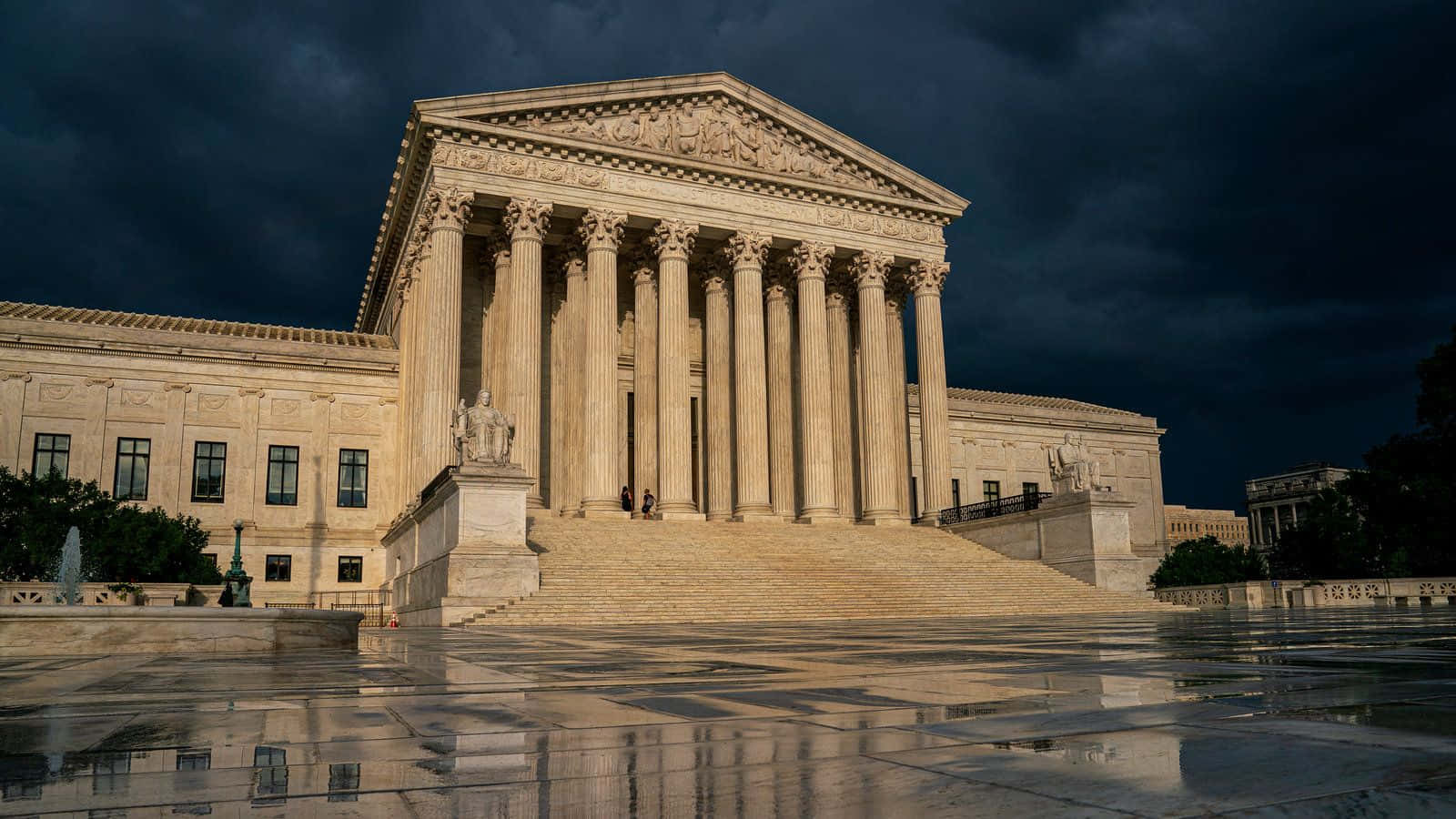
A morning drizzle glosses the Supreme Court steps, and steam curls from a street vendor’s espresso machine. Raindrops glisten on a discarded coffee cup near the white marble columns, and a single page of newsprint flutters on the plaza. Beneath that quiet hush, the machinery of justice seems a world away – yet here it is again, drawn into a new swirl of intrigue.
As I sip my coffee and catch the news, I can’t help but recall the twists of past cases I’ve covered. It feels like an episode of Perry Mason (yes, I know, old reference) — except this one is real life. In recent days, word came that Ghislaine Maxwell’s lawyers have asked the U.S. Supreme Court to throw out her 2022 sex-trafficking conviction. The grounds? A highly controversial 2007 plea agreement for Jeffrey Epstein that, they say, was never meant to exclude Maxwell.
I remember my first press pass days, watching courthouse dramas unfold. Now, after a few decades, the lay of the land seems just as complicated. The skies clear over D.C. and I watch tourists shuffle by, thinking how the grand building in front has seen its share of calculated legal gambits – and now possibly another one. (Which seems a stretch, frankly, but it’s what they’re arguing.)
Florida Plea vs. New York Charges
Back in 2007, a Florida prosecutor famously cut a deal with Epstein that shielded “any potential co-conspirators” from federal prosecution. In practice, the agreement let him plead guilty in a Florida court to lesser charges of soliciting a minor for prostitution (www.axios.com). It made headlines years later as a reckless bargain – though the 11th Circuit ultimately said it was “complied with legal requirements” (www.axios.com).
Maxwell’s team argues that language was broad. They point out that the Florida deal is titled a “non-prosecution agreement” and say it never explicitly limited beneficiaries by name. Mona and David Oscar Markus, her attorneys, have told the media it was meant to protect unnamed “co-conspirators,” not just Epstein alone (www.axios.com). In short, they say: if Epstein’s people were off-limits in 2007, then striking Maxwell now might violate that pact.
The Justice Department begs to differ. Federal lawyers note that Maxwell was nowhere named or mentioned in the Florida papers (apnews.com), and she was later tried in Manhattan by a different U.S. Attorney’s office. As Reuters explains, the question boils down to whether one prosecutor’s promise can bind others: “a legal question that has divided lower federal courts” (www.reuters.com). In appeals courts, where Maxwell has tried this before, judges have been skeptical. For example, in Brooklyn Maxell appealed in 2024, a panel flatly rejected her plea-deal argument and upheld her conviction (www.reuters.com). A judge simply noted: she was not listed in that Florida agreement.
Yet Maxwell’s camp is pressing on. The Second Circuit was asked to reconsider a 1985 precedent that limits such deals; it refused (www.reuters.com). Now the Supreme Court itself is being asked to weigh in. The petition filed at the end of July argues that Judge Alex Acosta – then the U.S. Attorney in Miami – had no authority to grant immunity to someone tried in New York (www.axios.com). The stakes aren’t just Maxwell’s fate but a broader principle: do plea bargains mean the same everywhere, or are they locked to one courthouse?
Appealing to the Supreme Court
The justices must first decide whether to hear the case. It’s worth noting they aren’t obliged to. If they do, it would take up valuable calendar time in their next term. Yet Reuters reports the issue is on their radar; under Court rules they’ll consider Maxwell’s petition in September (www.reuters.com). Given a sharply split lower court record on this exact point, the High Court might see it as an opportunity to clear the fog over plea-deal scope (www.reuters.com).
Adding to the tension, Maxwell’s appeal arises amid a political storm all its own. Epstein’s death and mystery documents have become a hot-button issue in D.C. With President Trump (of all people) pushing to declassify more Epstein files, even the composition of the bench looms large (www.reuters.com). The Supreme Court now has a 6-3 conservative majority with three Trump appointees – a fact foddered for speculation on how they might rule (www.reuters.com). As one analysis noted, legal experts are divided: some say the Court ‘faces potential political implications’ in choosing whether to hear the plea-deal question (www.reuters.com).
Meanwhile, advocates on all sides are lining up. The National Association of Criminal Defense Lawyers (NACDL) – hardly Maxwell’s fans, one assumes – actually filed a brief backing her petition (www.reuters.com). They stress that plea bargains are the backbone of the system; unraveling one may threaten “the credibility and consistency of plea agreements in the justice system” (www.reuters.com). In other words, make everyone wonder if yesterday’s deals can be undone tomorrow.
Mixed Reactions
Opinions diverge sharply. “I gotta say, it’s a high-stakes game,” laughs Ethan Davis, 47, a Denver criminal defense attorney. He’s seen dozens of plea deals, and he’s not easily shocked, but even he raises an eyebrow at Maxwell’s move. “If the Court finds that one prosecutor can’t protect co-conspirators in another district, we’re basically rewriting the rulebook,” he explains. “There’d be chaos – not just for her case, but for any conviction that leaned on a deal. But on the other hand, people expect promise-keeping. Pell-over with Richmond — if the deal didn’t cover her, then can we trust them?” He waves a hand. “I mean, not saying I like Maxwell – far from it – but looks like she’s daring the Court to fix a confusing point of law. It’s messy.”
On another side stands Rachel Green, 38, who advocates for survivors of sex trafficking. She’s painfully aware of the toll of cases like Maxwell’s. Over tea near Times Square, she shrugs. “Honestly, I feel sick about all this. Victims watched that trial. They thought it ended it. And here you have lawyers looking at a paper trail, talking about who’s named where,” Green says. “I’m not one to say the law shouldn’t be followed, but this is a gut check. Doesn’t sit right, you know? It feels like it’s all become a puzzle over semantics while people are still hurting.” She pauses, leaning forward. “Not to be stubborn, but if a 2007 deal can undo all that, then what message does it send? Just seems unfair to the victims.”
Others see the case differently. “This actually could be a good moment to clarify how district boundaries work,” says Michael Harper, 52, a law professor in Virginia. He leans against an oak tree on campus, pulling on a knit scarf. “The law should be clear: if the Florida prosecutor meant to include Maxwell, it should’ve said so. If it didn’t, then it’s not her fault a judge later relies on exact language.” He watches students pass by. “It’s confusing, and maybe a bit absurd – imagine telling juries ‘well, sorry, you’re not technically included.’ But the Court might reject it on narrow terms and say ‘deal’s off.’ That could be seen as harsh, but the reality is, people write their own safety nets. We don’t want secret promises.”
(He offers a tight smile): “I suppose I sound old-fashioned. Back in the day of Law & Order reruns, this would be just the facts to unpack. But here we are, with a messy reality.” (He chuckles briefly.)
No one pretends certainty. The average person may never have heard of imitation legal doctrines, after all. In one café booth, I scribble notes on a stained napkin – adding a coffee-ring circle around a quote. It hits me: Maxwell’s asks revolve around not just her fate, but trust in the bargain process itself. It raises questions of fairness and finality, and the public notice they get.
What’s at Stake
For readers trying to sort this out, remember: we’re talking about legal technicalities, but with real consequences. Maxwell’s appeal won’t just decide her liability; it might redraw the boundary of every plea deal in the federal system. If she wins, it would mean agreements reached by one U.S. Attorney’s office could tie the hands of many others. Law professors point out that’s a hard line to swallow — after all, would a Florida pact mean a shingle sniper on the L.A. case is suddenly immune? That seems like a stretch (some might even call it anarchy).
On the other hand, if the Court rejects Maxwell’s claim, it affirms the prevailing view that plea deals are strictly local. Prosecutors in New York would say: no crime here, gifts gone. That might leave some thinking justice was served, but others worried about leaving room for prosecutorial overreach (could a district cut shady side deals without recurrence?). As one analysis put it, we may reach the truth is more complicated than it looks from one angle. And indeed, as Axios reported, Maxwell’s petition “hinges on” whether Acosta could bind New York courts (www.axios.com) – and the DOJ flatly says he couldn’t (www.axios.com).
The debate occurs against a backdrop of eroding trust. Americans are more skeptical than ever about institutions (Gallup recently found confidence in the courts down to just 35% (www.axios.com)). In a reality where trending news and conspiracy notes swirl, cases like this make people itch: is it justice, or just legal posturing? For some voters, headlines of immunity and sweeping deals feed suspicion. For others, the law is law – even if it seems unfair at first glance.
I lean back, finishing my coffee, and think of all that. The marble steps are bathed in sun now. Somewhere amid these halls, somebody is running the numbers on who owes whom how much. Eventually, the justices will decide whether to even take the case – and down the line, perhaps, whether one high-profile plea deal can stand like a shield or fall like a house of cards.
Facts aside, it’s a reminder that legal conclusions often hinge on tiny details: a missing name here, a clause there. As the Supreme Court considers the petition, we’re left to wonder: A single line on paper could change the outcome of a trial years later. Is that sound law or a quirk to fix? It’s too soon to know. For now, the story is still brewing, much like my leftover latte.
Ultimately, I believe the reader should walk away curious, not scared: Curious about how a decades-old agreement might ripple today, and cautious about taking simple answers from complex cases. This case touches something universal about our system: the tension between strict legal rules and basic fairness. In time, the justices will weigh in. But meanwhile, life goes on beyond these steps — a mix of certainty and doubt, coffee stains and big decisions.
If nothing else, Maxwell’s surprise appeal is a lesson in nuance. It shows that a single document, signed in secret long ago, can circle back and ask the hardest question: Whose definition of justice holds more weight? The answer isn’t easy. All we can do is watch, sip our coffee, and try to keep the bigger picture in mind.
About the Author