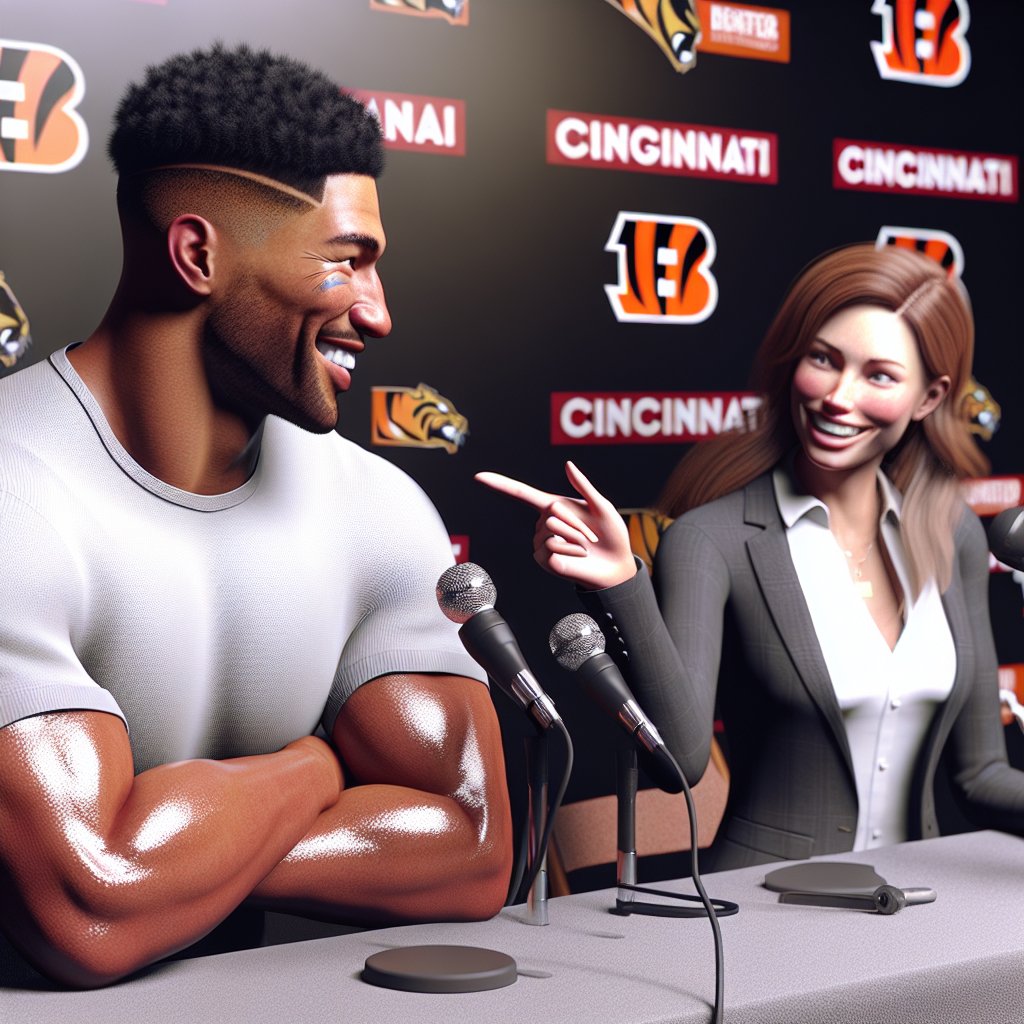
Imagine this: You’re at a bustling café, catching up over coffee, and you stumble upon a video of Ja’Marr Chase, the Cincinnati Bengals’ star wide receiver, playfully mocking a reporter’s choice of shirt during a press conference. It might seem like a small moment, a snippet that would fade into the digital vastness, but let’s peel back the layers to understand the significance of such interactions between athletes and media. Why do they hold so much power, and what does this tell us about the world of sports and storytelling?
The Media-Athlete Dance
Athletes are under the spotlight, and every interaction, especially with the media, is scrutinized. These encounters are a fusion of spontaneity, humor, and demands for professionalism. Ja’Marr Chase’s playful jest is a perfect example. On the surface, it’s a light-hearted moment that gives fans a glimpse of his personality. But there’s more at play here.
When players like Chase interact with the media, they’re not just answering questions. They’re shaping their narrative. Today’s athletes are more than just players; they’re influencers, role models, and sometimes, symbols of change. This shift in role means that every comment, every joke becomes a piece of the larger puzzle of their personal brand.
A Flashback to Media Relations in Sports
The relationship between sports stars and the media has evolved dramatically. In the past, media coverage was straightforward—just the facts about the game and occasionally a juicy story. But in the age of social media, 24-hour news cycles, and a hunger for behind-the-scenes content, the dynamics have shifted. Today’s athletes are expected to be engaging, authentic, and accessible. They’re required to strike a balance between professional dialogue and personal insight.
Consider the case of Muhammad Ali, a trailblazer in using media to his advantage. Ali was known for his charisma and boldly leveraged media platforms to express his opinions, making him a cultural icon beyond his boxing skills.
Why Personality in Sports Matters
Personality in sports is no longer just an added bonus—it’s expected. The public craves athletes who represent more than their athletic prowess. It’s the storylines that capture hearts and mindshare. Personal moments and candid interactions, like Chase’s comment, humanize athletes and bring them closer to their fans.
Moreover, these moments influence young aspiring athletes. They see their heroes being relatable, having fun, and still maintaining professionalism. This paints sports as not just a realm of physical excellence but also one of personal growth and self-expression.
The Role of Humor
Humor can be a potent tool in breaking down barriers. It adds relatability and can help in diffusing tense situations. In the high-stakes environment of professional sports, light-hearted moments are refreshing. Ja’Marr Chase’s humor reminds us that amidst the pressure, a little levity can go a long way.
A Note on Media Responsibility
With great power comes responsibility, right? The media’s role is vital in ensuring these moments are portrayed fairly and contextually. It’s crucial that the media doesn’t twist these interactions into something negative or sensationalize them irresponsibly. The way stories are reported influences public perception significantly.
Wrapping It Up
So, next time you see an athlete having a bit of fun with a reporter, smile. Recognize the layers beneath. These moments are the intersection of sports, personality, and media, each playing their part in crafting the narratives we consume. They’re more than just news; they’re the human stories that bring us closer to the athletes we admire.
**
About the Author