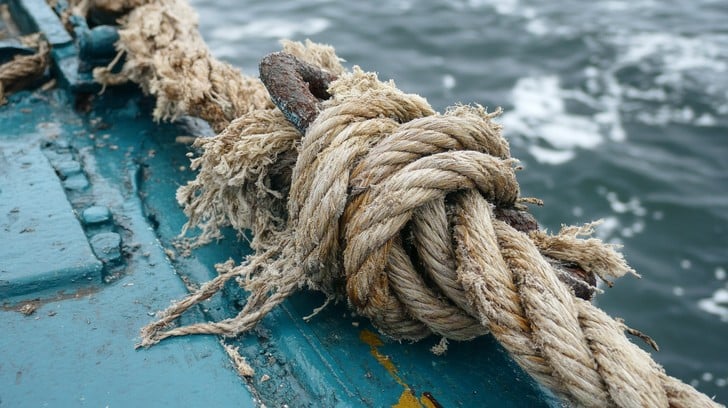
For coastal towns here, that serene dawn feels oddly charged. In Japan’s Pacific coast villages, a still harbor often masks an uneasy anxiety—a quiet before something larger. As I stand on the dock’s edge and watch those waves, memories and warnings tangle in the back of my mind. (I grew up on a beach like this, admittedly always half-expecting a scene from an old black-and-white disaster movie — though that might just be my overactive imagination.) Yet today the tension isn’t imagined. Tens of thousands of residents have been ordered to higher ground since a powerful offshore earthquake sent tsunami alerts ripping across Japan’s eastward coastline.
Evacuations Underway
By afternoon, broadcast alerts blared across smartphones and loudspeakers from Hokkaido to Kyushu. Eskimo-colored summer clouds filled the sky as authorities instructed about two million people to move inland. Theater-screen broadcasts like NHK repeatedly urged Miyagi and Iwate prefectures to evacuate immediately, recalling the “lessons of 3.11” and urging calm resolve. Roads to higher ground in fishing villages were already choked by a steady stream of cars and bicycles. In one beachside convenience store, shelves labeled “Emergency” were half-empty as worried customers grabbed bottled water and snacks. On flat lowlands, families piled children and suitcases into station wagons. One news reporter noted that even the operators at Tokyo Electric’s Fukushima Daiichi plant halted decommissioning work as a precaution, reflecting deep caution near the old reactor site.
So far, the most serious consequence of the far-off 8.8 magnitude quake off Kamchatka has been mass mobilization, not destruction. Measured tsunami waves along Japan’s coast have been modest. At Fukushima Prefecture, gauging stations saw only about 0.6 meters of surge — roughly knee-deep for an adult (www.reuters.com). In Wakayama and Ibaraki prefectures, officials found minor flooding of low-lying docks, and no boats were reported sunk. An AP summary emphasized that, despite the intense drill-like response, wave heights “remained moderate” across Japan (apnews.com). For now, most officials report no local damage or injuries directly linked to the tsunami’s waves (a tragic exception noted: one elderly evacuee in Mie Prefecture was killed when her car left the road during evacuation). Still, the mood on the ground is as restless as the sea.
Voices from the Shore
Along the nearly deserted harbor dock where the waves now gently roll in, a few locals share their nerves and resolve. “I’ve been out here since sunrise with my old gear, keeping an eye on the water,” says Hiroshi Yamada, 62, a retired coastal engineer. He tugs at his wool cap and laughs softly. “I didn’t even feel an earthquake here. But seeing this alert go off… well, it’s not every day you trust a siren without shaking. Honestly, I’m a bit spooked — got to say the waves on my phone looked bigger than life,” he adds (with a hesitant smile). A few feet away, driftwood carpenter Ayumi Nakamura, 39, eyes the grey horizon. “This town knows its history,” she says softly. “We had children here when the big one hit in 2011. Now, every sound from the coast or phone beeps makes us jump. We fill buckets, pack a bag, then take a deep breath. Nobody’s screaming, nobody’s panicking — we just do what we practiced. But I won’t lie, I’m worried too.”
A trio of schoolchildren in yellow rain boots press against her legs, palms on her thighs, asking when they can go home. She frets under her breath, “We’re staying put, sweetheart. It’ll be okay,” though even she admits uncertainty. Nearby, a volunteer from the town’s coast guard tent does a dummy nod of encouragement. Satoshi Inoue, 33, who spent the morning checking sensors, folds his arms. “What we see so far is not dangerous,” he explains as if to himself. “But wave trains can come intermittently, so we’re staying sharp.” He shrugs and adds, almost in passing, “And don’t trust everything you see online. There’s some video clip of surf crashing in Japan going around — we’re not sure it’s real-time. We have to verify images before anyone flips out.” His tone is calm but carries the weight of responsibility.
Memory and Misinformation
Japan’s collective memory of March 2011 casts a long shadow today. It’s hard not to recall how rapidly a quiet morning turned into national tragedy back then. Broadcasters still mention “3/11” in hushed tones, and living in its aftermath makes every alert feel urgent. At the same time, a few locals privately roll their eyes at modern rumors. “We had a whole internet panic this month about a July megaquake thanks to some old manga,” laughs Yasuko Ito, 45, a high school teacher at a seaside town center. Yasuko Ito, 45, scrolls her phone. “I remember the meteorologist had to debunk those predictions as a hoax back in June (apnews.com). What we’ve learned is: nature doesn’t care about YouTube conspiracies. We have to listen to scientists. They’ve said tsunami timing is unpredictable, yet here we are following their bad news — because this one’s real. I just hope people trust the warnings and not viral videos or gossip.”
Her tone is steady, but a small vibration creeps into her voice when she adds: “It all feels like a bad dream repeating. The reality is more complicated — no one can say exactly what’ll happen next.” Indeed, as officials have pointed out, tsunami behavior can be fickle. The Japan Meteorological Agency cautioned that waves might continue arriving sporadically for a day or more (www.reuters.com), a reminder that even if the initial wall is small, matchsticks of danger can keep coming. Save for the occasional drizzle, the sky remains overcast but calm. One stray orange cat in the parking lot pays no mind, batting at a discarded coffee stirrer — a tiny out-of-place detail that oddly underscores the quiet tension.
The Long Night Ahead
As evening approaches, emergency broadcasts quiet and storm clouds gather. Authorities have downgraded some alerts but stress that people stay ready until the official all-clear. If this morning’s scene felt like déjà vu from 2011, its outcome so far is thankfully different — more hassle than horror. We have seen no giant walls of water consuming these homes. Nonetheless, caution reigns. Coast guard boats patrol the bay’s edge with flashlights, and volunteers stand by with first-aid kits.
For now, no one can say for sure what will come next. Tsunami sensors and seismic networks have done their jobs; local preparations seem to be holding. Yet a small knot of doubt remains. “What, wait for New Year’s Eve fireworks?” mutters Hiroshi from the dock, breaking a lull. He shrugs and laughs, echoing Yasuko’s earlier thought. “We’re just a coastal town, caught between normal life and the ocean’s moods. All we can do is watch and wait.”
About the Author