The room smelled faintly of coffee, air conditioning, and paper; a congressional microphone gave a soft, nervous squeal. A crumpled campaign pamphlet lay under a lawyer’s elbow like an afterthought.
That small, slightly shabby scene is emblematic of the larger tension: earnest public-health marketing meets messy, human lives. Wearables promise crisp charts and simple answers. Real people rarely come with neat graphs.
A sweeping pledge in a hearing room
At a late‑June budget hearing, the health secretary laid out a striking ambition: a nationwide push so that “every American is wearing a wearable within four years,” and an advertising campaign billed as one of the largest HHS has mounted. The idea sits at the center of the MAHA — Make America Healthy Again — agenda, pitched as a low‑cost route to prevention and personal responsibility. (reuters.com)
That sales pitch landed hard in markets that sell glucose monitors and fitness trackers; shares for continuous glucose monitor makers popped on the news. But the leap from smart devices in pockets to durable public‑health gains is not straightforward. The devices themselves collect reams of biometric signals; the nation’s ability to interpret and use that data responsibly is another matter. (reuters.com)
Why wearables aren’t a panacea
Wearables can be powerful motivators. They nudge people to move more, measure sleep, and — in some clinical settings — help manage conditions like diabetes or atrial fibrillation. Yet the U.S. still has an uneven relationship with these gadgets: they’re common among higher‑income, better‑educated adults and far less so in groups that often need health interventions most. Pew Research has tracked that gap for years, showing wearables adoption clustered by income and education, a pattern that complicates any claim that a single campaign will create equitable benefits. (pewresearch.org)
And then there’s the human cost that doesn’t make for neat policy memos. A senior wearables reviewer who spoke about her own decade‑long experience described intense obsession, anxiety, and disordered eating resulting from relentless tracking — improvements in run times and resting heart rate that came with a steady toll on mental health. That personal account captures a broader, research‑backed worry: for a subset of users, constant feedback worsens anxiety around food, body image, and exercise. Clinical studies show mixed effects, but some people report that fitness trackers and calorie‑counting apps can aggravate unhealthy behaviors. (theverge.com, pmc.ncbi.nlm.nih.gov)
“I lost twenty pounds and then, I don’t know — I got weird about meals,” said Marisol Vega, 29, a yoga instructor in Tucson. “I’d scan everything, like, obsessively. I felt proud and guilty in the same breath. You can’t—uh—unsee those numbers.” Her voice softened when she mentioned birthdays she skipped because dining out meant dodging the calorie scanner.
Tracking without context
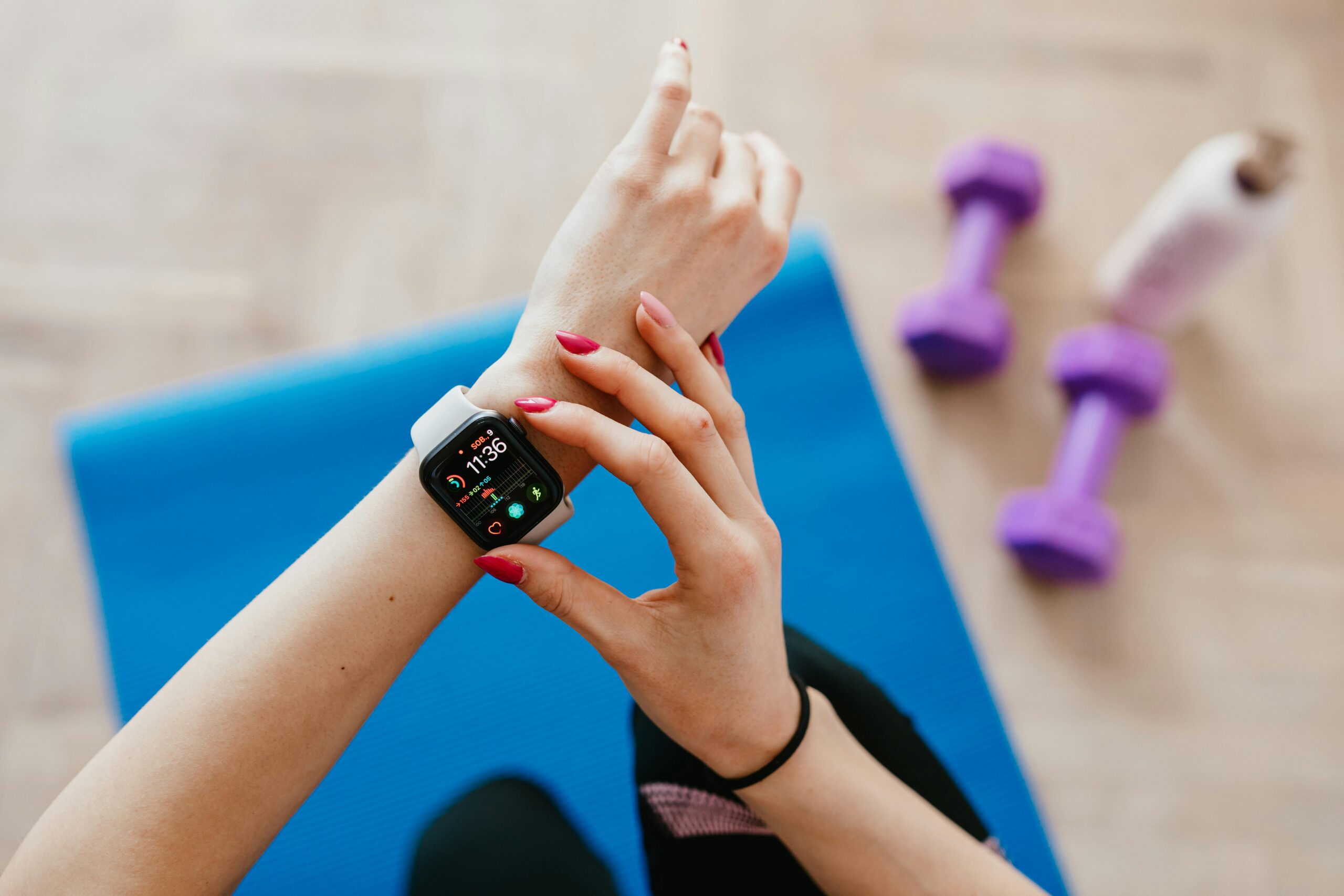
The crux of the problem isn’t the hardware. It’s the context. Raw heart rates, glucose blips, and step counts are only useful when paired with actionable, individualized care and clear interpretation. Most primary care clinics are not set up to ingest and interpret continuous biometric streams for millions of patients, and clinicians often say they don’t know what to do with the data patients bring. That mismatch turns potential empowerment into noise — or, worse, a source of blame. (theverge.com, reuters.com)
“It’s tempting to think of a watch as a magic wand,” said Earl Jenkins, 57, an auto mechanic from Akron who uses a basic fitness band. “But, you know, it’s not. My doc sees a chart and says, ‘Keep doing what you’re doing,’ and I’m left guessing. I’m not blaming them — they just don’t have time, right?” His hands, calloused and smelling faintly of motor oil, tapped a worn golf glove on the table as he spoke.
Policy, privacy, and perverse incentives
Promoting wearables at scale raises thorny policy questions. Who pays? Will insurers offer discounts only to those who meet device‑measured thresholds, effectively penalizing people with conditions or disabilities who can’t meet those metrics? The campaign rhetoric frames wearables as cost‑effective prevention compared with expensive pharmaceuticals, but the infrastructure to translate data into equitable care — from FDA approval when a device is used diagnostically to secure handling of sensitive health data — is complex and unsettled. Reuters coverage of the hearing flagged both the market ripple effects and the tentative nature of coverage or payment shifts. (reuters.com)
Privacy experts also worry about data flows. Health signals can be re‑identified, sold, or repurposed in ways neither consumers nor policymakers fully foresee. Past incidents, like fitness apps inadvertently revealing troop locations on overseas bases, are a sober reminder that mass data collection has national‑security and civil‑liberties dimensions. The reality is likely more complicated than a single campaign can resolve.
When good tools hurt some people
Research on how monitoring affects people with disordered eating is still preliminary but telling. A small but meaningful share of clinical and non‑clinical samples report that trackers and logging apps can amplify compulsive behaviors and body dissatisfaction. Other users find the same tools stabilizing — the signal varies with personality, history, and support systems. Because results are mixed, the risk is uneven: a program that pushes universal device adoption will inevitably help some and harm others. (pmc.ncbi.nlm.nih.gov, pubmed.ncbi.nlm.nih.gov)
One mild contradiction emerges here: wearables can be therapeutic, even life‑saving for some patients under supervised care, while simultaneously being a trigger for others when used without clinical oversight. Sources remain conflicted on how big that harmed subset is, and it remains unclear what a national rollout should do to protect vulnerable users.
A few practical questions
Suppose HHS follows through. Will devices be uniform? Subsidized? Tied into electronic health records? What about interoperability, standards, and basic consumer protections? If the federal push simply normalizes apps that harvest data for commercial uses, the public‑health angle could be swallowed by an ad economy that monetizes attention and personal information.
I remember strapping a clunky pedometer to my belt in 2008 and writing step counts in a notepad with coffee rings on the corner — it felt earnest then, almost quaint, like something out of an old episode of The West Wing. That memory humbles the pitch: public health is stubbornly local and human. Campaign posters and PSAs aren’t a substitute for good clinical judgment, adequately resourced care teams, and privacy safeguards.
What a better approach might look like
If the goal is genuine population health gain, some guardrails would help: pilot programs targeted to high‑need communities; clinician training on interpreting device data; hard limits on data sharing and commercial resale; and clear opt‑outs for people with histories of disordered eating or anxiety. Small trials, with longer follow‑up and meaningful mental‑health endpoints, would be wise before a universal rollout.
There’s one surprising aside I picked up while reporting: a wellness lobbyist quietly suggested free socks as an incentive in early pilots (don’t ask me why — maybe it’s the shoelace angle). It made me smile. It also reminded me that public health ideas are often born in the mundane.
The takeaway
Wearables are tools, not cures. The administration’s pitch taps into a popular desire for self‑management and cheaper prevention. But scaling a tool that changes behavior for some and breaks it for others requires humility, careful study, and real safeguards around privacy, equity, and mental health. Pushing gadgets to the masses without those pieces in place risks creating a well‑intentioned policy that, in the messy, human world, does more harm than good. That’s something any serious public‑health program should reckon with before buying ad time.
— (A personal note: I still wear a simple band most days, but I turn off weekly summaries. Small mercy. Also: I, too, once traded a dozen steps for a donut. No regrets.)
Sources: coverage of the HHS hearing and the secretary’s remarks; reporting and first‑person reporting on wearables and harms; Pew Research Center data on device adoption; peer‑reviewed and clinical literature on wearables and disordered eating. (reuters.com, theverge.com, pewresearch.org, pmc.ncbi.nlm.nih.gov)
Feature image
About the Author