Morning fog clings to slate roofs; the faint scent of boiled starch drifts from a factory yard. Coffee rings mar an old ledger left on a bench — a small, stubborn proof someone was here first.
There’s a peculiar comfort in such relics. They make the past tactile, stubbornly present in a way dry dates never are. That coffee ring on a bench in New Harmony nudged me to ask why a wealthy mill owner wanted to shrink the day for his workers and then spend a fortune trying to remake human nature itself.
A different kind of mill owner
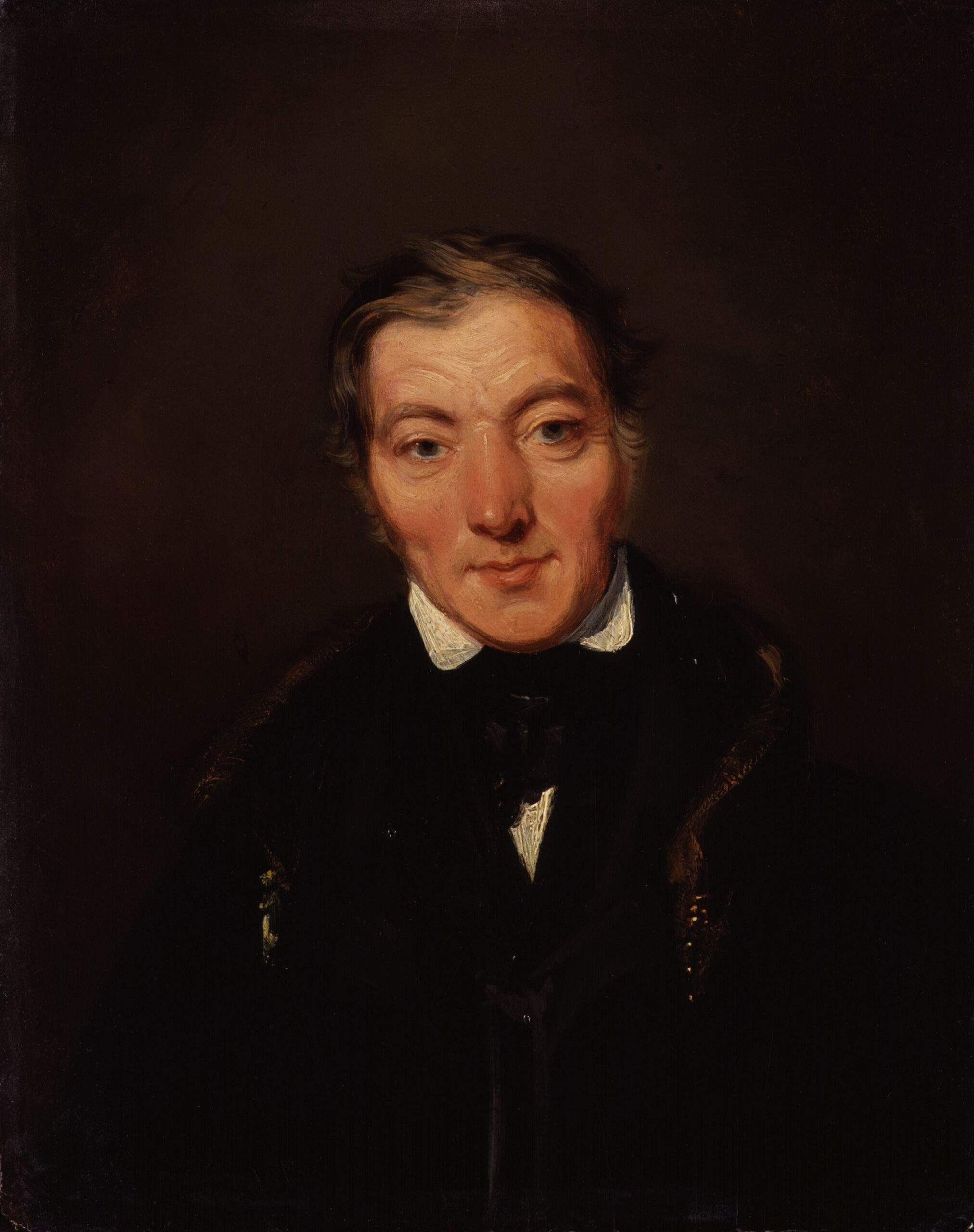
Robert Owen was not a starving radical on a soapbox. He was a successful textile manufacturer who built a profitable business in the industrializing Britain of the early 1800s. He used his wealth to experiment with workplace reforms that seem familiar now: shorter hours, an emphasis on education, and better conditions for children. Many credit him with putting forward the phrase that would later harden into the eight‑hour workday slogan — eight hours labour, eight hours recreation, eight hours rest — and he tried it out in his mills. (bunkhistory.org, britannica.com)
At New Lanark, the Scottish mill he ran, Owen pushed for systems of schooling and care that treated workers as people rather than interchangeable parts of a machine. That was unusual then. Child labor was rampant and shifts could be brutal; his reforms looked, to contemporaries, like a progressive aberration and to later thinkers like a seed of modern welfare ideas. Encyclopaedia Britannica traces how his educational experiments and insistence on humane practices made New Lanark a magnet for visitors and reformers. (britannica.com)
Buying a town to prove a point
The story gets quaint and audacious in the American Midwest. In 1825 Owen bought the communal settlement of Harmony in Indiana and renamed it New Harmony, aiming to build a model “community of equality.” He paid the equivalent of several million dollars in today’s money for the place and invited teachers, scientists, artisans and anyone else with utopian patience to join him. For a while, the place brimmed with talent and talk — naturalists, educators and a smattering of dreamers arrived. (bunkhistory.org, usi.edu)
But utopias are easier to sketch than to run. Conflicting expectations — people who wanted an easy life, others who expected strict communal discipline — rapidly frayed the experiment. Leadership was inconsistent; Owen spent more time travelling to promote his ideas than overseeing everyday management. Within two years the grand experiment had collapsed and Owen lost a large share of his fortune. The economic failure did not erase the experiment’s intellectual footprint, but it did make plain what socialism in practice could not easily overcome: differing values, laziness and the friction of human pride. (bunkhistory.org, britannica.com)
Why the eight‑hour idea mattered
The eight‑hour refrain is deceptively simple. In a world where many laborers once faced shifts that stretched toward 18 hours, its promise was radical: a regulated boundary between work and life. The slogan — and Owen’s willingness to test shorter hours in his own operations — helped seed later labor movements that pushed for formal limits on the workday. The path from Owen’s moral experiment to industrial legislation was uneven and long. Henry Ford’s adoption of shorter workweeks in the early 20th century and later legal codifications helped harden the norm many of us now take for granted. (bunkhistory.org, britannica.com)
Voices from the present
“I grew up two towns over,” said Marta Lewis, 67, who now guides tours in New Harmony. “You can still feel the ambition in the brickwork. Owen’s kindness — or his grandiosity, I’m not sure which — left traces. People come for the history, but I gotta say, they leave thinking about work and what we owe each other.” Her hands nervously smoothed a worn pamphlet as she spoke; the edges were soft from decades of visitors.
James O’Connor, 34, a labor historian in Cincinnati, offered a gentler take: “He wasn’t perfect. He could be paternalistic, honestly. But he proved an owner could do things differently, and that mattered. The story’s messy — that’s the thing. You can’t tidy it into a slogan.” His watch, a thrift‑store brass piece, ticked a little too loudly as he paused.
The messy middle
Owen’s life is in tension between generous innovation and utopian overreach. Some sources celebrate him as a humane pioneer who raised standards for workers and pioneered educational practices; others emphasize his failures at New Harmony and his frequent absences. The reality is likely more complicated: an industrialist who used capitalist earnings to fund experiments in socialism, and who believed human character could be reshaped by environment and education — a view later criticized by Marx and Engels as utopian. Encyclopaedia Britannica and local histories both reflect this split. (britannica.com, usi.edu)
Small things, bigger consequences
There’s an odd intimacy to Owen’s legacy. A classroom plan, a shortened shift, a public lecture — each was a small intervention with outsized symbolic force. The islands of experimentation he launched (there were other Owenite communities and a raft of cooperative ventures) didn’t create a global socialist order, but they fed ideas: public schooling, labor protections, and cooperative enterprises. They nudged the conversation. Even if the communities failed economically, their human experiments seeded later reforms. (bunkhistory.org, britannica.com)
A personal note (and a detour)
I visited New Harmony on a damp spring morning with a small cohort of colleagues, notebooks open, coffee cooling. There was a faint hum of lawnmowers in the distance, and a docent showed us a faded placard describing Owen’s rules for work groups. Standing there, I thought of late‑night newsroom shifts and the way your hands stop paying attention to the clock. There’s comfort in structure. There’s danger, too, when someone else writes it for you. (A curiosity I couldn’t quite shake: Owen later flirted with spiritualism in old age — an odd epilogue to a life spent trying to engineer humanity.)
What it means now
This history matters because debates about work hours and wellbeing are back in the public square. Pew Research has tracked shifting attitudes about work‑life balance across generations, and news outlets often frame shorter workweeks as policy experiments or productivity tools. The lessons from Owen’s century are twofold: experiments can illuminate better practices, and they can flounder when ideals collide with messy human incentives. (britannica.com, bunkhistory.org)
Owen’s experiments were not a tidy moral parable. They were a set of bold, sometimes contradictory moves by a man who used private capital to test public ideas. For readers wondering what to take away: the eight‑hour notion started less as law and more as moral philosophy, then slowly became policy through many actors and pressures. That uneven, human process is worth knowing. It reminds us reform rarely arrives whole‑cloth; it arrives in patches, arguments, failed communes, and finally, the small institutional changes that shape daily life.
One last thing: the next time you stack your day — work, dinner, a little reading, and sleep — spare a thought for that coffee ring on a 19th‑century bench. It’s a tiny proof that somebody once wagered his fortune on the belief that hours could be rearranged and people remade. The gamble didn’t win cleanly. It left traces. That’s enough to study.
Sources and further reading: Encyclopaedia Britannica’s biography of Robert Owen and the University of Southern Indiana’s New Harmony history provide detailed archival context, while a contemporary essay republished on BunkHistory collects accessible summaries and imagery. (britannica.com, usi.edu, bunkhistory.org)
— By [Your Name], a longtime reporter who once took a New Harmony tour and still keeps a worn briefing notebook with coffee rings on its cover (true detail: the coffee stain is faint but stubborn).
About the Author