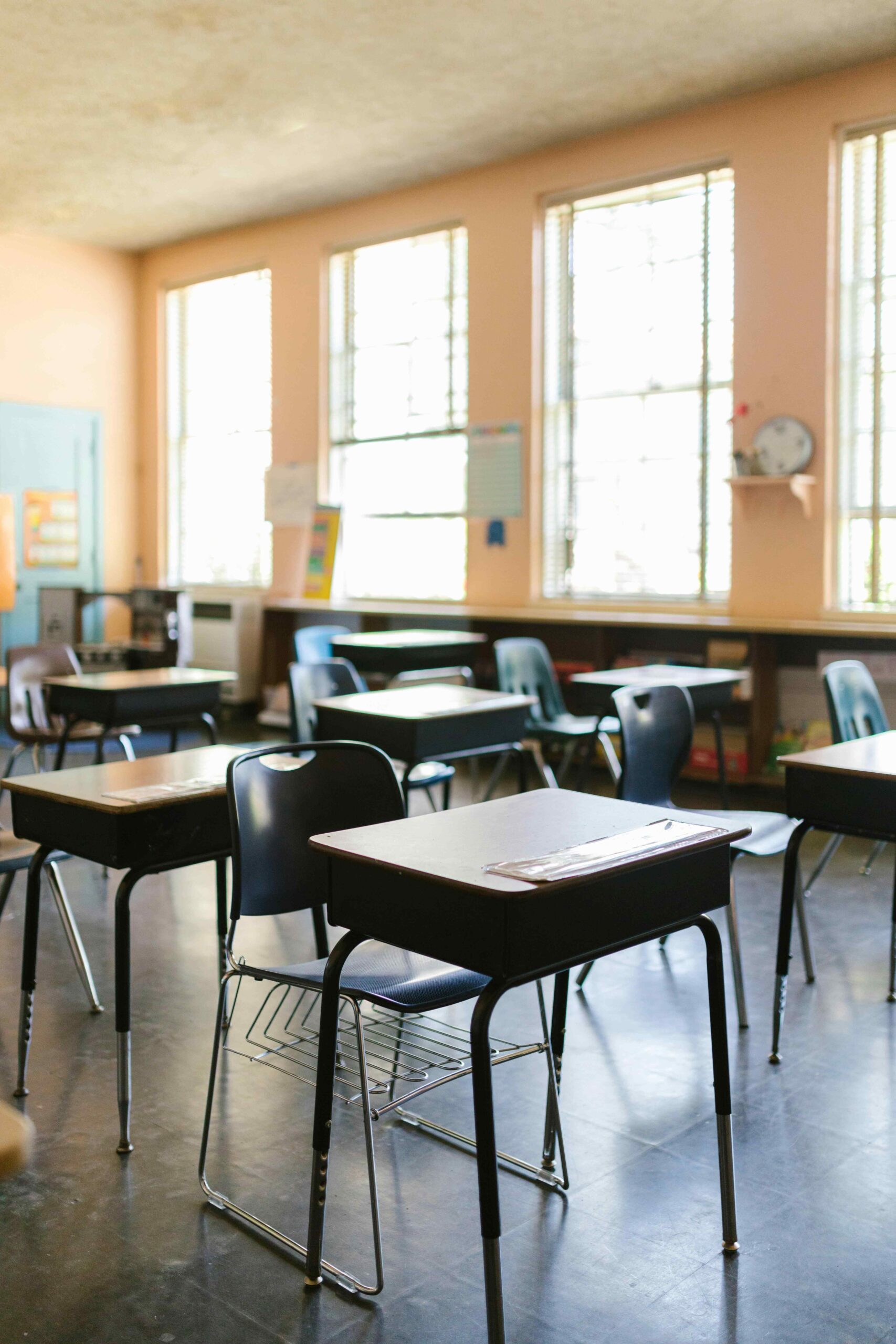
The gym smelled faintly of copier toner and lemon-scented hand sanitizer; a single coffee ring mopped awkwardly into the corner of a volunteer sign-up sheet. The late-summer light through high windows made the poster boards glow.
That little picture stuck with me — mundane, unremarkable. It also felt like a gentle reminder: schools are workplaces that smell, look, and feel like workplaces. On Aug. 9, 2025, at a “meet the teacher” night, that ordinary setting became the stage for an argument about what teachers owe their classrooms and what they owe their lives.
A brisk welcome
For most families the evening was warm and routine. Parents greeted teachers, scribbled encouraging notes on laminated cards, and snagged free pencils. Some brought tiny gifts. “We’re so excited for you,” said Marcus Hill, 37, father of a rising second-grader, balancing a juice box and a nervous smile. “You gotta say, the school feels ready.” He laughed, the kind of laugh people use to smooth out small anxieties.
Janelle Morris, 45, the long-term substitute introduced that night, stood beside the class roster with calm hands and a worn tote. “I’ve covered this grade before,” she told a small cluster. “I know the routines, the kids, the quirks.” Her voice had the steadiness of someone who’s covered morning announcements and recess duty through rain and heat.
A tense exchange
Then one parent’s mood shifted the room, briefly. He was angry enough that you could see the heat rise in his neck. “Every year she’s had a long-term sub,” he said loud enough that people paused. He wasn’t looking for reassurance; he wanted a complaint filed. The teacher — 37 weeks pregnant and due any day — caught the remark with as much poise as you can muster while holding a pile of student folders and the fragile calm of your own imminent leave.
“I’ll be back,” she told him, quietly but firmly. “My sub is an experienced teacher. The classroom is in good hands.” Her voice shook only a little.
“I need consistency,” the parent shot back. “This is my kid’s schooling.” He walked away, backpack straps tight, leaving a discrete ripple of discomfort behind him.
Why the reaction matters
This is not just a parish squabble. It is a small tableau of larger tensions about work, parent expectations, and the boundaries of professional life. Teaching has long been framed as a vocation — noble, demanding, essential. That framing can be a double-edged sword. It elevates the work, yes, but also primes some parents to expect uninterrupted devotion, even at the cost of teachers’ personal lives.
Research institutions have tracked shifting public views about work and family over the past decade. Pew Research has traced changing attitudes toward parental leave and workplace flexibility, while Reuters has covered high-profile disputes when institutions tried to balance staffing and family needs. Snopes has even had to debunk several viral claims about “teachers abandoning classrooms for babies,” a meme-friendly distortion that fuels suspicion more than it clarifies.
All of this matters because perception shapes policy. When parents insist on uninterrupted classroom presence as a baseline and treat leave as a dereliction, the pressure cascades into hiring decisions, school budgets, and the mental load educators carry. A substitute’s presence is not a placeholder; it is a planned, legal part of staffing. Yet perceptions lag behind systems.
Voices from the staffroom
“I know some parents are scared,” said Janelle Morris, 45, substitute teacher. “But, honestly, I’ve seen more harm come from chaotic staffing than from planned leaves. We’ve got systems.” She rubbed the edge of her tote bag, revealing a faded university sticker. “People assume subs are green. That’s not how it works.”
A colleague chimed in later in the break room, off the record but named for context: Linda Powell, 52, a veteran fourth-grade teacher, remembered coverages from her early years. “Once, I took two weeks for surgery,” she said. “Kids were fine. They learned. They missed me, sure. So did I.” She shrugged. “You can love your job and still love your life.”
For teachers themselves, the calculus is intimate. Anna Rivera, 30, an elementary teacher who is pregnant and planning leave next month, spoke with a soft, defiant amusement. “Teaching is my job,” she said. “It’s what I’m good at. But it’s not my life. I’ll enjoy that time with my baby. No one’s gonna shame me for living my life.” Her fingers fiddled with a thin silver bracelet — a small human detail that felt emblematic.
The operational reality
Staffing a school is, fundamentally, a planning exercise. Districts budget for substitutes; collective bargaining agreements outline leave. But the lived experience can vary wildly from district to district and school to school. Some communities have robust substitute pools and mentoring systems for long-term replacements. Others run short and lean, and any absence becomes a scramble.
Still, the broader public conversation often confuses anecdote for system. A vocal minority can make it feel like a majority. It remains unclear whether the hostility some teachers report represents a new era of parental demands or a recycled strain of entitlement that has always been there, just amplified by social media and louder PTA group chats. Sources remain conflicted on whether recent headlines reflect an actual policy crisis or a series of local flare-ups.
A small digression: the rubber ducks
On a table near the exit, someone had left a box of mini rubber ducks — yes, those classic yellow things — for students to take. It was absurdly cheerful and oddly comforting, a trifle that broke the tension better than any talking point. The ducks looked like a small, stubborn protest against sourness. I thought of an old TV show where a character drops something trivial into a scene and everything softens (which seems a stretch, frankly, but there it is).
Why this should matter to readers
The lesson here is practical. If you’re a parent, consider what you’d want if roles were reversed. If you’re a policymaker, consider the real trade-offs schools face. Good staffing doesn’t appear out of goodwill alone; it requires budget, planing, and respect for workers’ private lives. That balance affects teacher retention and class continuity, and ultimately, students’ learning.
One unresolved point is how to rebuild trust when it frays. Some parents will move on after a few weeks. Others may carry a grudge longer. Schools that communicate early, introduce long-term substitutes before leaves begin, and show how curricular continuity will be maintained tend to avoid friction. That’s a small, actionable takeaway.
A personal note
As a reporter who’s covered schools for years, I’m allergic to grand pronouncements. Teachers are not saints, and parents are not villains. But on Aug. 9, in that gym, I watched a teacher prepare to step briefly away from her classroom for something essential and human. I don’t think that choice diminishes her work. If anything, it underscores why good schools plan for life — the teacher’s and the students’.
Short sentence. Simple truth.
About the Author