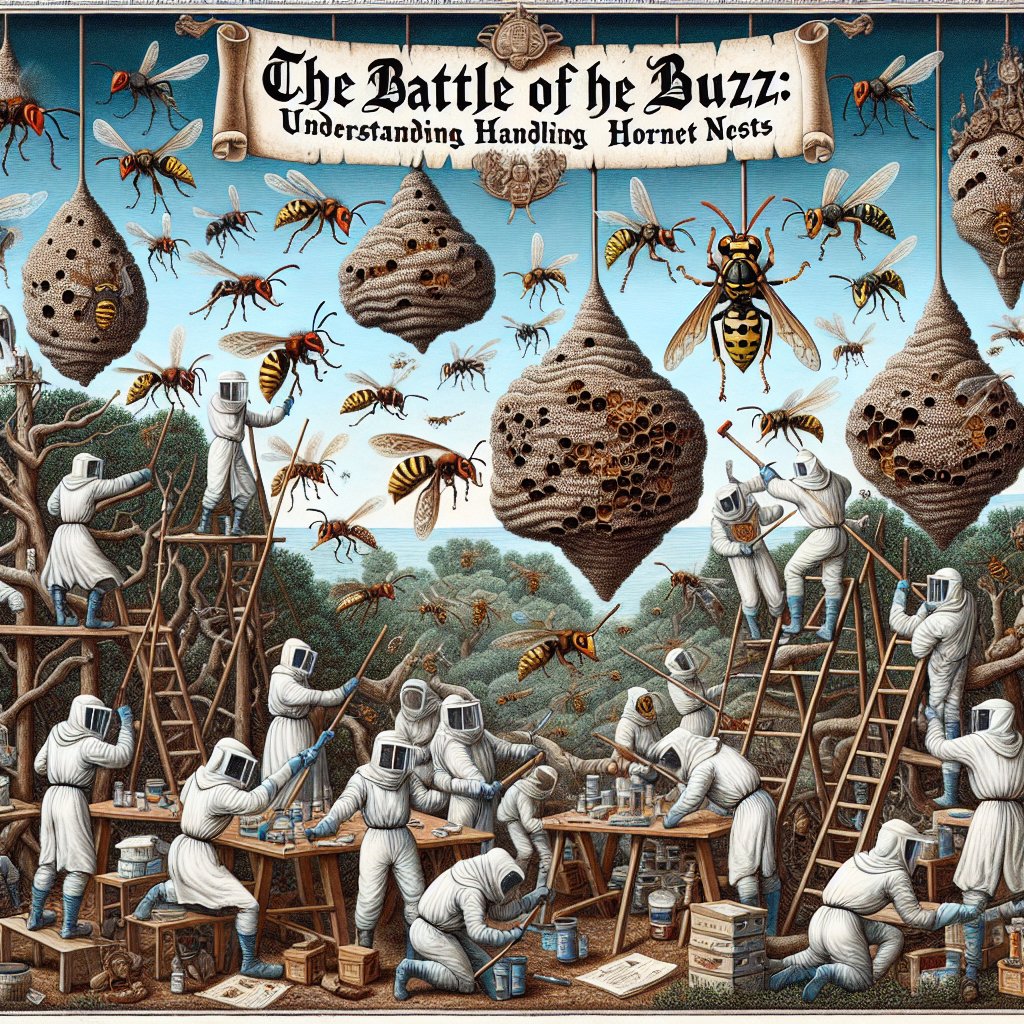
Imagine you’re enjoying a lazy summer afternoon in your backyard, perhaps sipping on some lemonade. Suddenly, you notice a buzzing sound that gets progressively louder. You look up and realize you have some uninvited guests — a hornet nest. Yikes! Before you run off screaming for cover or grabbing the nearest can of bug spray, let’s take a moment to understand these fascinating, albeit unwelcome, visitors.
To Nest or Not to Nest: Know Your Hornets
First, a quick biology lesson. Hornets are a type of wasp and are known for their aggressive nature and painful stings. But they also play a crucial role in the ecosystem by controlling other insect populations and helping with pollination. There are about 20 species of hornets, with the most common being the European hornet (Vespa crabro) in North America.
Hornets usually build their nests in tree branches, attics, or other sheltered places. Their nests are a marvel of engineering — made by chewing wood into a paper-like substance. A colony can contain hundreds to thousands of hornets. While they’re not innately evil, their sting is no joke, especially for those allergic to wasp venom.
When to Call in the Pros
Let’s cut to the chase. If you spot a hornet nest near your living space, it’s often wise to call professional pest control. Here’s why:
- Safety: Hornet stings can cause painful welts, allergic reactions, and in rare cases, anaphylaxis.
- Efficiency: Experts have the right gear and insecticides to remove nests effectively.
- Peace of Mind: Removing a nest isn’t just about spraying chemicals. Experts ensure complete removal which reduces the risk of re-infestation.
Attempting a DIY removal can be tempting, and there’s plenty of advice and supposed quick fixes floating around the internet. But trust me, some things are best left to those who have the protective suits and high tolerance for angry insects.
How to Coexist (Safely!) with a Hornet Community
If professional removal isn’t immediately possible, here are some quick tips to keep peace in the meantime:
- Keep Your Distance: Hornets are typically defensive, not offensive. Keep away from their nests and teach children to do the same.
- No Sudden Moves: Fast movements can agitate them. If they approach you, stay calm and move away slowly.
- Secure Food Sources: Hornets love sweet and protein-rich foods. Keep your trash covered and clean up quickly after outdoor meals.
A Lasting Peace (Or At Least Truce)
Historically, humans have had a complicated relationship with hornets. Ancient Greek texts even reference the strategic use of wasp and hornet nests in warfare, catapulting nests into enemy lines as a form of biological weapon.
Today, the approach is a bit more civilized. Many countries, like Japan, celebrate hornets (albeit the non-aggressive types) for their place in local ecosystems. In a time of significant biodiversity loss, understanding these creatures can coexist with the occasional nuisance they pose.
The Future of Pest Control: Innovations on the Horizon
Interestingly, technological advancements are transforming how we deal with pests. New, eco-friendly methods like pheromone traps and drones equipped with pest control substances are on the rise. Some companies are developing apps that analyze pest species from photos, providing real-time advice on handling various infestations. These innovations emphasize minimizing harm to beneficial insects while effectively managing pests.
Buzz Off, But Not Forever
Removing a hornet nest may seem daunting, but it’s important to approach it with a mix of caution, respect, and informed action. These critters are important parts of the ecosystem, playing their own tiny-yet-mighty roles in nature’s grand design. So, next time you hear that telltale buzz, you might see these buzzing neighbors in a slightly different light.
**
About the Author