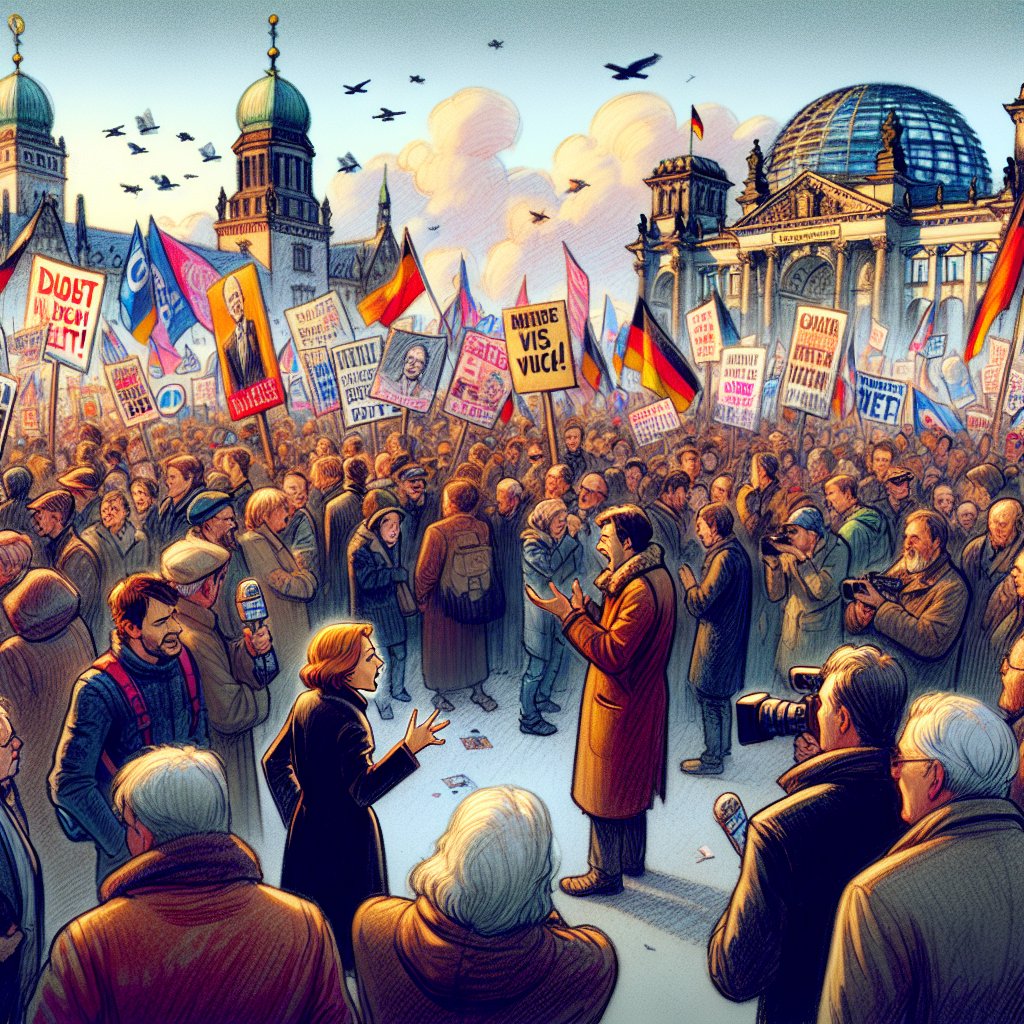
Subtitle: When Voices Rise Above the Noise – A Look Into the Political Protests Against the AfD
So picture this: you’re in the middle of watching a live interview. It’s not just any interview—this features Alice Weidel, the leader of Germany’s far-right political party, Alternative for Germany (AfD). Just as you settle in to hear her speak, a chorus of protests erupts, drowning out her words. This scene might seem chaotic, but it’s so much more than just noise. It’s a snapshot of the vibrant, often tumultuous, political landscape in Germany. It’s a reflection of the ongoing struggle over ideas, values, and the nation’s future.
The Role of AfD in German Politics
To better understand this incident, let’s step back and look at what the AfD represents. Formed in 2013, the Alternative for Germany is often described as a far-right party. It started as a eurosceptic force advocating for Germany’s exit from the Eurozone but has since shifted its focus to issues like immigration and national identity. The party has stirred controversy with its hardline stance on immigration, among other issues, which has both rallied supporters and sparked protests.
When Protests Speak Louder
The protest against Alice Weidel is not an isolated event. It’s part of a broader trend where citizens take to the streets to make their voices heard. What drives people to protest, you ask? Well, it’s a mix of frustration, passion, and belief in the need for change. For many Germans, the rise of the AfD signals a shift in values that doesn’t align with their vision of a diverse and inclusive society. Protests thus become a medium to express disapproval and demand accountability.
A Historical Perspective on Protests
Protests are hardly new in Germany. Post-World War II, Germany has seen its fair share of public demonstrations, from anti-nuclear protests in the 1980s to the major anti-Iraq war rallies in the early 2000s. These events have played a crucial role in shaping German policy and public opinion. The protests against the AfD can be seen as a continuation of this legacy, reflecting a democratic tradition where civic engagement plays a key role in shaping political discourse.
The Power Dynamics of Modern-Day Protests
Most of us have a vision of protests as chaotic and noisy. But they can be incredibly organized and strategic, particularly in this digital age. Social media has transformed how protests are coordinated and covered, allowing for rapid mobilization and international visibility. In Germany, movements against the AfD utilize these platforms to rally support and document their activities, ensuring that their message is not just heard locally, but globally.
The Ripple Effect of Dissent
Why do protests against the AfD matter? Because they challenge us to think critically about the intersection of free speech, democracy, and the limits of tolerance. These protests remind political leaders and citizens alike that democracy isn’t just about voting once every few years—it’s about ongoing engagement, reflection, and evolution. When protest voices drown out a high-profile interview, they are effectively participating in a dialogue about the nation’s future.
Conclusion: Democracy is Loud
In the end, the protests during Alice Weidel’s interview underline an important truth: Democracy is noisy. It’s supposed to be. Through debate, dissent, and even disruption, democracy thrives. While the methods and messages of protests can be polarizing, they remain a vital part of the political landscape, ensuring that a multitude of voices, opinions, and ideas are part of the public conversation.
The next time you see a protest on TV or hear about one on the radio, consider what it represents—a clashing of ideas and a testament to the power of civic engagement. Whether you agree or disagree with the protesters, know that their presence is an essential part of keeping democracies vibrant and alive.
**
About the Author