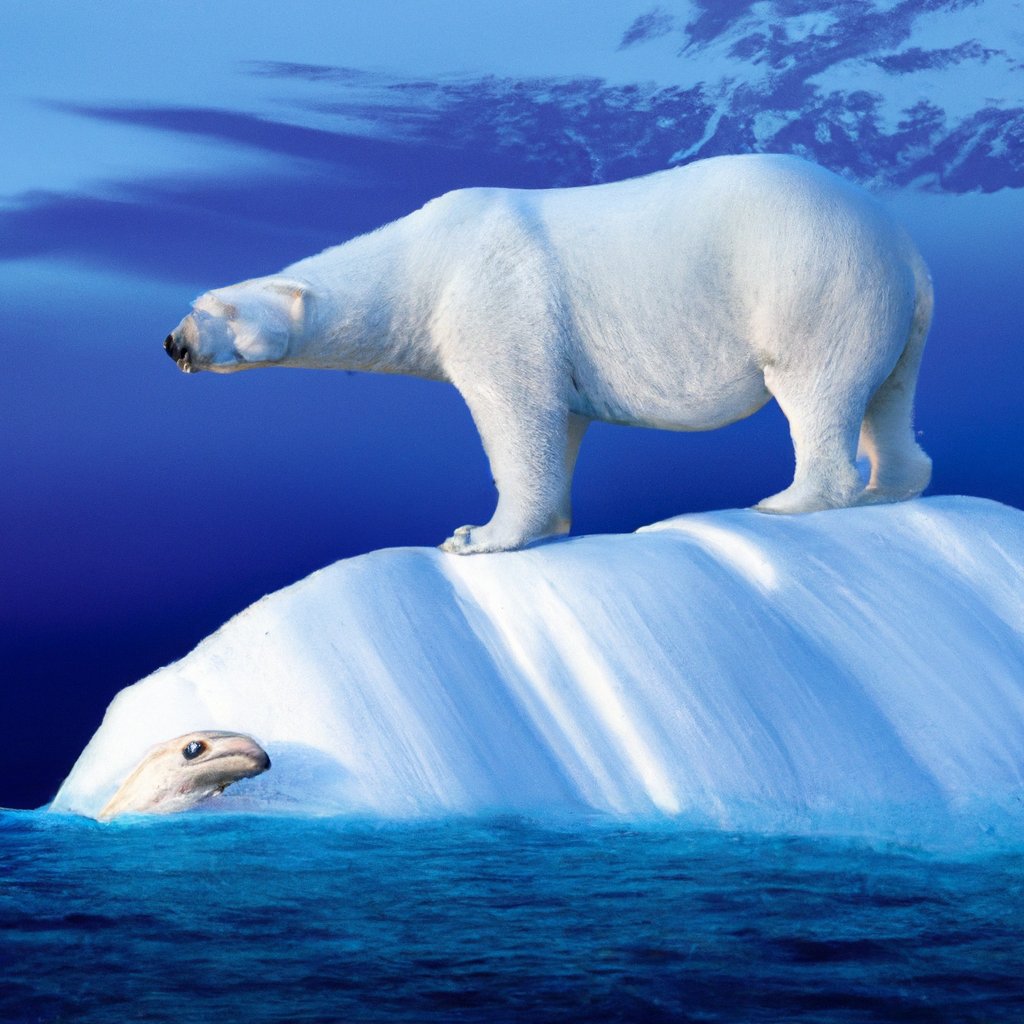
There’s this incredible photo that’s been making the rounds, showing a female polar bear perched upon a gigantic male sperm whale. The polar bear, weighing in at around 300 kilograms, looks positively tiny against the backdrop of the 40-ton behemoth. This remarkable scene got me thinking about the fascinating world of these two giants of the animal kingdom. So, let’s dive in and explore what makes these creatures so captivating.
The Mighty Polar Bear: Ruler of the Arctic
First, let’s talk about our friend, the polar bear. Polar bears are the largest land carnivores on Earth, with females usually weighing between 150 to 300 kilograms, while males can be twice as heavy. These majestic creatures are perfectly adapted to life in the harsh Arctic environment with their thick fur and a layer of blubber insulating them against frigid temperatures.
Quick Facts about Polar Bears:
– Diet: Primarily seals, caught on sea ice.
– Lifespan: About 15-18 years in the wild.
– Habitat: Polar regions, spanning parts of Canada, Alaska, Greenland, Norway, and Russia.
The challenging conditions of the Arctic are no match for the polar bear’s prowess as a hunter. Yet, with climate change melting ice caps, their hunting grounds are shrinking. Recent studies indicate that without immediate action, polar bear numbers could decline by more than 30% in the next three decades.
Sperm Whales: The Deep-Sea Giants
Now, let’s turn our attention to the sperm whale, the heavy lifter of this unique duo. Sperm whales are the largest toothed predators on our planet, characterized by their massive heads and long, slender bodies. These marine giants can measure up to 20.5 meters in length and weigh an astonishing 45 tons.
What Sets Sperm Whales Apart:
– Diet: Mainly squid, diving as deep as 1,000 meters to hunt.
– Lifespan: Around 70 years, with some living over 80.
– Social Structure: Matriarchal, with females and calves forming tight-knit groups while males are more solitary.
Just think about the adaptations needed for deep-sea diving: their specialized lungs can withstand intense pressures, and they possess echolocation abilities that help navigate the dark ocean depths.
A Remarkable Encounter
Seeing a polar bear atop a sperm whale wasn’t just a stroke of nature photography luck but offers a glimpse into an unusual inter-species interaction. While polar bears roam their icy domains, whales are typically ocean dwellers; therefore, our fascinated observation likely occurs when the whale is washed ashore, a rare and possibly tragic occasion for the whale.
In these instances, beached whales provide a surprising bounty for polar bears, supplementing their diet in an increasingly precarious environment. It’s a stark reminder of the interconnectedness of nature and how one species’ struggles can impact others in unexpected ways.
The Bigger Picture: Conservation Challenges
This photo isn’t just about size and scale; it’s a quiet testament to the challenges these species face. Both the polar bear and sperm whale populations are becoming beacons in the climate change discussion.
Key Conservation Concerns:
– Habitat Loss: Melting sea ice and increasing ocean temperatures threaten their hunting and breeding grounds.
– Pollution: Ocean pollution and oil spills degrade their habitats.
– Human Activities: Shipping routes, industrial fishing, and noise pollution disrupt migratory paths and natural behaviors.
Governments and conservationists are working tirelessly to study these animals, advocate for protective legislation, and raise public awareness. But what can we, as individuals, do? Supporting conservation efforts, reducing our carbon footprint, and spreading awareness are great starting points.
Final Thoughts
So, next time you see a photo of nature’s giants, like the polar bear and the sperm whale, let it serve as a reminder. These photos tell stories beyond their frames—about nature’s grandeur, its resilience, and our role in preserving this incredible world. As we sip our coffee, let’s ponder these creatures’ future and what we can collectively do to ensure their survival for generations to come.
About the Author