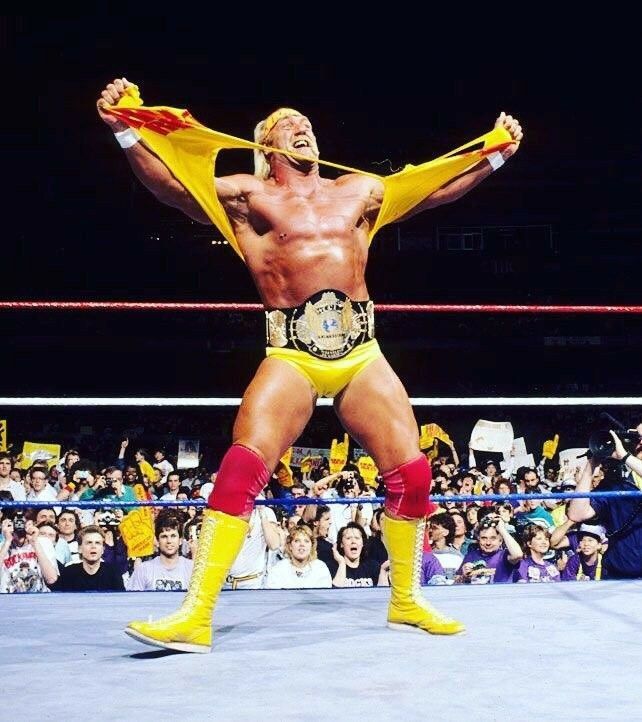
If you’ve ever found yourself scrolling through memories of the golden days of wrestling, you’ve probably reminisced about the towering figure of Hulk Hogan. His larger-than-life persona and signature moves transformed wrestling into a spectacle of athleticism and drama that captivated audiences worldwide. As we remember his impact, let’s dive into the legacy of the man who was much more than just a wrestling ring icon.
A Titan in the World of Wrestling
Hulk Hogan, whose real name was Terry Eugene Bollea, dominated the wrestling world from the late 1980s through the 1990s. Standing at 6 feet 7 inches and weighing around 302 pounds in his prime, Hogan wasn’t just a wrestler, but an archetype of the ultimate hero for many fans.
Hogan’s popularity soared when he joined Vince McMahon’s World Wrestling Federation (WWF, now WWE) in 1983. His charisma, coupled with his catchphrases like “Whatcha gonna do, when Hulkamania runs wild on you?” turned him into a cultural phenomenon. His matches, characterized by his signature moves such as the “Atomic Leg Drop,” weren’t just physical bouts—they were storytelling at its finest.
Making Wrestling Mainstream
Before Hogan, wrestling was a popular but niche entertainment sport in America. Hogan’s influence helped catapult wrestling into mainstream consciousness. His match against André the Giant at WrestleMania III was a pivotal moment, captivating over 93,000 spectators. That event placed wrestling on the map as a serious entertainment option globally.
Hulkamania, as it came to be known, wasn’t just about sports; it was a cultural movement. Hogan’s colorful presence and his theme song “Real American” inspired a sense of patriotism and heroism among fans.
Beyond the Ring
Hogan’s influence wasn’t limited to wrestling. His foray into movies and television contributed to his larger-than-life image. Movies like “Rocky III,” in which he played ‘Thunderlips,’ and his own animated TV series, “Hulk Hogan’s Rock ‘n’ Wrestling,” laid the groundwork for wrestlers transitioning into mainstream media.
Additionally, Hogan’s philanthropic endeavors, including appearances to support children’s hospitals and his involvement in anti-bullying campaigns, highlighted a softer side of the man behind the wrestling persona.
The Business of Wrestling and Personal Challenges
Hogan’s rise coincided with the advent of cable TV, which played a crucial role in taking WWE to every household. But his influence extended beyond just popularity. In a Forbes study, Hogan was frequently mentioned as one of the wrestlers who contributed significantly to WWE’s business success. His merchandise—from bandanas to action figures—retailed in millions, a testament to his enduring popularity.
However, with fame came challenges. Hogan’s personal life has been marked by highs and lows, from a widely-publicized divorce to controversies in both his personal and professional lives. Despite these setbacks, Hogan managed to reinvent himself time and again, most recently as a nostalgia-centric figure and ambassador for the wrestling community.
Conclusion: The Immortal Icon
So, what made Hulk Hogan an immortal icon? It wasn’t just the wins, the championships, or the popularity. It was his ability to inspire, to be more than just a wrestler. Hogan represented the ‘Everyman’ overcoming odds, battling the seemingly unbeatable forces, and coming out victorious—something that resonates with the human spirit.
As we reflect on the legacy of Hulk Hogan, it’s a testament to the power of resilience and transformation. Wrestling today may be a different beast, with its new stars and changing narratives, but the essence of Hulkamania will forever linger in the rings and hearts of millions.
About the Author