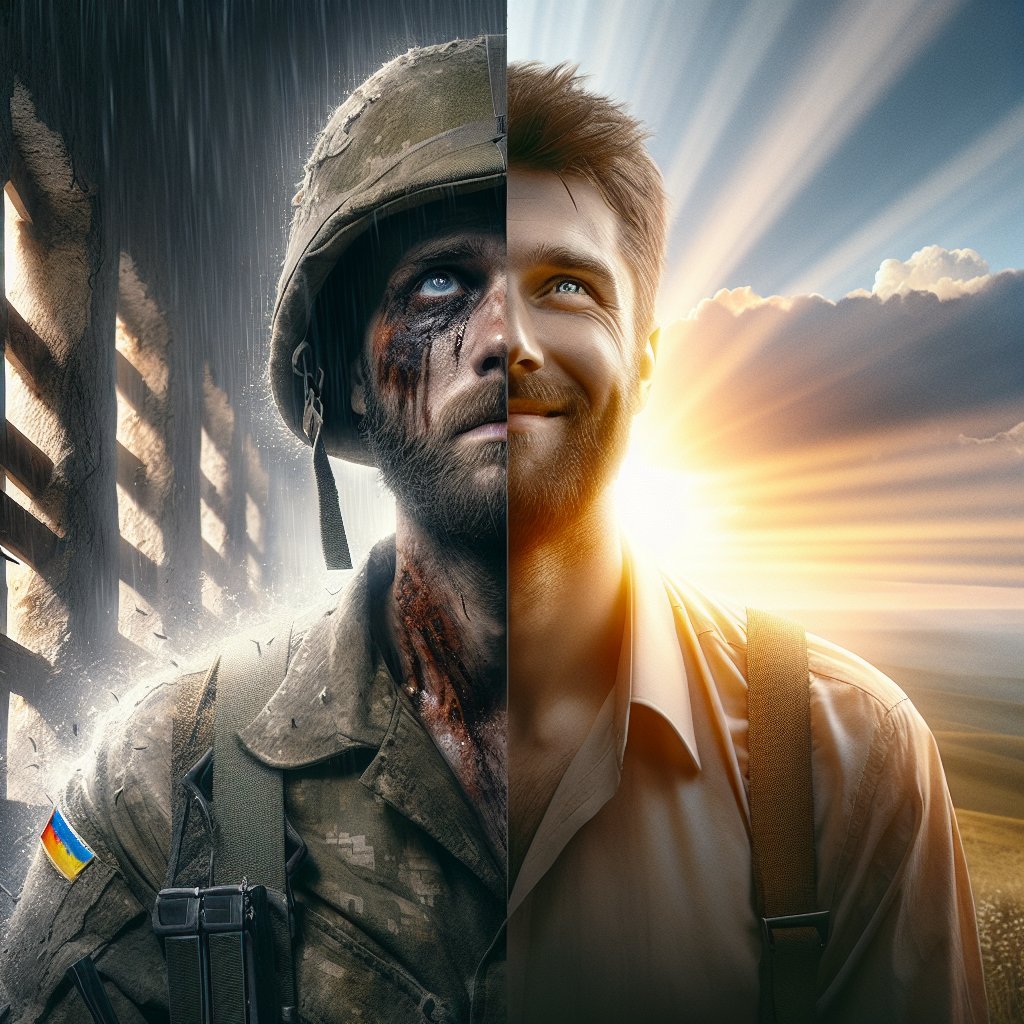
War is an abstract concept for many, encapsulated in history books and gravely narrated documentaries. But for those knee-deep in its mud and grit, it is brutally real. Take the story of Oleksandr Kiriyenko, a Ukrainian soldier who had tasted the bitter pill of captivity under Russian forces. His before-and-after images reveal more than just the physical toll of war — they unmask the silent battles fought within.
The Reality Behind the Numbers
Imagine for a moment being thrust into a war that is not about numbers or percentages. It’s personal, visceral, and immediate. Kiriyenko’s story is a stark reminder that behind every statistic, like the UN’s approximated 9,000 civilian casualties in Ukraine since early 2022, there are individuals with families, dreams, and fears.
The Historical Context
To understand the scope of Kiriyenko’s experience, a bit of history is necessary. The conflict between Ukraine and Russia traces back decades, but the recent ignitions can be marked by the 2014 annexation of Crimea by Russia. Since then, Ukraine has become a stage for larger geopolitical tensions, drawing in discussions of NATO, EU alignments, and independence.
Post-invasion reports and international sanctions have all played a part in this intricate geopolitical chess game. However, amidst these towering global narratives are the Kiriyenkos — soldiers who walk the fragile line between hope and tragedy.
Who Fights These Wars?
Kiriyenko, like many others, represents a small but significant part of Ukraine’s fight for autonomy and survival. Many of these soldiers are not professional warriors but everyday individuals trained amidst the ever-looming threat. According to the Ukrainian Ministry of Defense, the average age of a soldier in their ranks is mid-20s, illustrating how the country’s young bear much of the brunt.
The psychological effects of soldiering and captivity are domains of ongoing study. A 2020 study in the “Journal of Traumatic Stress” highlighted the long-term mental health consequences faced by veterans, conditions like PTSD being alarmingly prevalent. Kiriyenko’s ordeal in captivity would likely place him at high risk, needing adequate psychological resources and support systems post-release.
The Face of Captivity
Absorbing before-and-after images of soldiers like Kiriyenko confronts us with the grim reality of captivity. It isn’t just about lost weight or worn expressions; it’s about endured violence, mental scars, and the unsettling re-entry into civilian life. The Geneva Conventions set the framework for humane treatment of prisoners of war, yet stories from released captives often reveal stark deviations from these international standards.
A Glimpse Forward
So, where do stories like Kiriyenko’s fit in the larger pattern? They are reminders. Reminders of resilience and the enduring human spirit. They urge policymakers and citizens alike to interrogate the structures that perpetuate conflict. Organizations like Amnesty International and Human Rights Watch continue to monitor and report on conditions, advocating for adherence to international humanitarian laws.
For those interested in aiding the cause, various NGOs provide support, from psychological help for veterans to humanitarian aid for war-torn regions.
More than Just Stories
This isn’t just a story about a soldier. It’s about the resilience and vulnerability of humanity at war — how one man’s ordeal is mirrored in countless others. To truly grasp the impacts of conflict, we must look beyond the tactical displays and understand the personal stories etched in every line on a soldier’s face.
**
About the Author