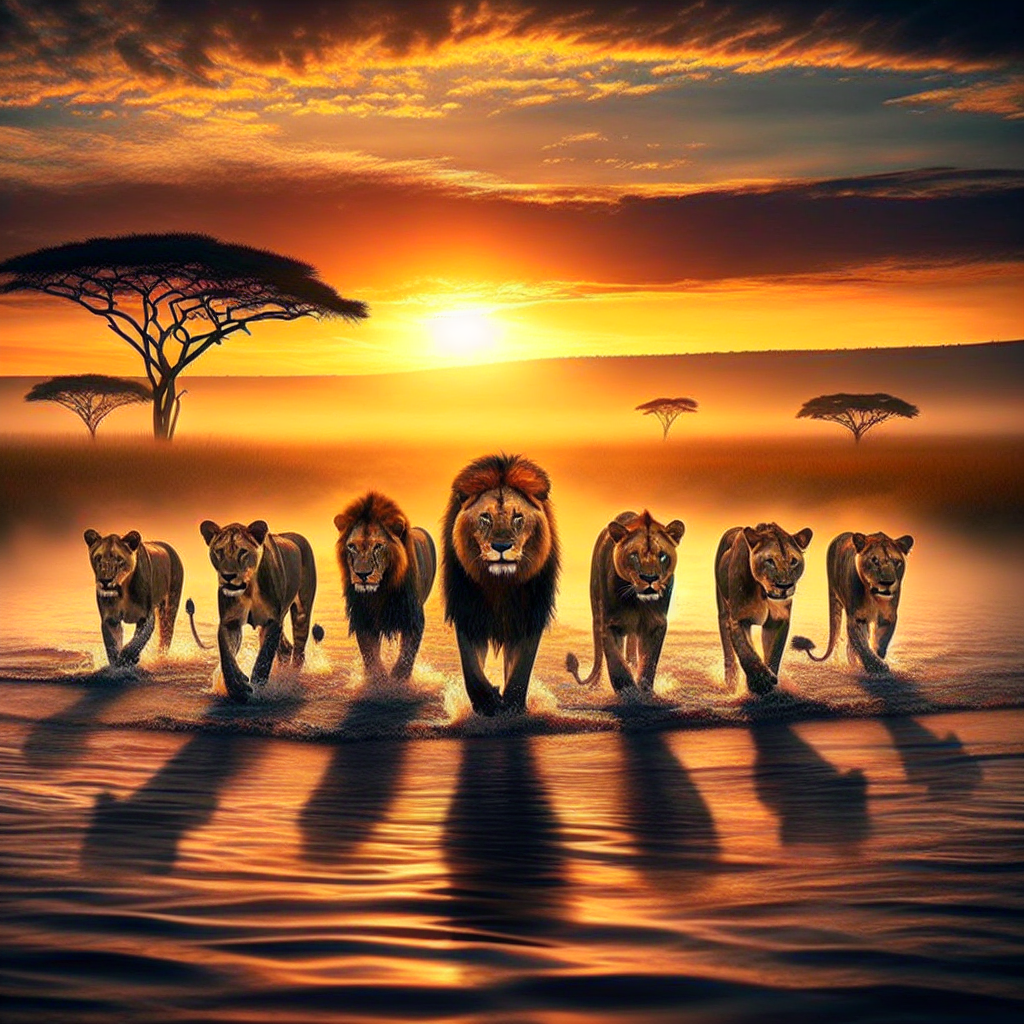
Have you ever heard about the incredible journey of Notch, the lion who defied nature’s norms to raise a formidable family of his own? Picture this: a vast savannah, the wild stretches of the Maasai Mara. If you’ve ever dreamt of waltzing with wildlife, this is where it happens. And right here, against the odds, Notch carved out a legacy not just for himself, but for all lion-kind.
The Lion King’s Challenge
Lions, by nature, are complex creatures. They’re bound by instincts, driven by survival, and woven into the fabric of wilderness hierarchy. Typically, a male lion’s role in a pride is minimal after the offspring are born. Females do the hunting and nurturing; males defend and procreate. But Notch was no ordinary lion.
After being ousted from the prestigious Marsh Pride, a renowned group in the Maasai Mara, Notch found himself in an unusual predicament. Here he was, a lion expected to wander alone or challenge for another pride—yet he faced a challenge greater than just survival. It was about rebuilding, reclaiming, and redefining himself and his line.
Crossing the Mara: A Symbol of Renaissance
Notch didn’t just wander into oblivion. Instead, he gathered his five sons—aptly named the Notch Boys—and embarked on an epic journey across the Mara River. This wasn’t just a physical crossing; it was symbolic of reclaiming dignity and authority. Crossing rivers is a lion’s rare feat, and taking this risk signaled his determination to rewrite their tale.
What’s fascinating is that Notch did what was virtually unheard of: he played an active role in the upbringing of his offspring. This so-called army was trained, nurtured, and supported by Notch—defying the basic lion rules of family dynamics.
Rewriting the Rules of Leadership
Why is this story so remarkable? Simply put, it reshapes our understanding of lion behavior. Male lions are generally portrayed as detached fathers. However, Notch demonstrated that leadership could be built on mentorship and direct involvement with one’s kin.
This unique behavior also ties into broader discussions about animal behavior and leadership. Much like human leaders, Notch cultivated not only warriors but legacy-bearers. His sons flourished under his guidance, establishing themselves across the grasslands. Not only does this highlight Notch’s role as a father but also as a leader reshaping the savannah’s power dynamics.
The Broader Context: Lions and Survival
Now, let’s step back and look at lions within the larger context. Lions, once rulers of Africa, face modern threats—habitat loss, poaching, and human-wildlife conflict being the top aggressors. According to Panthera, a global wild cat conservation organization, the African lion population has decreased by over 40% in the past decades. Notch’s story might be exceptional, but it underscores the drastic shifts lions endure as both cultural and environmental landscapes change.
What Can We Learn?
Notch’s journey is a masterclass in adaptability and resilience—qualities that resonate beyond the animal kingdom. Whether it’s coping with life changes, leadership responsibilities, or redefining family roles, Notch teaches us that success lies often in unexpected paths and courageous cuts through the unknown.
As I sip my coffee, pondering this lion’s journey, I can’t help but muse: if a lion can break through the natural order to better his lineage, what barriers can we, with our tools and technologies, overcome in our personal and societal lives?
In a world where the roar of progress is ever-deafening, remembering the silent whispers of nature offers us insights that not only ground us but propel us toward reimagining our potential and responsibilities.
**
About the Author