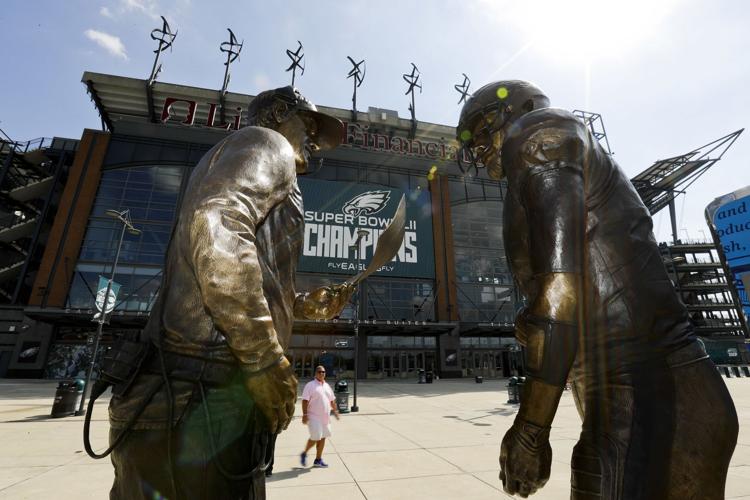
A light drizzle dusted the plaza, a distant horn sighed, the faint scent of fried dough hung in the air, and a single foam finger clung to a railing outside the Patriots Hall of Fame.
That odd little tableau—festive, damp, resolutely local—felt like a small allegory for the moment: a ceremonial showpiece that doubled, with a grin, as a provocation. Public monuments are for memory, yes. They’re also for telling jokes in public.
A statue, a joke
Tom Brady stood before the bronze that will bear his likeness, thanking fans and teammates, then landed a line that sent the crowd laughing and social video into overdrive: the statue “isn’t just for Pats fans. It will also give all the Jets fans something to throw their beers at as they leave the stadium every year. Probably in the second quarter.” The remark was captured on video and has been replayed widely since the unveiling on August 8, 2025. (nfl.com, boston.com)
The bronze itself was designed with symbolism front and center: a 12-foot figure for Brady’s No. 12, mounted on a hexagonal granite base that brings the total height to 17 feet—an intentional nod to the Patriots’ AFC East titles during his tenure. The piece, revealed on the plaza outside Gillette Stadium before the preseason opener, was unveiled with the kind of fanfare the franchise typically reserves for banners and ring ceremonies. (nfl.com)
Why the jab landed
Rivalry fuels ritual. For two decades Brady’s Patriots were the measuring stick in the AFC East—stat lines, playoff berths, and regular-season slaps that extended into Sunday traditions. So when he joked about Jets fans and their beers, it landed as both campy and classic: part roast, part ritual. The crowd responded like an audience at a comedy club, full-throated and willing to laugh at the expense of the other side.
Still, there’s a real-world edge to the humor. Stadiums are sites of fandom but also of spilled beer and occasional conflict. Security teams note that rivalry jabs can sometimes translate into rowdier exits or more trash pickup (not to mention extra janitorial overtime). Whether the quip will escalate anything beyond an annual bit of heckling—or mostly live on as a viral punchline—remains unclear. Sources remain conflicted on whether this will change tailgate behavior meaningfully. (nfl.com)
Voices from the plaza
“I mean, I gotta say, it’s perfect,” said Mark Collins, 58, a season-ticket holder who’d camped out with a faded foam finger tucked into his coat. “It’s lighthearted. We beat the Jets a lot. It’s part of the history. But, you know, people should keep their beers—don’t be that guy.”
On the other side, Jenna Morales, 27, a graphic designer who drives up from Queens for Jets games, rolled her eyes with a half-smile. “He’s rubbing it in, right? Uh, it’s fine. I laughed. I’ll probably take a selfie next to it and then get on the commuter rail,” she said. “Still — gotta respect the sculptor, even if the QB’s being smug.” These small human moments—coffee rings on a notebook I used to take notes, a kid balancing a hot pretzel on the railing—made the ceremony feel less like a PR event and more like a neighborhood party with a very famous guest. (boston.com)
Sculpture, memory, and marketing
Monuments do more than honor individuals. They anchor narratives about place, success, and belonging. For the Patriots, the statue is a branding tool as much as a shrine: it consolidates an era and gives fans a physical locus to re-enact memory. The sculptor—Jeff Buccacio—was present; the granite base was quarried in New England, and team leaders framed the piece as “larger than life,” gestures that connect local craft to franchise mythology. (nfl.com, boston.com)
There’s a curious tension here: a statue’s permanence versus the ephemeral nature of sports rivalries and social media heat. A bronze figure will outlast seasons, coaches, and even the most viral of clapbacks. Yet those viral moments—Brady’s quip included—are how many fans will first encounter the statue. The reality is likely more complicated: some will see it as reverent, others as theatrical, and a third group as content for a TikTok duet (a curiosity I couldn’t quite shake while watching a teenager already plan a clip).
What this says about fandom
On a practical level, the event underscored how teams curate their histories. It also offered a reminder about how modern fandom blends affection with performative antagonism. Recent coverage in outlets such as ESPN and regional reporting in Boston highlighted the ceremony’s mix of gratitude and roast, while national wire stories captured the broader optics of immortalizing living athletes. (nfl.com)
There’s an open question: will monuments like this deepen civic pride around a stadium, or do they increasingly serve as content factories—made to be filmed, clipped, and shared? My sense—formed by years covering similar unveilings (and a fondness for old TV hangouts like Cheers, which makes me weirdly nostalgic for bar-side banter)—is that it will be both. People will gather to remember and to joke. They’ll pose. They’ll argue. They’ll toss a roast-line into the wind and call it tradition.
A short, unavoidable aside
I once covered a baseball statue unveiling where someone taped a paper crown to the bronze and left it there for a week. Here, someone had scribbled “TB12” on the underside of a discarded game program and tucked it into a nearby planter. Small rebellions of fandom. They feel important, in a way.
What to watch next
If you care about stadium culture, public commemoration, or the theater of rivalry, watch how local authorities respond to Saturday’s exits, whether social feeds keep spinning the joke into new memes, and how the franchise leans into or tempers the chest-thump. Media outlets will keep replaying the clip; that’s the nature of modern ceremony. News organizations from the Associated Press to ESPN captured the lines and the symbolism at the ceremony, giving us both the literal transcript and the broader context. (nfl.com)
In the end, it was a ceremony that did what many sports rituals aim to do: it made people feel part of something, gave them a moment to cheer—and left a rival with a new target for mockery. And if fans fling beer at bronze statues in the second quarter of future games, well, that will be a headline for another day. I’ll be interested to see whether the statue becomes a pilgrimage or a punchline (or both). I’ll also admit—briefly, and perhaps inappropriately—that I kept thinking of an episode of Seinfeld where a minor thing becomes a major social ritual. That’s fandom for you.
About the Author