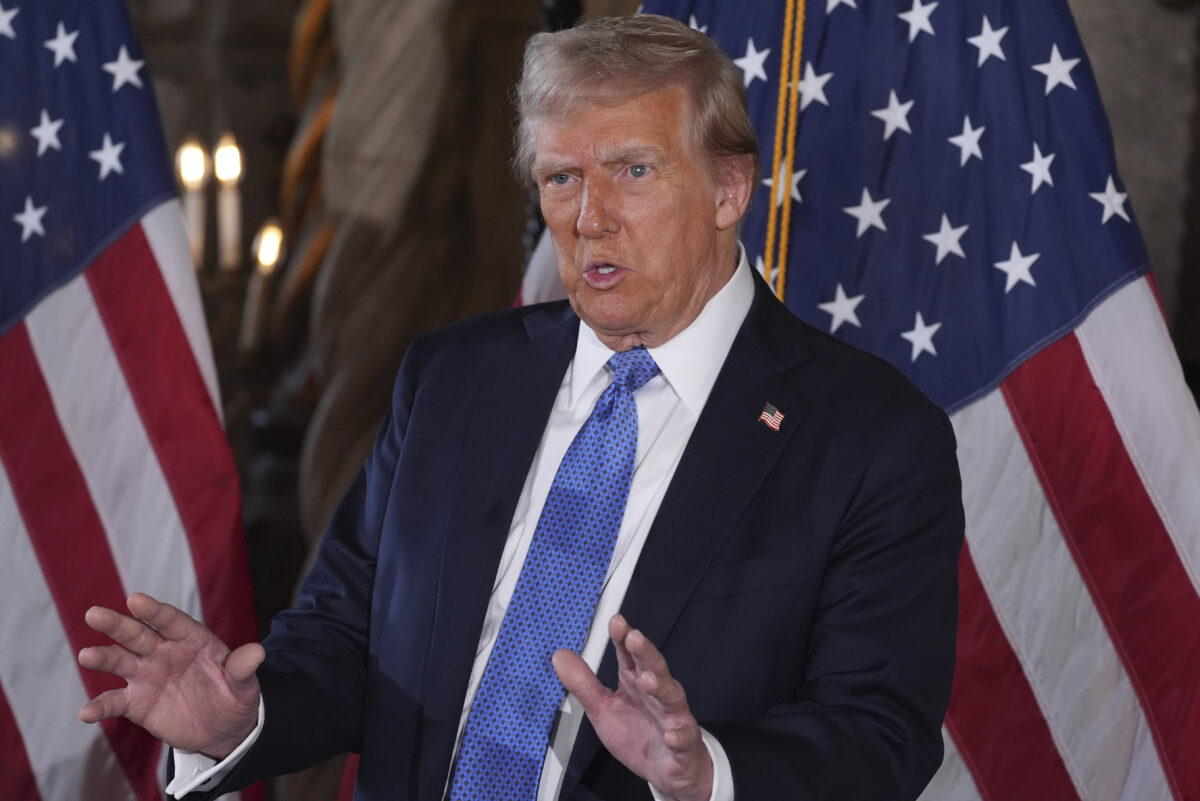
President-elect Donald Trump speaks during a news conference at Mar-a-Lago, Monday, Dec. 16, 2024, in Palm Beach, Fla. (AP Photo/Evan Vucci)
It was a muggy summer afternoon in Washington, D.C., camera shutters clicking in the heavy air with the smell of coffee brewing in nearby press rooms. Reporters stopped and listened as the news broke: former President Donald Trump was demanding prosecution of Beyoncé over her campaign support for Kamala Harris.
Trump’s latest social media post, shared late Saturday, claimed Hillary’s former VP had “illegally” paid pop stars—including Beyoncé—for endorsements. He ranted that “Candidates aren’t allowed to pay for endorsements… It is totally illegal,” arguing Beyoncé “was paid $11,000,000 to walk onto a stage, quickly ENDORSE KAMALA.” In TrumpWorld logic, that made her an “illegal election scammer” who “broke the law” and “should be prosecuted”. He insisted Harris and “all those that received Endorsement money… broke the law.”
Political Fireworks vs. Facts
Unsurprisingly, lawyers and fact-checkers immediately questioned Trump’s claims. NBC News and ABC News both note experts say there’s no Federal Election Commission rule against paying for official appearances or entertainment—so long as it’s properly reported. As one campaign finance analyst told ABC, paying a singer’s production company for stage costs isn’t an illegal donation. Indeed, the Harris campaign’s filings show payments to production companies run by Oprah Winfrey and Beyoncé’s mother each covered rally expenses, not a “fee” for an endorsement (abcnews.go.com). ABC’s reporting explains that Winfrey defended her $1 million fee as covering event production, and Beyoncé’s team says she never took an endorsement check at all.
Nonpartisan fact-checkers are unanimous: Trump’s story falls apart on inspection. The Guardian notes he offered “no evidence” for these allegations (www.theguardian.com). PolitiFact gave his claims a “False” rating, finding “no evidence” that Beyoncé was paid anything for her Houston rally appearance. FactCheck.org likewise flagged social posts about paid endorsements as “unfounded”, quoting a campaign aide who said the rumors were “not true” (www.factcheck.org). Beyoncé’s publicist also dismissed the talk as “beyond ridiculous.”
One supporter, small-business owner Melissa Reyes, 42, sighed as she read the news. “This is preposterous,” she said. “I think it’s just another distraction. Trump’s got himself in trouble, so now he’s throwing wild accusations at beloved celebs. It’s frustrating—maybe even a little paranoid.”
Stakes and Context
Trump isn’t inventing this line of attack from thin air. During the 2024 campaign he lashed out at Taylor Swift, Bruce Springsteen and others, repeating a right-wing trope that star power meant cronyism. Axios reported he blasted Harris’ endorsers as “unpatriotic entertainers” who he alleged were secretly paid pile. In reality, both parties had celebrity help: Trump’s team bragged when figures like Ted Nugent and Kid Rock played the Republican convention.
The timing is telling. In recent weeks, Trump’s name surfaced in unsealed Jeffrey Epstein documents, drawing scrutiny back to his long-criticized ties to the predator’s world. Now he’s seized on Beyoncé and Kamala Harris instead. It’s unclear whether this is a genuine crusade or simply an attempt to change the subject. Critics point out the irony: Trump has always paid celebrities large sums for support (remember Hulk Hogan and Ted Nugent concerts). If paying entertainers to rally is that illegal, isn’t he indicting himself?
Public Reaction and Rebuttals
Democrats pounced. Senator Elizabeth Warren tweeted that Trump was “outside reality”, adding that lawyers tell her “there’s simply no law” broken here. Even some Trump loyalists were unconvinced. “Come on, man,” said Mark Jennings, 34, a New York barista. “Does this really matter? She wasn’t even singing; she just waved a flag. If that’s illegal, what have we gotten ourselves into? It’s gotta be a joke.”
Yet Trump doubled down in a Fox News interview Sunday, calling the situation an “illegal election scam at the highest level.” He claims media reports support him, but no major news outlet has substantiated the numbers he quotes. The only “proof” remains his own word and a handful of conspiratorial websites.
At its core, the question remains open: is this a political stunt or a potential legal issue? Campaign finance experts say that paying performers for appearances is commonplace and lawful in U.S. elections, as long as it’s public. The Federal Trade Commission, not the FEC, typically oversees endorsement deals. So far, no prosecutor has expressed interest in Trump’s claims. For now, the drama seems destined more for cable TV debates than any courtroom.
As Beyoncé’s Houston speech becomes political fodder, fans are left scratching their heads. “She didn’t even sing!” a fan pointed out online. “And he did this for attention, I think.” The saga is far from over—as Trump rages on, the chorus of fact-checkers and experts might just outsing him in truth.
Sources: Reporting by ABC News and PolitiFact provides detailed looks at the campaign finance filings and false claims. The Guardian also noted the lack of evidence behind Trump’s allegations (www.theguardian.com) (www.factcheck.org).
**
About the Author