The White House foyer smelled faintly of brewed coffee; a folded program left a coffee ring on the mahogany table as aides shuffled papers and a polished presidential pin caught the overhead light. Rain hissed softly on the driveway outside.
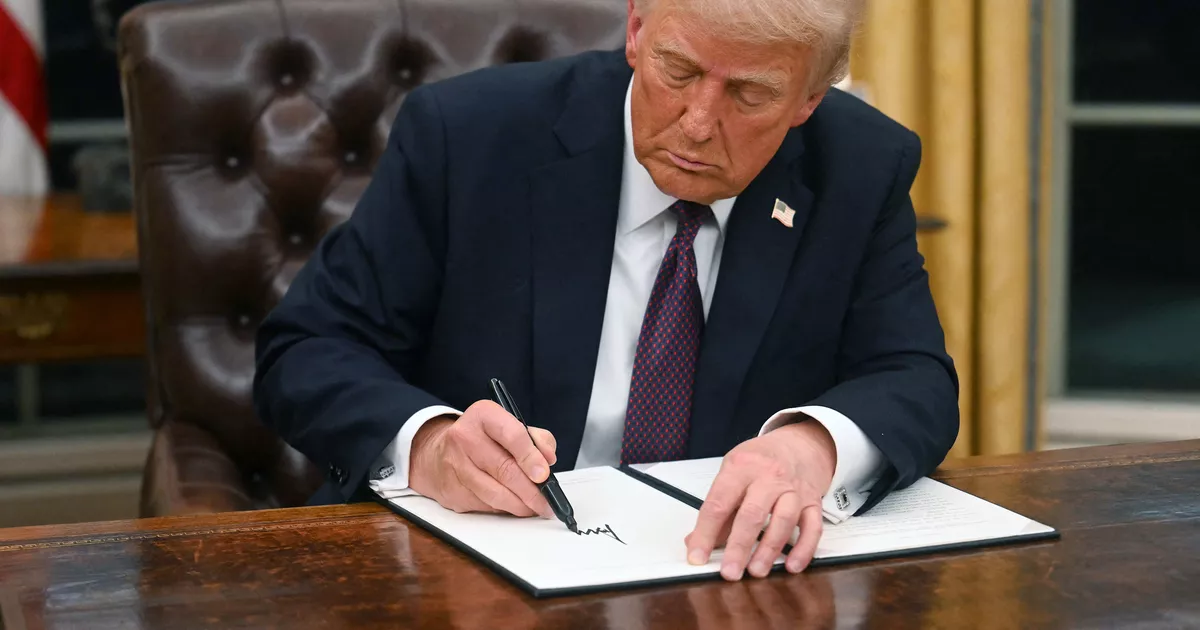
The small theatricality set the tone. Big events always do. But the ceremony that followed — an executive order placing the president himself atop a federal task force for the 2028 Los Angeles Olympics, with an explicit mention that the National Guard or even the military could be used if needed — was not quite the ceremonial nod most past presidents have offered.
What the president announced
President Trump signed an order creating a White House task force that he will chair, with Vice President J.D. Vance as vice chair, directing dozens of federal agencies to coordinate on security, transportation and visa and credentialing operations tied to the Games. He told reporters he would “use our National Guard or military” if necessary to keep the Olympics safe. The move follows a recent bill that set aside $1 billion in federal funds for Olympic security and planning. (latimes.com, cbsnews.com)
Casey Wasserman, the chairman of LA28, praised the president’s involvement at the event, calling the administration “supportive and helpful” and suggesting stronger federal coordination would help pull off what he likened to “seven Super Bowls a day.” That public embrace contrasts with frank anxiety from many local leaders who have clashed with federal agents and the White House over months of immigration enforcement actions in Los Angeles. (latimes.com, reuters.com)
Why the military comment matters
Presidential oversight of Olympic planning is not new in the U.S., and host nations commonly use military resources for logistics and security — Paris deployed tens of thousands of police and soldiers for last year’s Games. But the context here is different: Washington recently sent National Guard troops and Marines into Los Angeles during immigration operations, a deployment that helped spark bitter public disputes with city officials. That recent history makes talk of sending forces back for the Olympics politically combustible and operationally tricky. (latimes.com, reuters.com)
“To be honest, when he said that I kind of froze,” said Marisol Gutierrez, 44, who runs a taqueria in Boyle Heights and has been watching city debate about the Games. “We want visitors, sure — but my customers are nervous already. The last thing we need is soldiers on our streets again.” Her hands were stained with salsa as she spoke; a battered order pad lay by the register. (Small detail: her menu still lists a “1984 special,” a nod to the last L.A. Games — a quirky reminder that these conversations aren’t new.)
Local officials’ tightrope
City leaders have been negotiating with LA28 over who pays for police, traffic officers and other municipal services during the Games. Los Angeles Mayor Karen Bass and others have publicly criticized the recent federal presence in the city and warned that heavy-handed deployments could deter visitors and strain community trust. At the signing, Bass’s office noted the city has worked productively with federal partners in the past while also signaling deep concern that federal policy choices could complicate visa processing or make international teams wary of coming. (latimes.com)
The Secret Service will lead security coordination because the Games have been designated a National Special Security Event — the same high-security status used for other major domestic events — but the task force puts the White House in a more centralized role than some locals expected. How that dynamic will play out is uncertain; sources remain conflicted about whether the task force will fully integrate with state and city planning or try to steer parts of the operation from Washington. (latimes.com)
Political optics, logistics and precedent
There’s precedent for strong federal involvement: security budgets and federal logistics for past U.S. Games were substantial — the government spent hundreds of millions on security and transport for Atlanta in 1996, and security architecture tightened after 2001. But the current president’s hands-on posture carries a political layer that could reshape everyday logistics into national theater, especially with midterms and other political cycles still ticking. Reuters noted LA28’s chair defended the move as reinforcing federal commitment; others see it as the president leaning into a high-visibility stage. (latimes.com, reuters.com)
“It’s got potential to be very useful, or to make everything ten times harder,” said Dr. Evelyn Park, 58, a retired LAPD incident commander who now teaches emergency planning at a local university. “Safety planning needs clear lines — confusion costs time and lives. The reality is likely more complicated than the sound bites.”
Money and manpower
The $1 billion set aside for Olympic security and planning is significant but not limitless; mega-events often run over budget on transport and policing. Still, federal money and an across-the-government task force can grease crucial wheels: streamlined visas, unified credentialing, and single-channel communications help thousands of athletes, officials and tourists move through a dense urban region. That said, the question of how military assets might be used — for crowd control, perimeter security, transportation logistics or something else — was left intentionally vague at the signing. (cbsnews.com, latimes.com)
Open questions and an uncertain path
It remains unclear how the task force will balance national security needs with local sensitivities. Will federal forces be deployed only as back-up logistical support, or might they take visible, front-line roles? Who pays for overtime for city officers detailed to the Games? And politically: how will Los Angeles, a deep-blue city with a complex immigrant community, reconcile being the stage for a Games whose security message could clash with residents’ everyday lives? These are not theoretical — they will shape whether the Olympics are remembered for athletic feats or for tense civic conflict.
A small aside: at the ceremony the president was handed a set of 1984 Olympic medals, a nostalgic flourish that seemed aimed at continuity. It struck me — someone who once watched a grainy VHS replay of the ’84 opening on a clunky VCR — as both symbolic and oddly theatrical. (I know, VHS is ancient; what can I say? Old habits die hard.)
What readers should take away
If you live in L.A., work in hospitality, or plan to visit in 2028, watch how federal and city plans get written into concrete agreements over the next months. Expect more negotiation over money, personnel and the public face of security. Plan for disruptions during big test events, and pay attention to who’s actually doing the coordination on the ground — the best-laid plans rely as much on clear roles as on budgets and muscle.
“It’s a proud moment for our city,” said Casey Wasserman, 51, LA28 chairman, in a brief conversation after the announcement. “But we also gotta be realistic — there’s a lot to do, and we’re gonna need everyone at the table.” (latimes.com, reuters.com)
One last note: sources remain conflicted about whether this centralized White House role will smooth operations or polarize them further. The timeline for answers is long — the opening ceremonies are three years away — but the political and logistical choices being made now will echo through neighborhoods and ticket lines alike.
About the Author