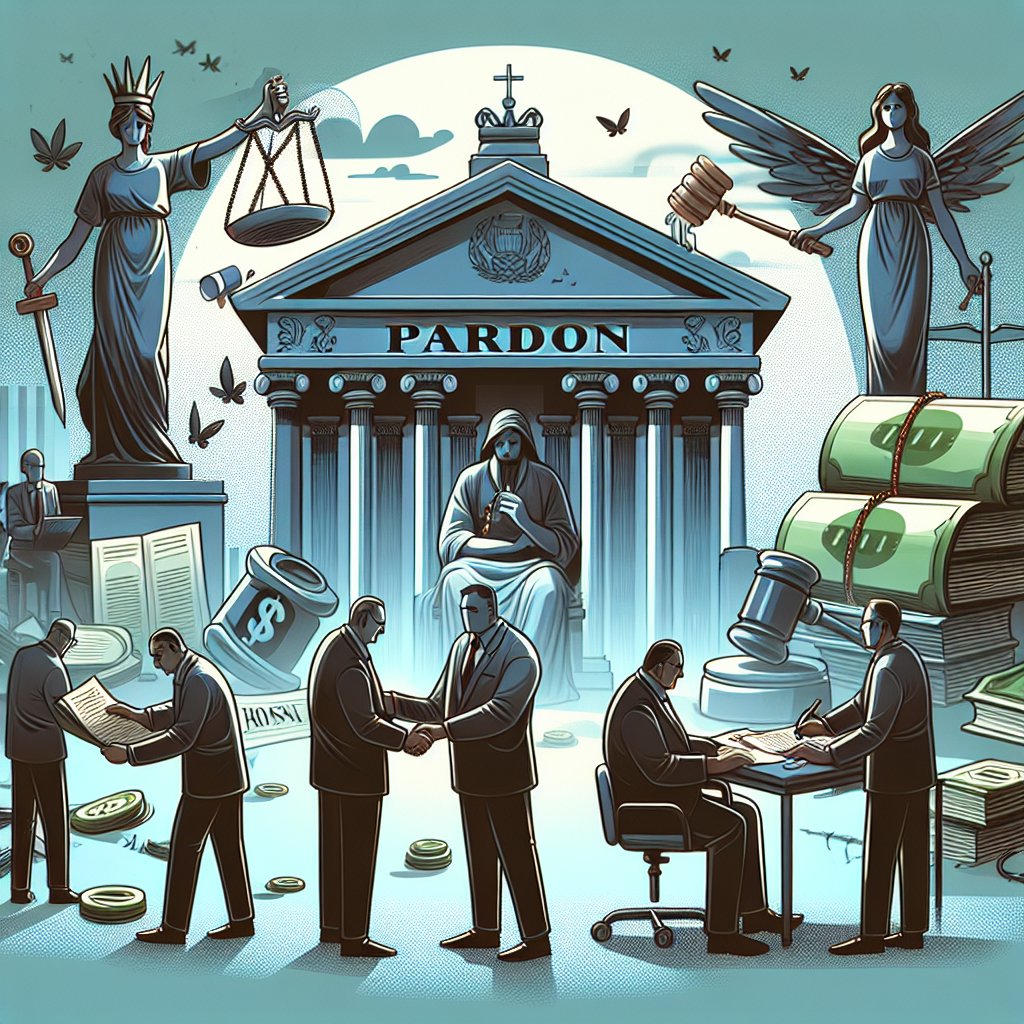
There I was, sipping my morning coffee when I came across a news snippet that piqued my interest. It mentioned something about Donald Trump saying he’s “allowed” to pardon Ghislaine Maxwell, a name entangled in a web of high-profile controversy due to her association with Jeffrey Epstein. Now, whether or not one agrees with the former president’s perspective, his statement prompts a deeper look into the powers—and limits—of presidential pardons in the United States.
What Exactly is a Presidential Pardon?
Let’s break it down. The power to pardon is granted to the President of the United States by the U.S. Constitution under Article II, Section 2. This provision allows the President to forgive federal crimes, which means they can reduce prison sentences, overturn a conviction, or restore certain rights. This power is only applicable to federal offenses, not state crimes. What’s fascinating is that this power does not require approval from Congress, making it a singular, often controversial, wielding of authority.
Historical Context: Pardons That Made Waves
Presidential pardons have a storied and often contentious history. Let’s go down memory lane:
-
Gerald Ford and Nixon: Perhaps the most famous of all, Gerald Ford’s pardon of Richard Nixon after the Watergate scandal is a classic example. Ford believed that a pardon would help the nation heal, but it led to significant public outcry and may have cost him the subsequent election.
-
Bill Clinton’s Last-Minute Pardons: On his last day in office, Bill Clinton issued 140 pardons, including one for Marc Rich, a financier who had fled the country to avoid federal charges. The decision raised many eyebrows and sparked investigations.
-
Barack Obama’s Clemency Initiative: In a bid to address sentencing disparities, Obama pardoned or commuted the sentences of over 1,700 individuals, focusing particularly on non-violent drug offenses.
These examples highlight how presidential pardons can both reflect and influence the political climate and societal values at the time.
The Maxwell and Epstein Connection
Now, circling back to Ghislaine Maxwell, her connection to Jeffrey Epstein, a wealthy financier convicted of sex offenses, made her a focal point in discussing justice in high-profile criminal cases. She was convicted in 2021 for sex trafficking and other offenses. The speculation around her potential pardon (whether considered or not) taps into the broader discussion on how the judicial system handles individuals with immense power and resources.
The Ethics and Consequences of Pardoning
Pardons, especially those perceived as undeserved, often ignite debates on ethics and transparency. Critics argue that the pardon power can undermine justice if misused. It raises questions like, “Does pardoning send a message that some are above the law?” History tells us that the answer isn’t always clear-cut, and each pardon can have ripple effects.
One sentiment, though, remains constant: presidential pardons often reflect the challenging balance between forgiveness, justice, and influence. The debate on their ethical implications continues to capture public interest and dissect our legal and political frameworks.
Wrapping It Up
Presidential pardons are more than just legal formalities—they’re powerful statements. Whether it’s about forgiveness or controversy, these decisions open up conversations about justice, equity, and political power. As for Trump’s remarks about pardoning Maxwell, whether hypothetical or not, they underscore the complexities and the wide-ranging impact of this constitutional power.
It’s a complex, layered issue that makes our political discourse so interesting—and sometimes bewildering. So, next time you come across a headline about presidential pardons, I hope it gives you pause to consider the intricate dance of law, politics, and morality.
**
About the Author