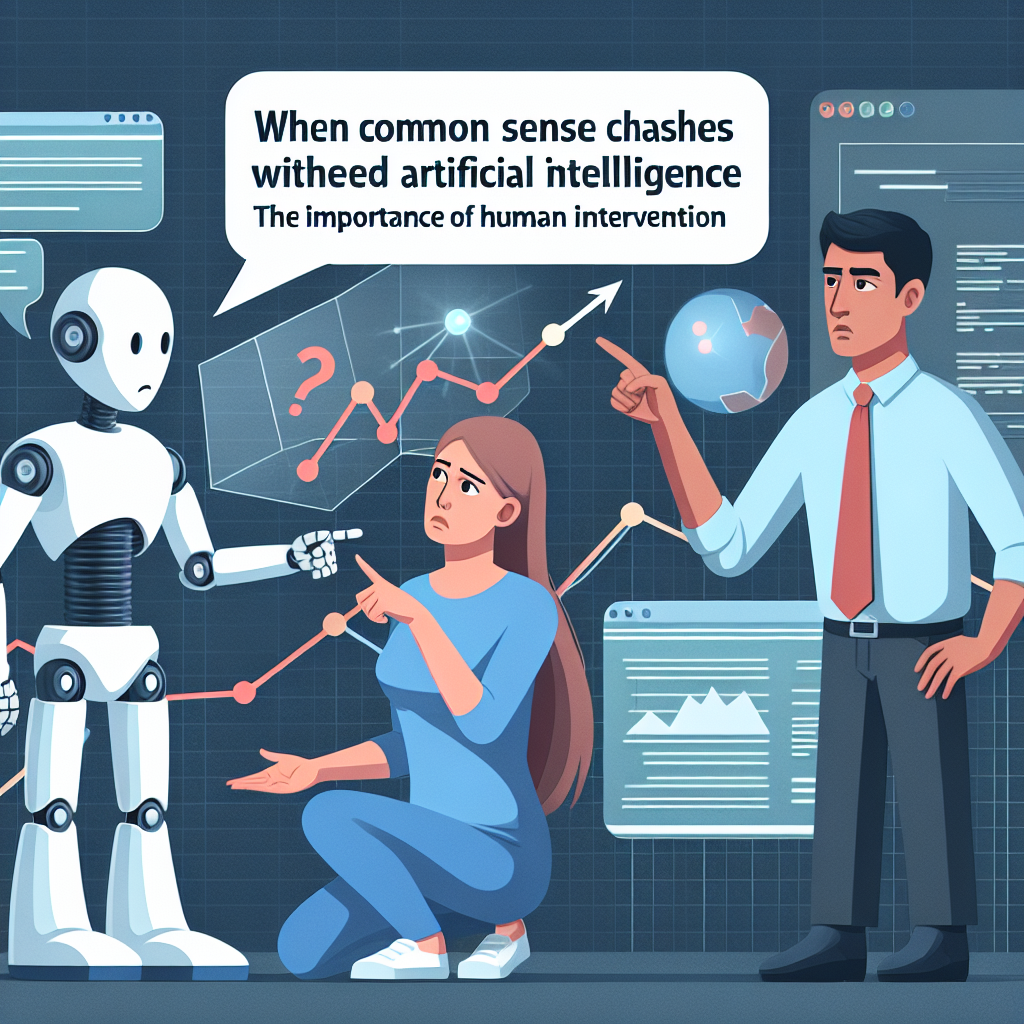
We’ve all heard the buzz about AI and how it’s changing the world—streamlining tasks, enhancing productivity, and gradually making its way into our everyday lives. But, as we revel in the marvels of technology, it’s crucial to remember that sometimes, the tried-and-true method of good ol’ human common sense is still vital. Grab your coffee, and let’s chat about an interesting scenario that brings this to light.
The Tale of the Sandpaper Dilemma
Imagine this: You’re at work, and your boss is wrestling with a pesky problem—how to trim a 52-inch piece of sandpaper down to 51 inches so it’ll fit on the wide belt sander. Naturally, they turned to the new shiny tool in the box: AI. For two hours, they fed prompts into an AI machine, hoping for the magic answer. Meanwhile, you, with just a straightedge and a bit of practical knowledge, complete the task in ten minutes flat. The kicker? Your boss wasn’t impressed that you bypassed the AI process.
What makes this story more than just an amusing anecdote is how poignantly it highlights a broader discussion: the interplay between human judgment and artificial intelligence.
The Limits of AI Versus Human Ingenuity
Artificial Intelligence has reached a stage where its capabilities are undeniably impressive. From predictive text to self-driving cars to complex data analysis, AI is transforming industries. But why, in this situation, did AI struggle where human intervention thrived?
- Contextual Understanding: One critical limitation of AI is its lack of inherent contextual awareness. Human judgment is often based on tacit knowledge accumulated through experience—a concept explained by Michael Polanyi as “we know more than we can tell.”
- Problem-Solving Creativity: Humans excel at creative problem-solving, often employing out-of-the-box thinking. AI, while powerful, excels in structured environments where clear parameters are defined.
- Efficiency Versus Complexity: Sometimes, the simplest solution is the most efficient. In this scenario, the task was to cut sandpaper, something straightforward enough to not warrant overcomplication through AI.
AI in Context: Historical and Modern Perspectives
Historically, humanity has always sought tools to improve efficiency. The Industrial Revolution heralded machines that could do the work of many, and now, AI offers a leap forward in intellectual tasks. Yet, according to Forbes, around 80% of executives acknowledge missed opportunities due to an excessive focus on trends like AI without enough focus on execution.
AI, much like past technological innovations, should be seen as a complementary tool—an assistant rather than a replacement. For example, IBM’s Watson has made strides in data-driven fields like healthcare and finance by supplementing human expertise, not replacing it.
Striking a Balance: Working Alongside AI
So, how do we find balance? How do we decide when to rely on AI and when to trust ourselves? Here are a few tips:
- Evaluate the Complexity: If the task is straightforward, possibly requiring more common sense and hands-on interaction, trust intuition.
- Understand AI’s Capabilities: Know what AI is good at—pattern recognition, large data set analysis—and leverage these to your advantage.
- Collaboration is Key: Emphasize collaboration between human intellect and AI efficiency for optimal outcomes.
The Takeaway: The Value of Human Intuition
As AI continues to evolve, our role isn’t diminished; it’s enhanced. The goal isn’t to replace common sense with algorithms but to work symbiotically. After all, it’s our ability to adapt, learn, and innovate that truly sets us apart.
Remember, the next time technology gets in the way rather than helping, trust in the simple things—a straight edge, an experienced hand, and a bit of common sense. Sometimes, that’s all you need to slice through a problem.
About the Author