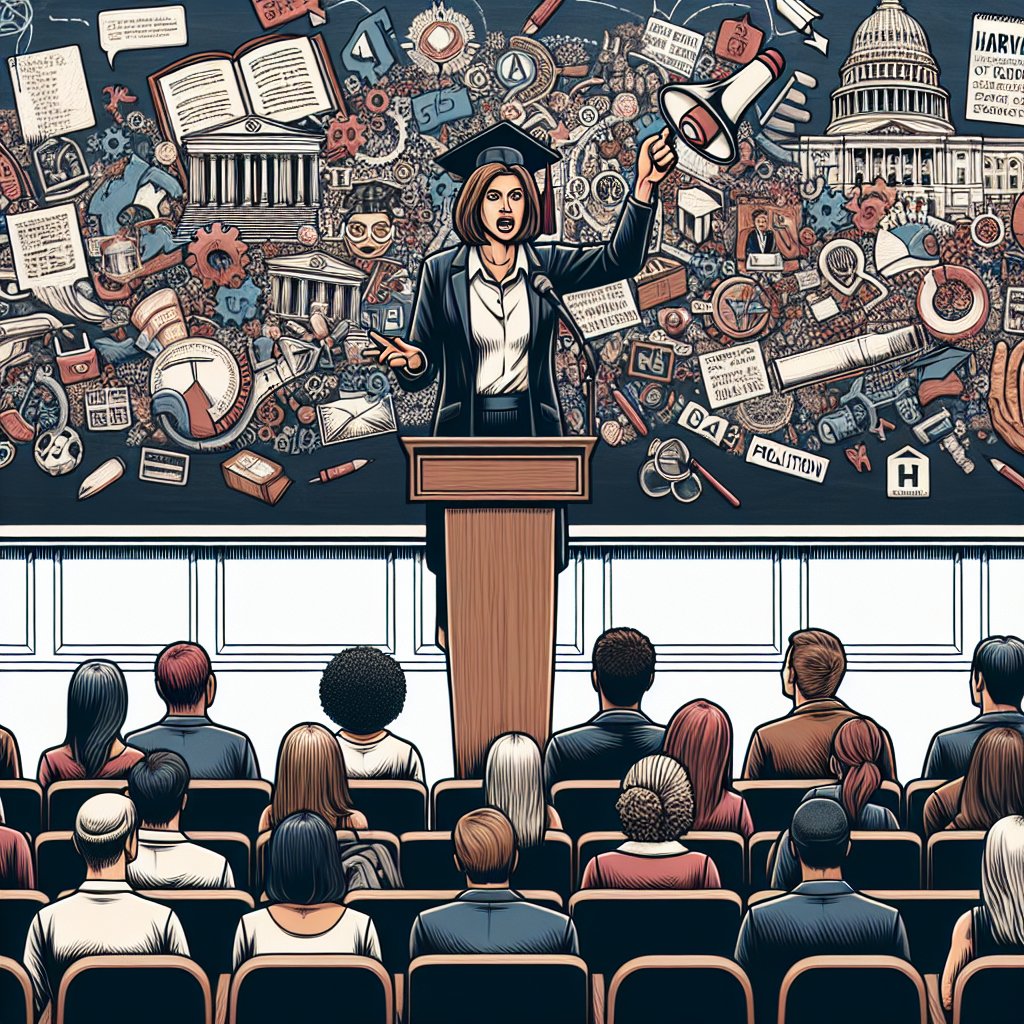
A Battle Beyond the Classroom
If you’ve been keeping an eye on higher education news, you might’ve heard about the ongoing saga between Harvard University and the Trump administration regarding funding cuts. It’s a story that encapsulates the intersection of politics, education, and finance.
But why did this happen, and what’s at stake? Let’s dig in and find out.
What Prompted the Funding Cuts?
In a nutshell, Harvard found itself at odds with the federal government over policies and political views. The Trump administration justified the funding cuts by claiming the university had policies that ran counter to federal interests.
Historically, this isn’t the first time politics have influenced university funding or policies. During the McCarthy era in the 1950s, for example, universities were pressured to dismiss faculty who were believed to have communist affiliations. More recently, we’ve seen funding impacted by debates over Title IX and diversity initiatives.
The Stakes for Harvard—and Beyond
So, why does this matter? After all, Harvard is one of the wealthiest universities in the world. But beyond the immediate financial implications, this conflict presents a larger issue about the independence of educational institutions and their interactions with government authorities.
-
Research and Development: Federal funding is often crucial for research, which drives innovation and development. Harvard, like many other institutions, relies on these funds to advance knowledge in various fields.
-
Academic Freedom: Political interference could set a concerning precedent about what can be taught, researched, or discussed in academic settings.
-
Long-term Impact on Students: The trickle-down effects might affect scholarships, financial aid, and the quality of education over time as universities struggle to balance budgets.
The Bigger Picture: Education Versus Politics
Whenever education becomes a political chess piece, there’s much more at risk than just dollars and cents. Historically, universities have been bastions of free thought and innovation. From the Renaissance to the modern era, advances in science, philosophy, and the arts have often come when universities operated independently of political interference.
Remember when Darwin’s “On the Origin of Species” brought on a revolution not just in biology but in how we think about humanity’s place in the universe? It was possible because academia was a place for free inquiry.
Expert Opinions and Data
A 2019 study from the American Council on Education found that institutions facing increased political pressure often experience a chilling effect on academic freedom. This not only stifles creativity but can deter top talent—faculty and students alike—from being part of those institutions.
Moreover, Nobel laureate and economist Paul Romer highlighted that universities need to remain independent to foster environments where innovation can thrive.
What’s Next?
The resolution of this standoff isn’t only significant for Harvard. It’s a signal to educators and students at institutions worldwide about the value we place on education and critical inquiry. If Harvard manages to restore its funding, it could reaffirm the independence and resilience of educational institutions.
In Conclusion
While I sip my coffee, pondering this intellectual tug-of-war, it strikes me how essential it is to protect the spaces where new ideas happen. Universities are like the greenhouses for the human mind, nurturing young buds of ideas to ultimately flourish into groundbreaking changes.
As we follow the ongoing dialogue between Harvard and the federal government, let’s consider what kind of academic future we want to promote. One defined by the freedom to pursue knowledge without constraint, or one defined by the shifting sands of political winds.
About the Author