A humid porch at dusk. The box fan hums, blades whispering; the faint scent of lemon cleaner hangs in the air, and a coffee ring blooms on a battered notebook beside a sweating glass.
That hum settles into the background of summer living — part comfort, part ritual. People switch on fans expecting relief, not a miracle. The real story is quieter and more mechanical, and it explains why that breeze can feel like salvation even when the air itself hasn’t cooled.
What the fan actually does
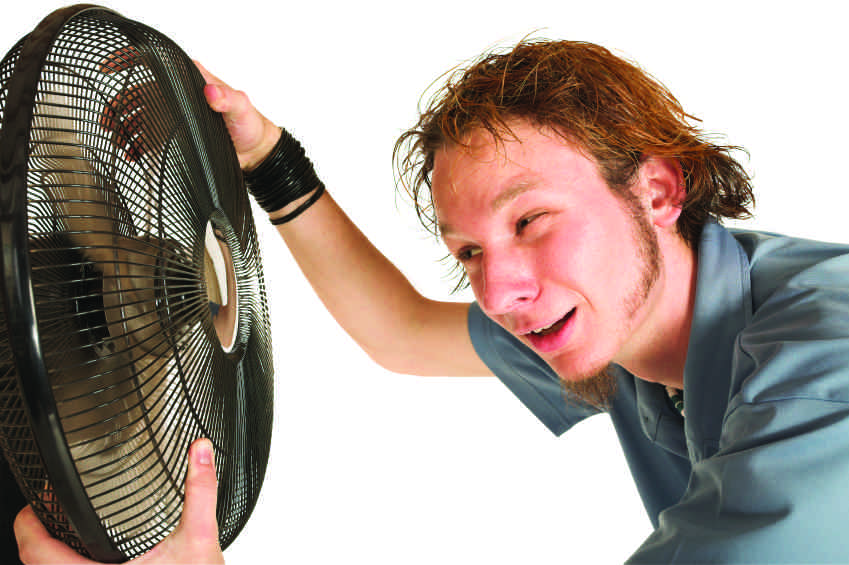
A fan doesn’t lower the room temperature. It moves air. Plain and simple. Yet the movement changes what’s happening right at the surface of your skin. Warm air clings to your body in a thin, invisible layer. That layer acts like a warm blanket. When a fan blows, it strips that blanket away. New air takes its place, and heat flows from your skin into the moving air faster than it would in stillness.
That faster flow comes in two flavors. One is convective cooling: moving air carries heat away more quickly. The other is evaporative cooling: small amounts of moisture on your skin — sweat, or even the thin film of moisture everyone has — evaporate into the passing air and take heat with them. Evaporation is surprisingly effective; it uses a lot of energy to turn water from liquid to vapor, and that energy comes from your body as heat.
Why it still works when you’re not sweating
You might think the fan only helps when you’re soaked. Not so. Even when you feel dry, microscopic moisture and heat at the skin’s surface still evaporate. A fan amplifies that tiny evaporation and trims the insulating boundary layer of air. The result: your skin temperature drops a bit, and your brain registers comfort. Socially, that matters. Feeling cooler makes people less irritable, more productive, and more likely to leave windows open instead of cranking up the air conditioning — which has energy and policy implications during heat waves. A Reuters look at summer energy use and behavior noted that many households turn to fans as a first response during heat events, partly for that reason.
Real people notice the difference. “I mean, when I was on a roofing job last July, the fan in the truck didn’t make the cab colder, but you could breathe easier,” says Jamal Peters, 29, a construction worker. “Gotta say, it keeps me from feeling like I’m melting.” At home, Ellen Morris, 67, a retired teacher, says she sometimes wipes her arms and sits by the ceiling fan. “Feels like it helps, even if I’m not drenched,” she adds, tapping a worn golf glove on the chair beside her.
When fans can fail — and when they can harm
There’s an important caveat. If the surrounding air is much hotter than your body — think above roughly 95°F to 100°F (35–38°C) — moving that air across your skin can stop helping and start hurting, because you’re literally being pelted with hotter air. For vulnerable people, such as older adults or those with certain medical conditions, relying on fans alone during extreme heat may be unsafe. CDC guidance on staying cool in high heat stresses that fans aren’t always enough for preventing heat-related illness in those conditions.
Snopes’ fact-checks have wrestled with viral claims about fans causing heatstroke — the nuance being that fans don’t cause heatstroke by themselves, but they can’t replace air conditioning when the outdoor temperature is dangerously high. So the reality is likely more complicated than the reassuring “fans are always fine” message some of us grew up with.
Old tricks and modern trade-offs
There are clever ways to squeeze extra cooling from a fan: directing air across a bowl of ice or a wet towel increases evaporative cooling in a room, and ceiling fans angled to push air downward create a stronger breeze across the skin. These aren’t new discoveries; they’re the kind of small, homemade fixes people used long before central air was common — think of that slow, earnest ingenuity in old reruns of MAS*H where folks made do with what they had.
Energy-wise, fans are far more frugal than air conditioning for moving the same volume of air. That’s not a panacea for climate-driven heat spikes, though. If many people skip AC on a very hot night because they “feel” cooler with a fan but are actually at risk, public-health outcomes could worsen. Policymakers and utilities watch these behaviors closely, and public messaging from health agencies frequently tries to strike the balance between energy savings and safety.
A small contradiction: perceptions versus measurements
People’s sense of comfort doesn’t always match thermometer readings. A fan can make you feel several degrees cooler even when the thermostat hasn’t budged. Scientific measurements of skin and core temperature sometimes show modest drops; subjective comfort can be greater. Why? The nervous system responds to local cooling on the skin, and that signal can outweigh slight changes in overall body temperature. So perception and physiology can point in different directions — sources remain conflicted on which matters more in particular contexts, like prolonged heat exposure.
A quick aside: drying paint
Artists use fans to dry paint faster. Weird little crossover with human cooling, but the mechanism is shared: air movement accelerates evaporation. I confess I watched that once at a community art night — drying strokes in front of a desk fan while someone hummed an old Sinatra tune. Small, useful observation. Little detours like that stick with you.
What readers should take away
Fans are effective because they change the physics at your skin more than they change the room. They help most people feel cooler by increasing heat loss through convection and evaporation, and they do it with far less energy than air conditioning. But fans are not a universal fix; in extreme heat they may offer false security for the vulnerable. Public-health advice from agencies and fact-checking outlets emphasizes both benefits and limits. Choose based on conditions, and watch for signs of heat stress in yourself and others.
Final note — a personal memory
I still remember a night in the late 1980s, a box fan rattling on the windowsill, my father reading a dog-eared paper beside a lamp that smelled faintly of cigarette smoke (I know, not a great habit). The fan made the room bearable. The science was simpler then; my gratitude wasn’t. It hasn’t changed. Neither has the small human comfort that a moving breeze brings.
About the Author