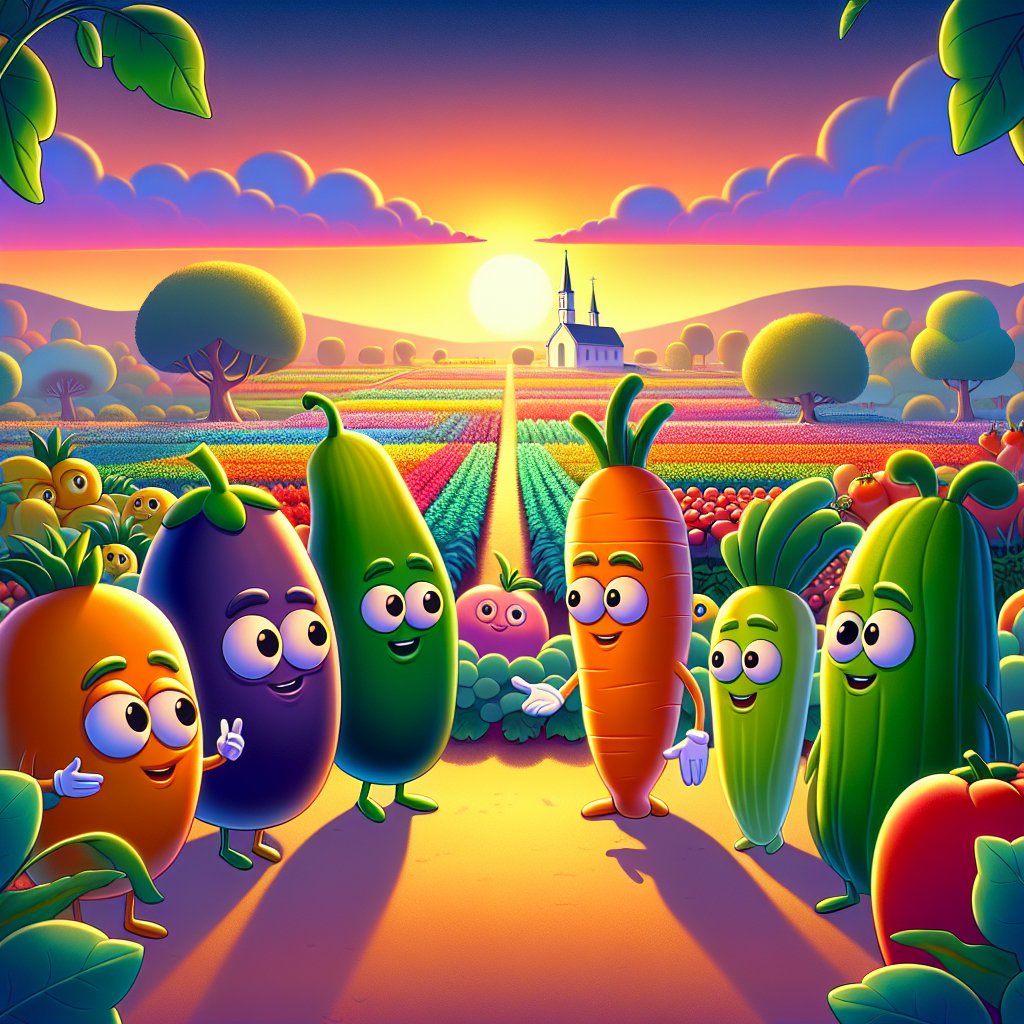
Do you remember VeggieTales? Those animated, talking vegetables with big eyes, catchy songs, and surprisingly deep moral lessons probably graced many of our childhood screens. But have you ever wondered why a popular religious cartoon never depicted Jesus? Take a seat, grab your cup of joe, and let’s chat about it.
The VeggieTales Conundrum: A Rule with Roots
Phil Vischer, the creator of VeggieTales, grew up in a world brimming with creativity and moral storytelling. In the early ’90s, he brought to life this unique world where veggies could talk and teach us life lessons, thanks to his solid Christian upbringing. But behind the vibrant animations and whimsical tales were two steadfast rules laid down by his mother: no depicting Jesus as a vegetable and no portraying the veggies having a redemptive relationship with God.
At first glance, these might seem a bit quirky. I mean, why not have Larry the Cucumber play Jesus in a skit about kindness? But delve a little deeper, and you’ll find these rules were grounded in serious theological and ethical considerations that allow us to appreciate the depth behind not just VeggieTales, but other religious or culturally significant narratives.
Rooted in Reverence
Central to this was the idea of reverence. The depiction of Jesus as a vegetable could trivialize the seriousness and sanctity of the Christian Savior’s image. Vischer’s mother rightly recognized that turning Jesus into an animated cucumber or tomato could reduce His divine and religious significance to mere caricature. This reflects a broader historical trend where religious figures are often afforded the highest level of respect to maintain their reverence among the faithful.
This isn’t just about VeggieTales. It’s a pattern seen across cultures and religions. In the Islamic tradition, for instance, depictions of Prophet Muhammad are avoided to prevent idolatry and maintain respect for his legacy. Likewise, the Christian Church has historically exercised caution in how Jesus and other sacred figures are depicted.
The Theological Thoughtfulness
Then there’s the matter of the veggies not having a redemptive relationship with God. In Christianity, redemption is tied deeply to human experience, involving repentance, forgiveness, and a personal relationship with the divine. Portraying vegetables—non-human entities—as capable of this relationship could blur theological lines and inadvertently mislead young viewers about the nature of salvation.
This rule ensures that the show stays grounded in moral lessons applicable to viewers’ lives without oversimplifying or misrepresenting religious doctrine in the process. Through stories focusing on courage, forgiveness, and compassion, the veggies teach universal virtues without stepping into theological territories much too complex for a children’s show.
The Creative Curbs as Boundaries for Freedom
Interestingly, these limitations imposed by Vischer’s mother might have seemed like creative roadblocks, but they actually pushed the boundaries of storytelling. Restricting particular narratives compelled the creators to weave stories that are both cleverly simple and profoundly impactful—focusing more on values than direct religious instruction.
A quick peek at the world today shows us a swell of content aimed at integrating values and entertainment, without leaning heavily on direct religious narratives. Shows like “Bluey” and movies like “Inside Out” spring to mind, offering impactful storytelling that leaves room for personal interpretation.
What We Learn from Talking Veggies
The legacy of VeggieTales goes beyond quirky animations and catchy tunes. It offers a blueprint for understanding how creativity can engage deeply with religious themes while respecting boundaries crucial for maintaining reverence and theological integrity. As we’re daily bombarded with content, it serves as a gentle reminder that art can reflect on moral and existential themes without overstepping vital cultural and religious bounds.
So, the next time you cross paths with an old VeggieTales episode, remember there’s more under those leafy layers than just cute vegetables. There’s history, thought, respect, and so much more—a beautiful testament to the power of thoughtful storytelling.
About the Author