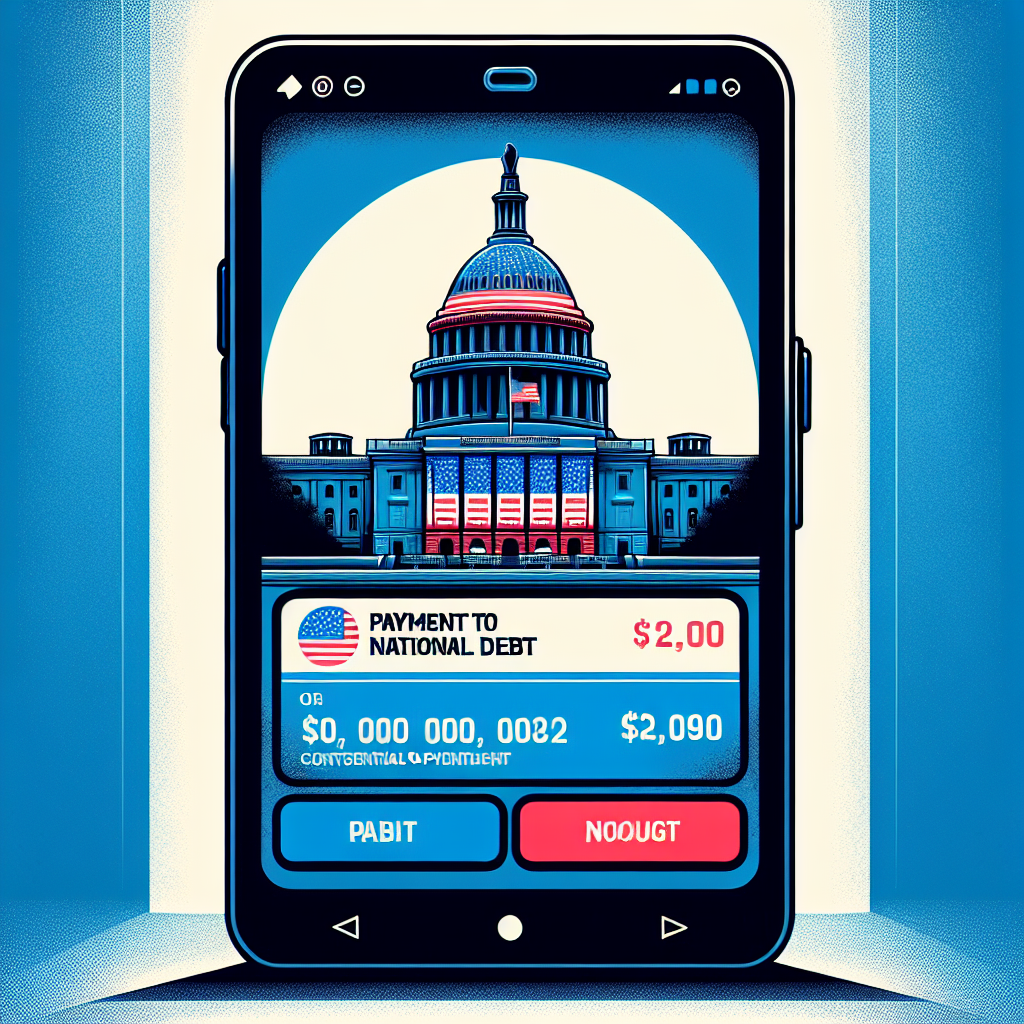
Imagine sitting down with a friend over coffee and hearing them say, “Hey, did you know that you can now Venmo the government to help pay off the national debt?” At first, you might laugh it off, thinking it’s some sort of joke or a ridiculous meme going around. But no, it’s a real thing—at least while Donald Trump was in office.
The “Venmo the Debt” Idea: A Playful or Practical Proposition?
For those of you who might have missed it, the concept of using Venmo or any similar payment platform to tackle the national debt seems as futuristic as it is audacious. It’s an innovative twist on an old idea: getting citizens to voluntarily contribute funds to the national till. If you’re scratching your head wondering where this idea came from, let’s dive a bit deeper.
The Mechanics Behind the Idea
Using Venmo to pay off national obligations isn’t just about tech-savvy improvisation. It’s about the desperate, albeit humorous, measures some leaders consider when facing a colossal issue: the U.S. national debt. As of mid-2023, the U.S. national debt was staggering around $31 trillion. To put that into perspective, imagine stacking one trillion $1 bills; it would reach nearly 67,866 miles into space.
The idea of citizens contributing to the national debt is not entirely new. The Bureau of the Fiscal Service actually accepts gifts towards reducing the debt via checks and electronic payments. In 2022, Americans donated approximately $1 million—admirable, but merely a drop in the ocean compared to trillions.
Is It Really Feasible or Just Fun?
The scope of the national debt problem far exceeds what individual contributions could realistically achieve. Imagine each American chipping in $100—still not enough by a long shot. However, the proposition raises interesting discussions about civic duty and modern financial tools.
Why Venmo?
Thanks to its simplicity and popularity, Venmo is synonymous with quick, hassle-free transactions. Imagine the hypothetical picture: you could, in theory, Venmo a few dollars to “Uncle Sam” the same way you’d pay back a friend for coffee. But why stop at Venmo? Other platforms like PayPal or even crypto wallets could theoretically serve similar purposes.
The Bigger Picture: Understanding the Debt
Now, let’s talk about the elephant in the room—not my Aunt Patty’s three-layer chocolate cake, but the significant driver behind this discussion: the national debt. The debt is essentially the cumulative borrowing needed to cover the nation’s operating expenses surpassing the tax revenue over time.
Historically, the U.S. has weathered debts of this magnitude before. World War II saw debt surges when the country borrowed heavily for war efforts and reconstruction. However, today’s debt is concerning because it grows amid economic expansion, not just crises, raising debates on sustainability and generational equity.
Expert Opinions and Real Talk
Economic experts often emphasize that rather than focusing on individual contributions, structural reform is paramount. Lowering deficits through thoughtful policy-making and spending adjustments is crucial. International peer examples could provide direction; for instance, Sweden reduced debt by adopting fiscal rules limiting government expenditure.
- Admittedly, the idea does have its quirky charm. But perhaps its most practical merit lies in sparking conversations about fiscal responsibility and the innovative use of digital financial tools. *
In Conclusion: A Thoughtful Dialogue Keeps Us Grounded
So, can you Venmo the national debt away? Not in any material sense. But as a conversation starter, it’s a rather entertaining way to engage citizens in discussions about fiscal policy and national economics. It attracts attention to a serious subject while tickling the imagination. Plus, it reminds us—even amid staggering figures—of the shared responsibility we all carry in shaping economic policy.
About the Author